
“Every journey has a crossroads.”
– Journalist and travel writer Mary Jo McConahay
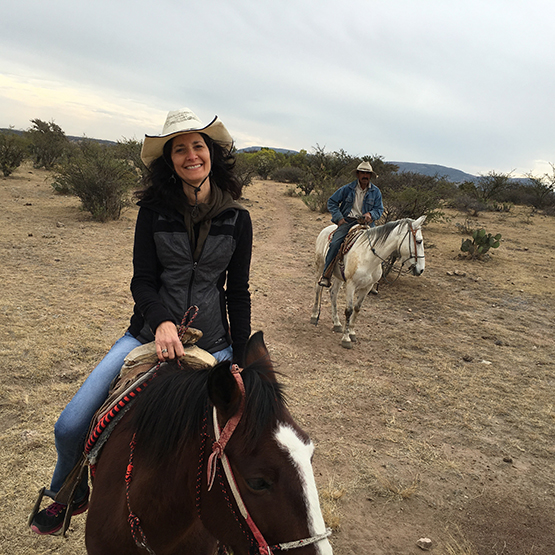
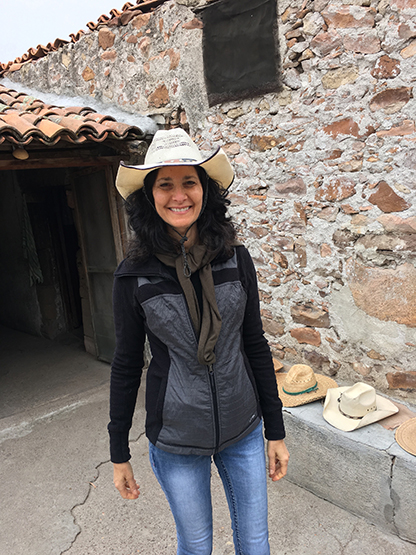
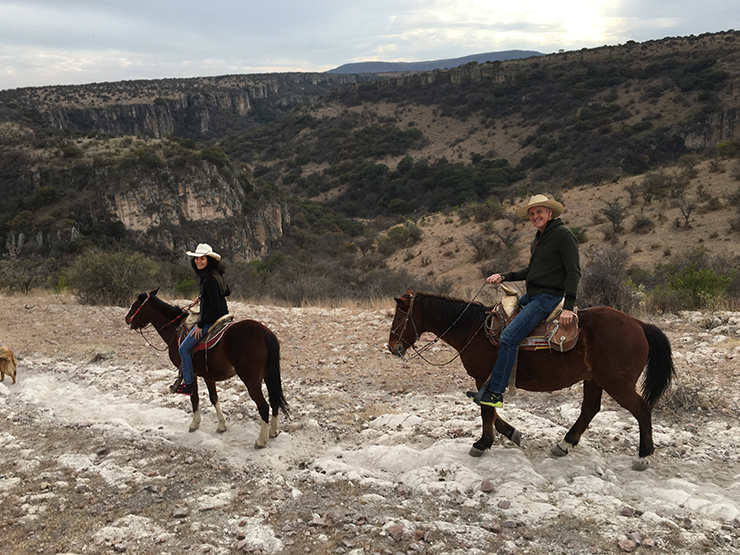
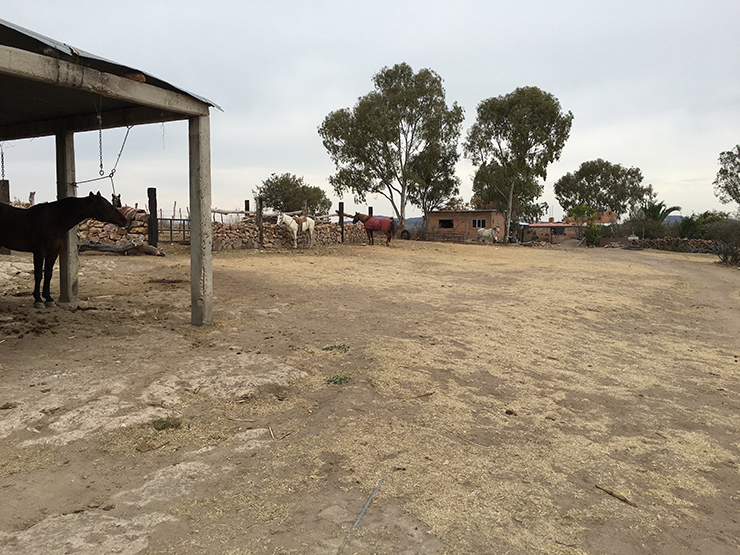
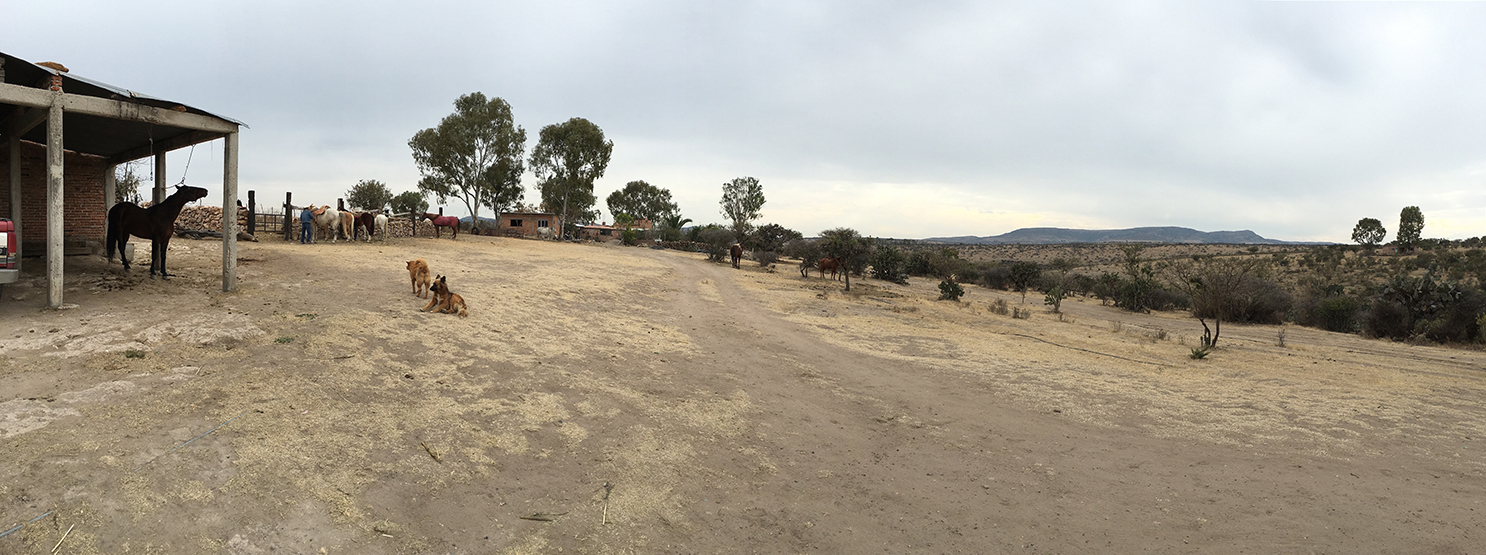
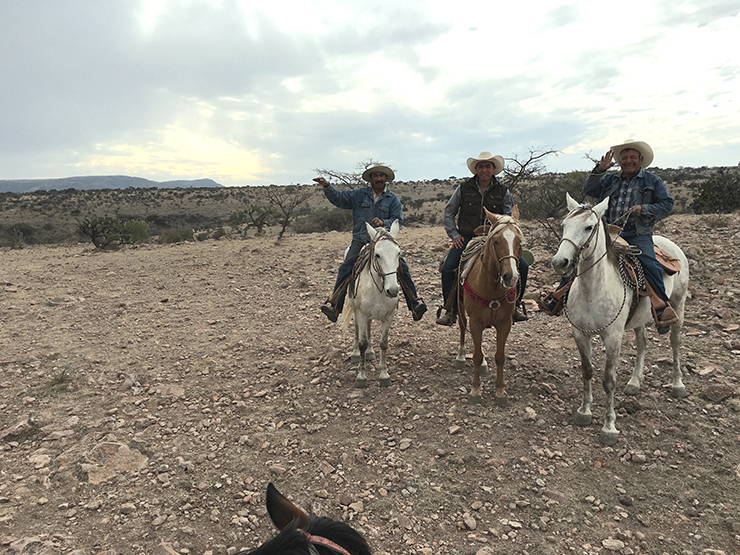
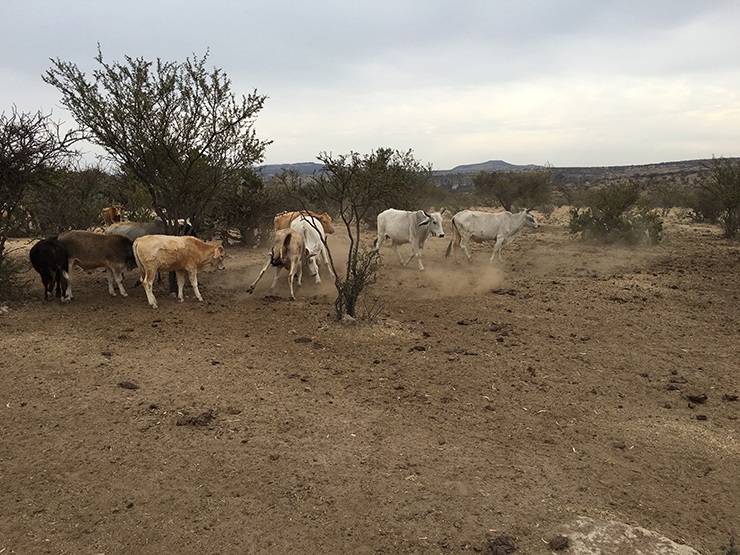
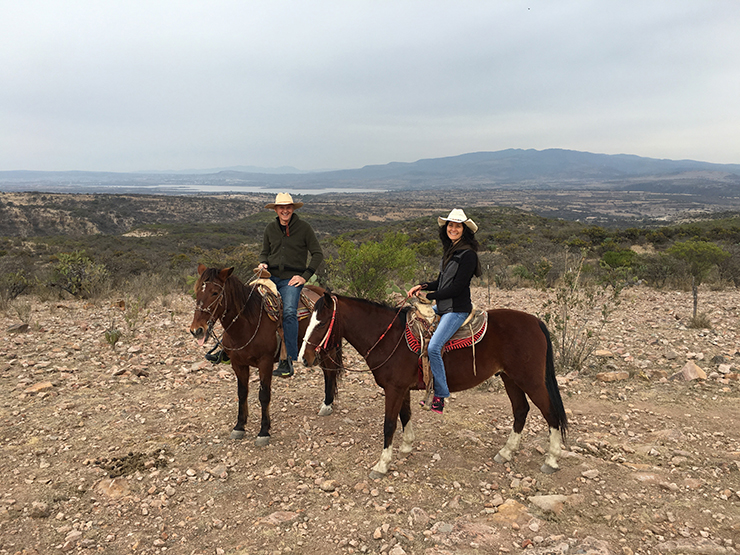
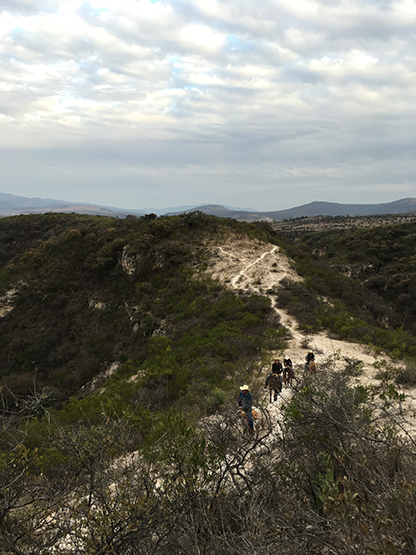
It is late afternoon when I throw myself into a saddle at El Xotolar (pronounced Cho-toe-lar), a 1,200-acre working ranch on the semi-arid plateau 45 minutes outside of San Miguel de Allende, Mexico. I’m on a wiry but strong bay mare named Calcitines, about to embark on a three-hour ride. With me on this journey are three male members of the Morín Ruiz family, who owns the ranch, and my husband, Daryl. It is a ride that will take us within horn’s distance of a rowdy group of steers, knee-to-needle with cacti, and deep into the canyon known as Cuesta Abajo para el Águila (“Downhill to the Eagle,” for all you non-translators).
It will also bring me face to face with my past.
Barely a hundred yards into the ride, a deluge of tears threatens to erupt from my eyes, accompanied by a nearly uncontrollable urge to burst out laughing. Insight, for me, has always ridden in on the heels of emotional lability, and this time is no different. Suddenly I realize that three of the significant plot points of my life converge around horses, Mexico and Hispanic men.
I first heard of San Miguel de Allende about 15 years ago, when a friend announced that he and his wife were buying property there. But it wasn’t until my husband and I decided to go that I did a little research. Resting 170 miles northwest of sprawling Mexico City in the state of Guanajuato, San Miguel de Allende is relatively small. Of the 80,000 residents, about 4,700 are American expats. The town is perhaps best known for its funky artistic vibe (Diego Rivera spent time painting here), its cathedrals and its colorful cultural and religious festivals, all of which my husband and I drank in in great gulps the first time we were here, two years ago.
But this time I am here for the horses of El Xotolar.
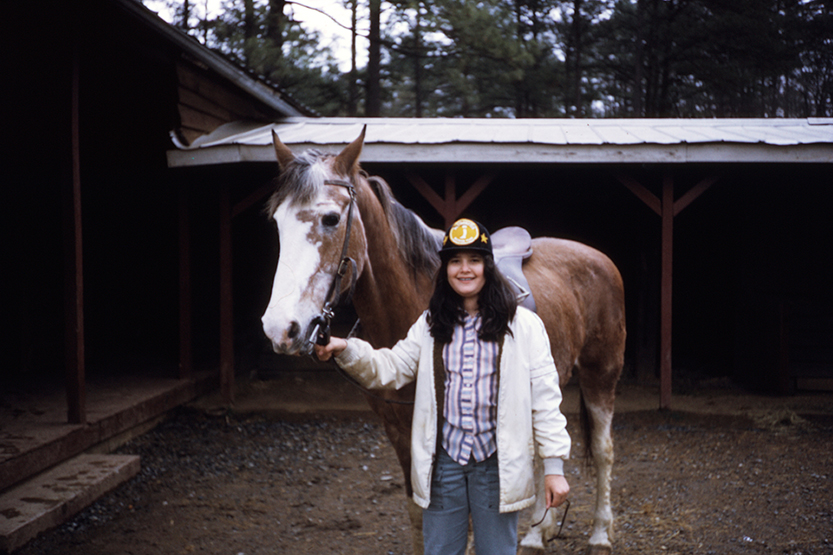
I have ridden four-legged animals in fantastical locales before. Fifteen years ago, a mule named Iceman carried me to the bottom of the Grand Canyon, a seven-hour trek along sheer rock precipices, one misstep away from death. As a teenager in Atlanta I spent weekends on my red mare, Sheba, thundering through dense woods right up to (and into) the cold and murky Chattahoochee River. And when I was 10, my parents did something that would today earn them a prison sentence: They took me to an isolated, non-English-speaking horse ranch in the Dominican Republic and left me in the care of a large group of male strangers.
“We’ll be back in three hours,” they said.
It was a defining moment in my life. For those three hours, I galloped joyfully – maniacally – across that flat, dusty plain, my parents and my angst-inspiring fifth-grade classroom back in Atlanta a distant memory. For three spectacular hours it was just me, my horse and a raven-haired, broody-eyed Spanish teenager galloping beside me. And when he shouted over the wind, in halting English, “You – Good – Ride!” I smiled wider than I ever had and perhaps ever would again. In that moment I was not pudgy, my hair was not frizzy and dull, I was not near-sighted, and there was not a train yard worth of steel glued to my teeth. Hurtling across that horizonless plain with a young man who, in the retelling, would be a little bit in love with me, I was, quite simply, beautiful.
Perhaps my Santo Domingo moment as a beautified 10-year-old girl laid the groundwork for the moment when I would travel to Mexico City with my high school band and meet another Spanish-speaking man who would become, for two important years, my almost-boyfriend. It was on a plush tour bus with 50 other kids (including 30 boys who had never so much as said “hey” to me) that I met our 29-year-old tour guide, Pepe.
Pepe showed us the sights, taught us the language and explained how to haggle in the markets, showering extra attention on me. If I understood the significance (or the crassness) of the Superman patch sewn into the crotch of his jeans, it was only in retrospect, long after our two-year, monthly letter correspondence came to an end. For his part, Pepe’s letters were chaste, kind, never leading me on. But I believed, in the way that naïve young girls can make much of nothing, that he truly loved me.
Long after Pepe and I stopped writing, there was another trip to Mexico, this time with my brother when I was 26 and he was 31. Our mission was simple: We would visit the ruins in Cancun. We would snorkel in the shallow blue waters of the Caribbean. And we would begin the task of repairing a relationship marked by a lifetime of fighting. But two days in, our mother called to tell us that our father, who had been ill, had died. I said goodbye to Mexico, and I didn’t return for 28 years.
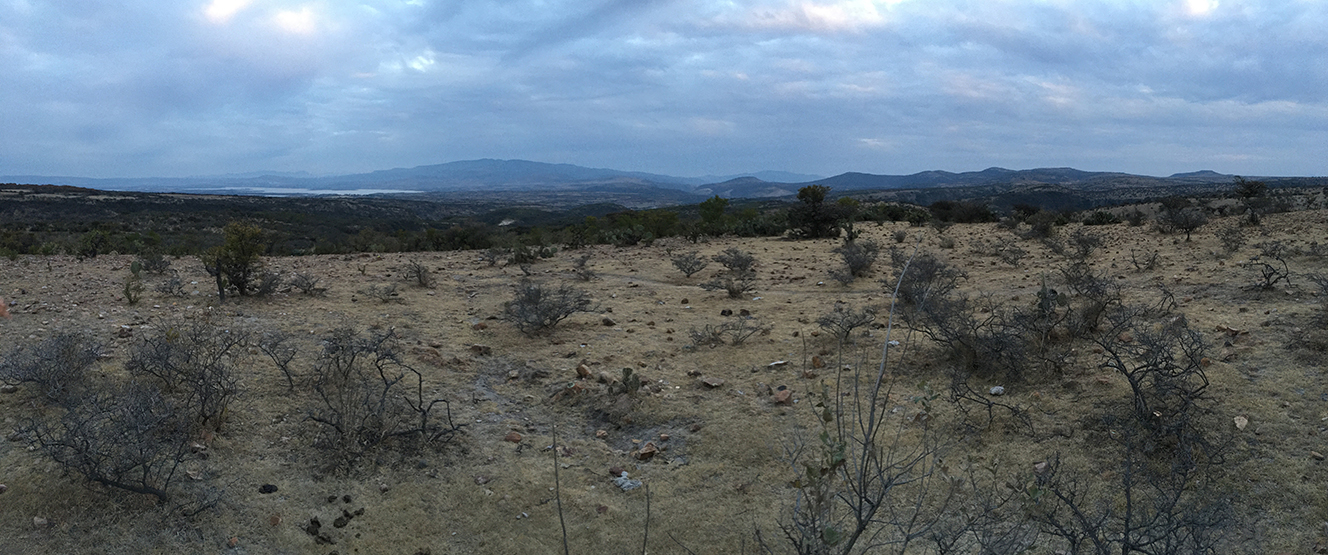
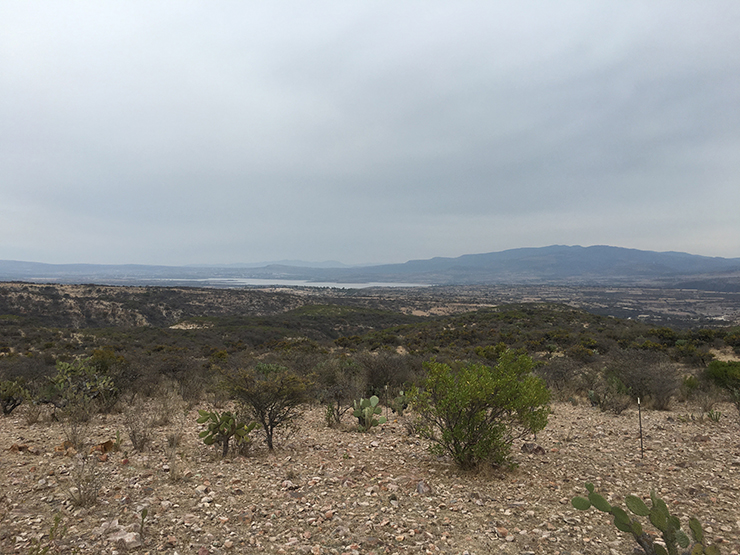
The plateau outside San Miguel de Allende is ringed by the Bajio Mountains. This particular corner of the state enjoys a short but intense spring rainy season, enough to nourish the corn, bean and squash crops, fill up the water holes and turn the hillsides a lush green with a dense carpet of flowers. But right now it’s February. The hills are mostly brown, and the landscape is strikingly stark. The temps are in the low 60s, and there’s a breeze. By the time we are through with our ride, it will be in the 50s.
As we lope along, I find that Calcitines, though responsive and well behaved, is not a comfortable ride. My saddle is a hard hunk of unforgiving leather lashed on by a complicated and disconcertingly ancient array of frayed leather straps. Because my horse’s mouth is tender, I am to resist the temptation to pull back on the thin rope rein, even if I feel out of control. If I must hold on, I’m to grasp not the horn, that shaft of leather shaped like the head of a nine-iron conveniently jutting up from the front of my saddle, but the saddle’s back rim. I am a little nervous. A fall from my horse at age 12 left me with a bloody concussion; a fall from one at 54 could leave me with much worse.
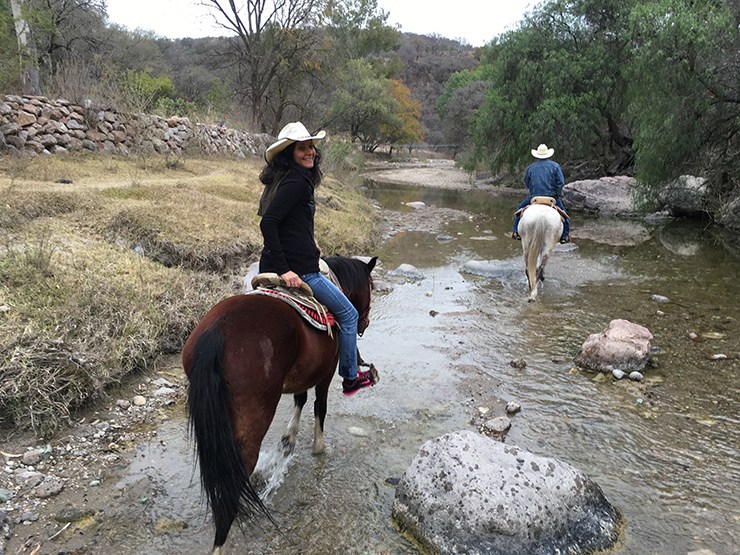
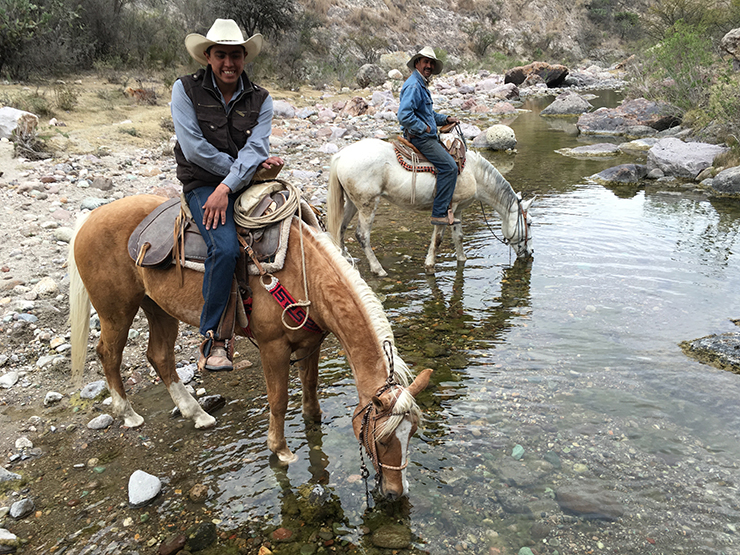
After an hour and a half of cross-plateau travel and steep descents, my husband and I find ourselves deep in the belly of Arroyo de Leon (roughly translated to “Gully of the Lion”). A shallow river cuts through the canyon, and we walk our horses into it so they can drink. I am reminded of the time, at horse camp, when my horse put his head down to drink from a creek and I, somehow unable to let loose of the reins, slow-motion somersaulted over his head and into the water.
And then our guides announce, in a complicated mash-up of hand signals and laughter, that Daryl and I are to race our horses “en el agua.” I don’t want to race, especially not through cold agua, but when I go to protest, I find my Spanish National Honor Society vocabulary is long gone. “No la race-a!” is all that comes to mind. And nobody knows what that means.
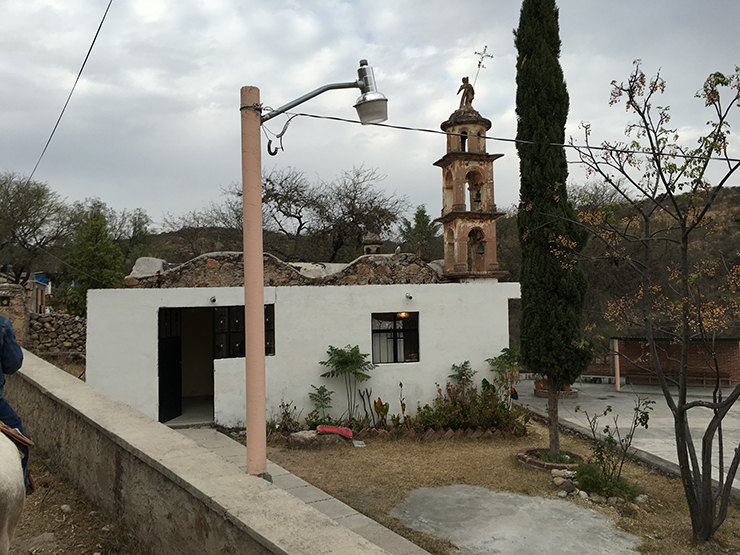
“Accion!” our guides yell, and with no cue from us, our horses burst into a gallop, ears back, manes flying, hooves chopping and churning up the water. My husband and I cling alternately to our saddles and our hats. Less than two minutes later, Calcitines and I emerge the winners, but Daryl and I are equally soaked, and laughing. We rest our horses briefly just outside the tiny community of Boca de la Cañada, a small settlement of ancient, flat-topped, concrete houses and one tiny stone chapel inside of which people are singing. And then we begin our ascent back to El Xotolar.
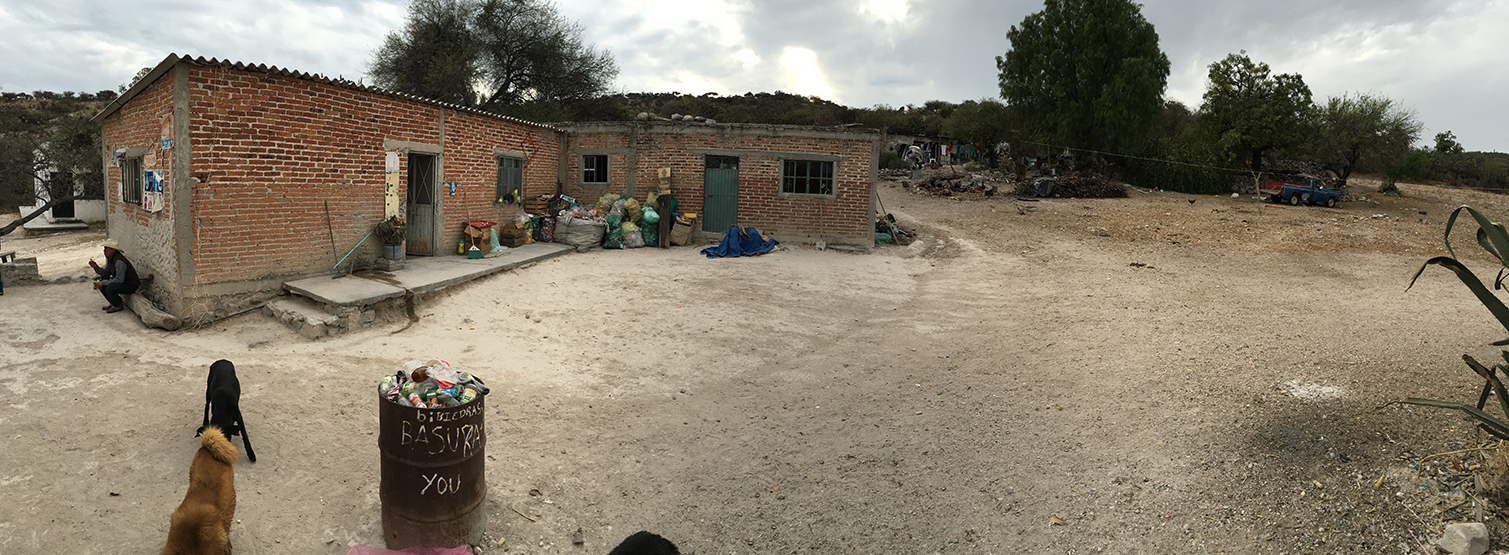
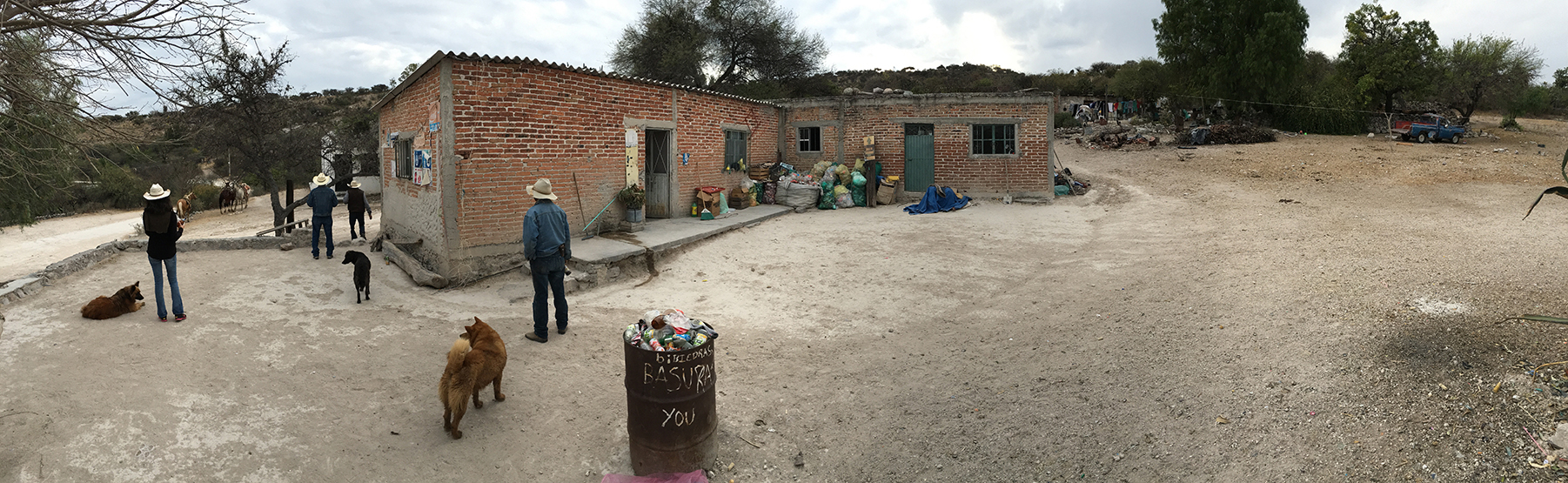
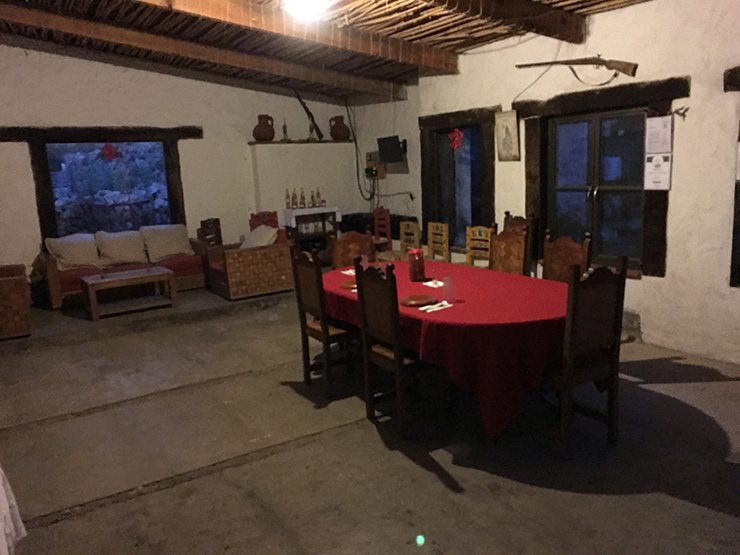
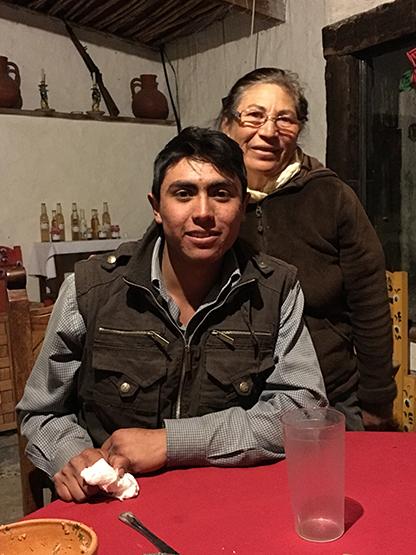
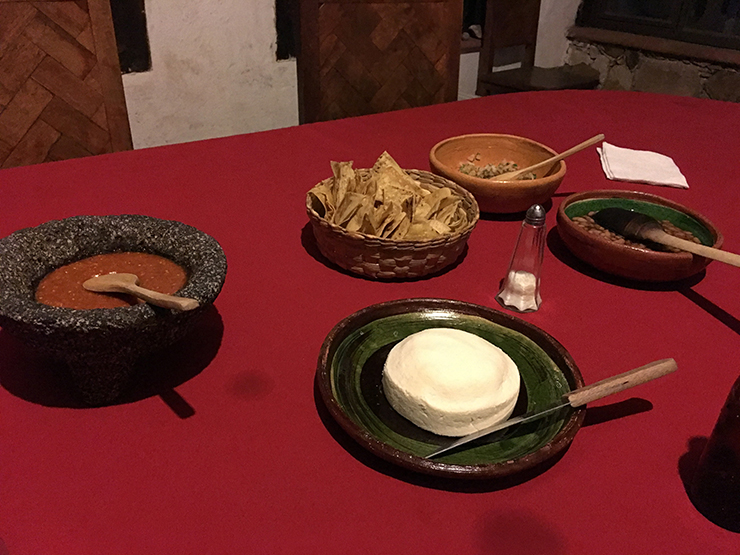
At El Xotolar, we climb down off our horses and hand the reins over to our guides. We follow Gustavo to the stone patio between the main house and the impossibly small kitchen, where his aunt Maria Luisa has been busily preparing a meal for us. After washing our hands (which involves soaping them beside a pot of water on the patio and then dribbling a minuscule amount of water over them), we are ushered into the spare family dining room. In the center is a table covered with a bright red cloth. Six wooden chairs are arranged around the table. As there is no heat source and we are wet from the knees down, the room is chilly. Gustavo, Daryl and I sip beer and attempt conversation until Maria Luisa brings our dinner: thick, freshly fried tortilla chips made from homegrown corn and a tomatillo salsa; creamy queso fresco made from the ranch’s cows’ milk; boiled, seasoned homegrown beans; and xoconostle (a pico de gallo made with cactus fruit). Just when we think we can’t possibly eat any more, plates of cheese enchiladas arrive. All of this we eat and drink like we’ve been wrestling steers instead of gingerly avoiding them. It will go down in the annals of personal food history as one of my most satisfying meals ever.
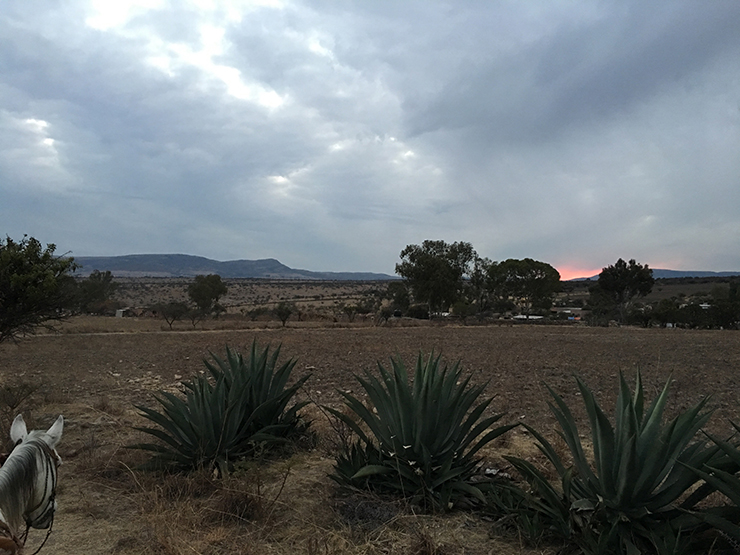
Evenings in San Miguel de Allende fall fast, and the long road that leads out of El Xotolar is a bumpy one. As we drive back to our hotel, wet, tired, bellies full of comida and cerveza, I think about one other horse I rode to one other fantastical place. She was nameless and imaginary, the horse that came to me as a child whenever I needed escape or friendship. Onto her back I would jump, and together we would gallop until my childhood worries dropped away. If, as Mary Jo McConahay suggests, every journey has a crossroads, then mine was at the trailhead of this ride.
It was there, in a sudden flash of tears and laughter, that my older self befriended my younger self, and the two rode as one into a Mexican sunset.