
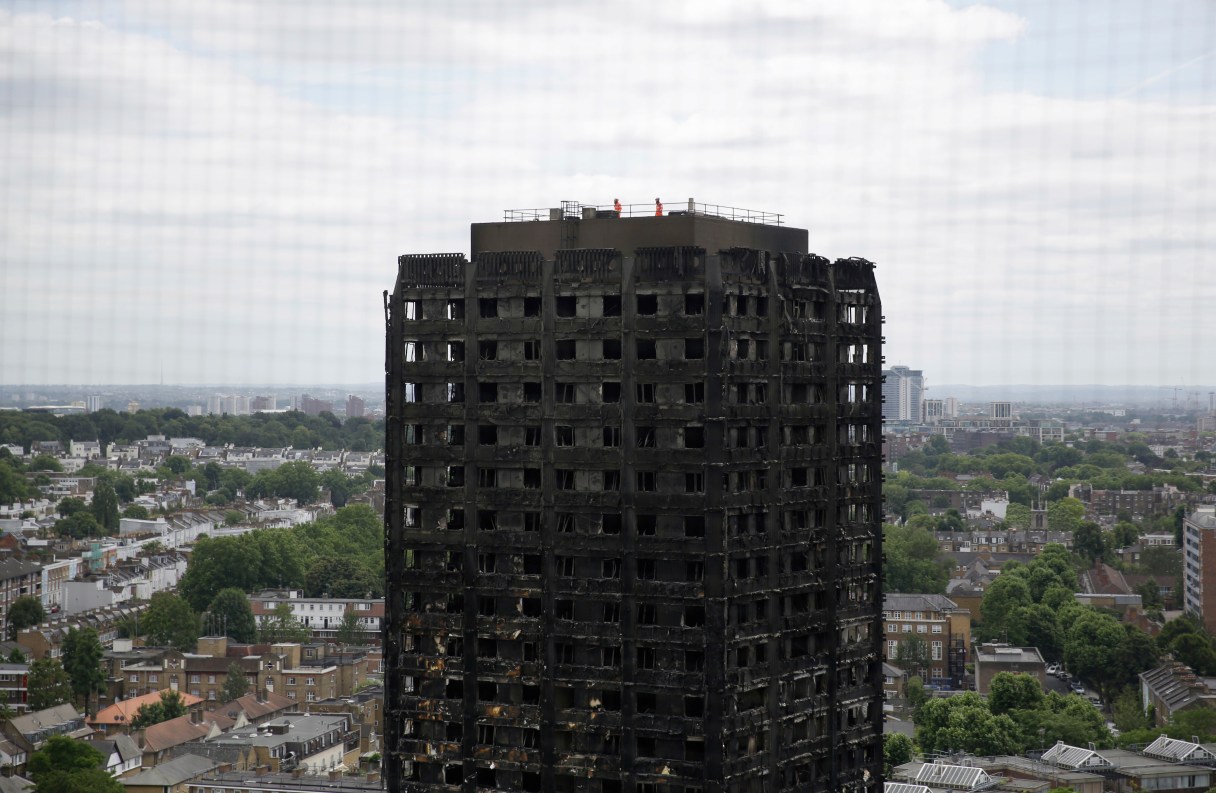
LONDON (AP) – A government-ordered inquiry into the London tower block fire that killed at least 80 people opened Thursday, with its leader acknowledging that survivors feel a “great sense of anger and betrayal.”
Retired judge Martin Moore-Bick said he hoped his investigation would “provide a small measure of solace” by answering how such a disaster could happen in 21st-century London.
The June 14 blaze began in a refrigerator in an apartment at Grenfell Tower before racing through the 24-story building. One aspect of the investigation will be the role of combustible aluminum cladding installed during a refurbishment to the 1970s tower block. Emergency safety checks have uncovered scores of other buildings across Britain with similar cladding.
The fire was Britain’s deadliest in more than a century, and provoked intense grief and anger. Many residents accuse officials in Kensington and Chelsea, one of London’s richest boroughs, of ignoring their safety concerns because the tower building was home to a largely immigrant and working-class population.
Moore-Bick said he was aware that “former residents of the tower and local people feel a great sense of anger and betrayal.”