
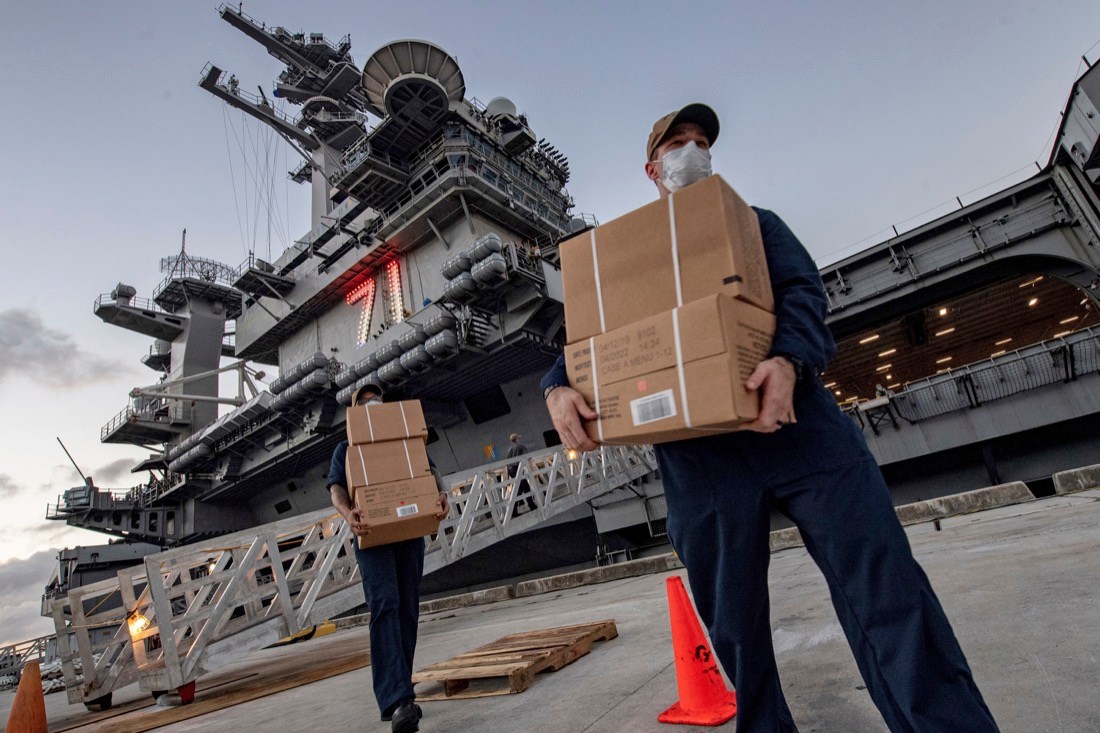
WASHINGTON (AP) – With limited supplies of coronavirus tests available, the Pentagon is focusing first on testing those performing duties deemed most vital to national security. Atop the list are the men and women who operate the nation’s nuclear forces, some counterterrorism forces, and the crew of a soon-to-deploy aircraft carrier.
Defense leaders hope to increase testing from the current rate of about 7,000 a day to 60,000 by June. This will enable them to test those showing symptoms as well as those who do not.
The current tight supply forced the Pentagon to take a phased approach, which includes testing sailors aboard the USS Nimitz, the Bremerton, Washington-based Navy carrier next in line to head to the Pacific. Officials hope to avoid a repeat of problems that plagued the virus-stricken USS Theodore Roosevelt. On Friday the Navy disclosed a virus outbreak aboard another ship at sea, the USS Kidd.
Despite President Donald Trump’s assertion that testing capacity is not an issue in the United States, Pentagon officials don’t expect to have enough tests for all service members until sometime this summer.
Defense Secretary Mark Esper recently approved the tiered approach. It expands the Pentagon’s practice of testing mainly those who show symptoms of the virus to eventually testing everyone. Many virus carriers show no symptoms but can be contagious, as was discovered aboard the Roosevelt.