
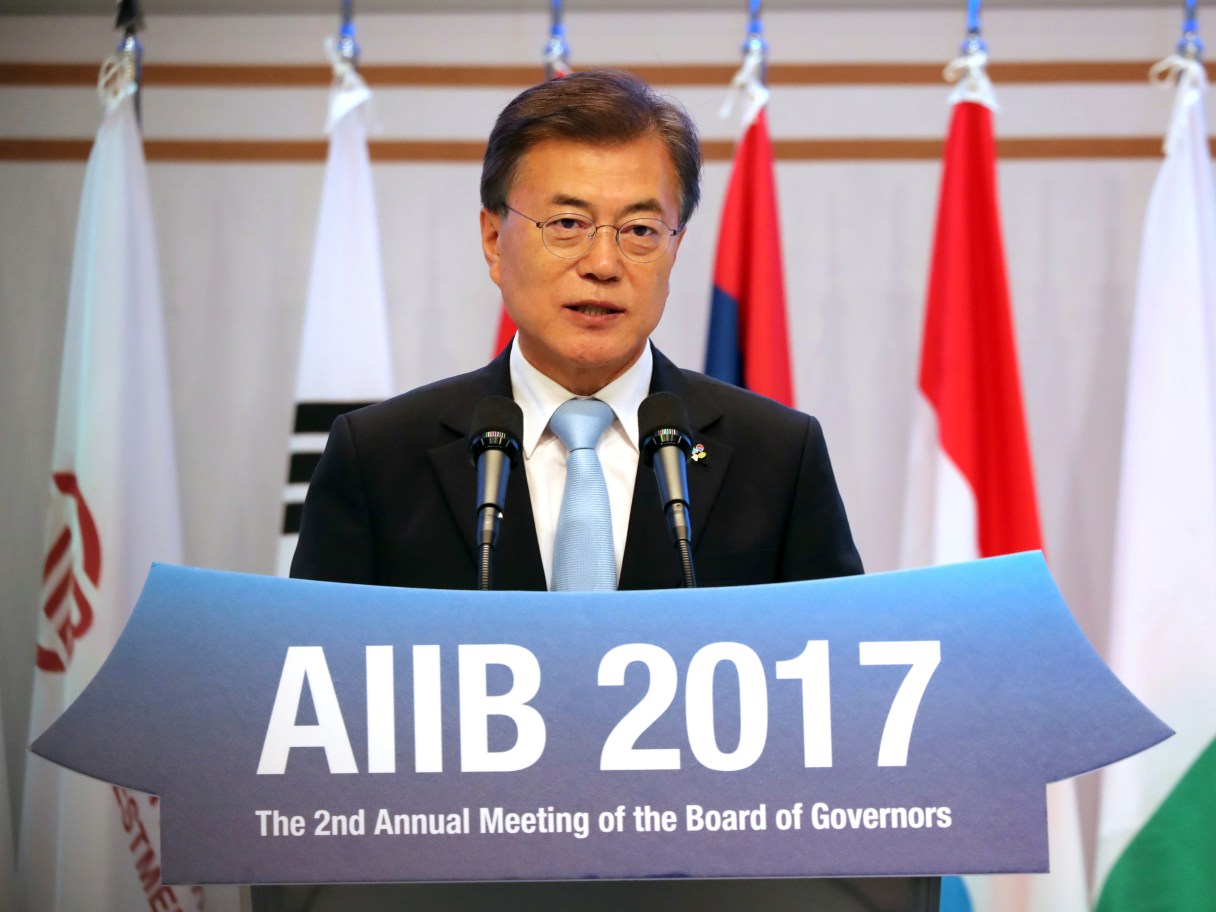
SEOUL, South Korea (AP) – China and South Korea put aside hard feelings over Beijing’s objections to a U.S. anti-missile system to join an annual meeting on the South Korean island of Jeju of a China-backed Asian lending bank.
Sustainability of investment in infrastructure such as roads, ports and energy systems was expected to dominate discussions, which began Friday and will wrap up over the weekend.
Chinese finance minister Xiao Jie and his Indian counterpart Arun Jaitley were among those attending the Asian Infrastructure Investment Bank’s second annual meeting.
South Korea was picked to host the gathering before Beijing began protesting Seoul’s agreement to let its ally the United States deploy on its territory key components of the so-called Terminal High-Altitude Area Defense system. South Korea and the U.S. say the system is needed to deter a possible North Korean attack but Beijing sees it as a threat to its own security because its radar can peer deep into northeastern China.
It was unclear if the meeting might pave the way for a thaw or if finance ministers from China and South Korea might meet on its sidelines. But the AIIB meeting in South Korea was a rare chance for senior officials from the two countries to be in the same room. Since China began protesting the THAAD deployment in late February, visits by Chinese tourists have dropped sharply and some companies operating in China, South Korea’s largest trading partner, were asked to suspend their operations there.