
Thursday, November 12, 2026Nov 12

US slaps 220 percent duty on Canada’s Bombardier jets

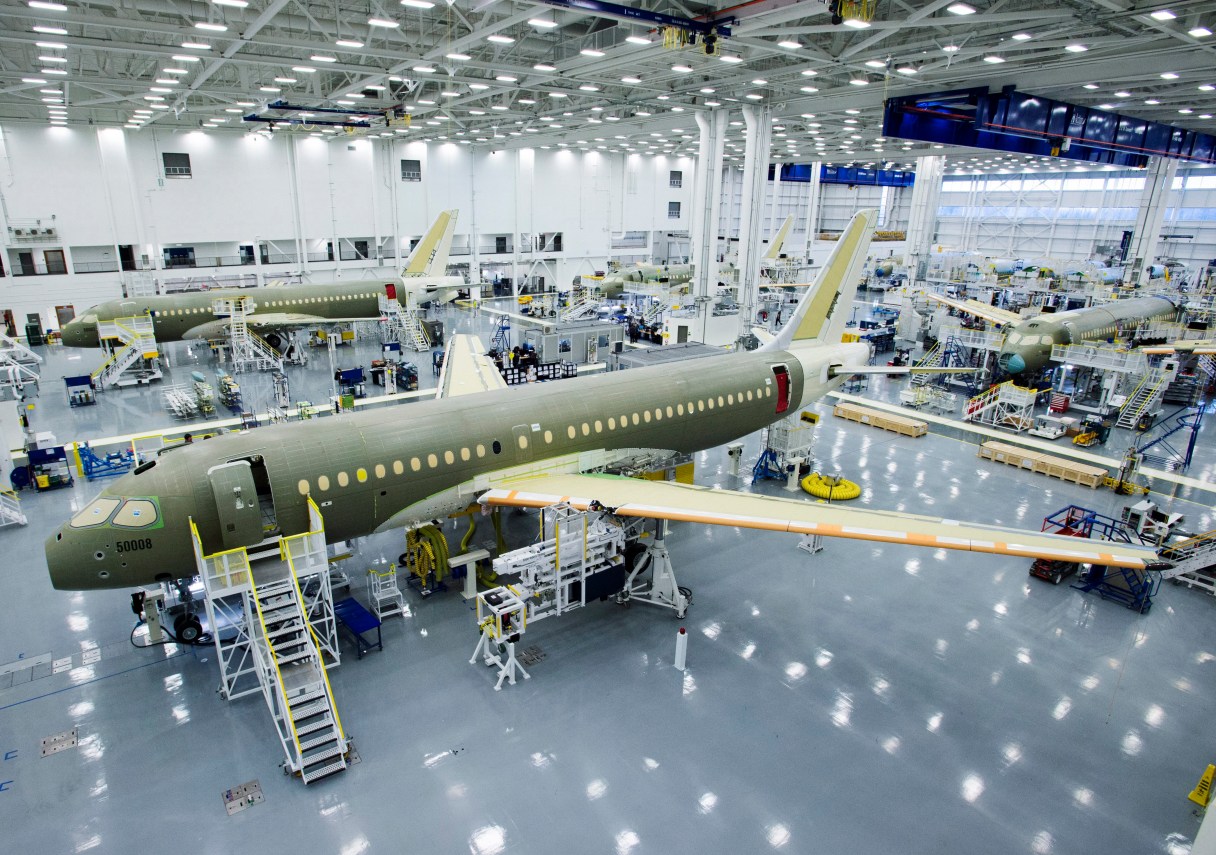
FILE- In this Dec. 18, 2015, file photo, Bombardier's CS100 assembly line is seen at the company's plant in Mirabel, Quebec, Canada. The U.S Commerce Department slapped duties of nearly 220 percent on Canada's Bombardier C Series aircraft Tuesday, Sept. 26, 2017, in a victory for Boeing that is likely to raise tensions between the United States and its allies Canada and Britain. (Ryan Remiorz/The Canadian Press via AP)
FILE- In this Dec. 18, 2015, file photo, Bombardier's CS100 assembly line is seen at the company's plant in Mirabel, Quebec, Canada. The U.S Commerce Department slapped duties of nearly 220 percent on Canada's Bombardier C Series aircraft Tuesday, Sept. 26, 2017, in a victory for Boeing that is likely to raise tensions between the United States and its allies Canada and Britain. (Ryan Remiorz/The Canadian Press via AP) FILE- In this Dec. 18, 2015, file photo, Bombardier's CS100 assembly line is seen at the company's plant in Mirabel, Quebec, Canada. The U.S Commerce Department slapped duties of nearly 220 percent on Canada's Bombardier C Series aircraft Tuesday, Sept. 26, 2017, in a victory for Boeing that is likely to raise tensions between the United States and its allies Canada and Britain. (Ryan Remiorz/The Canadian Press via AP)

WASHINGTON (AP) – The Commerce Department slapped duties of nearly 220 percent on Canada’s Bombardier C Series aircraft Tuesday in a victory for Boeing that is likely to raise tensions between the United States and its allies Canada and Britain.

Commerce ruled that Montreal-based Bombardier used unfair government subsidies to sell jets at artificially low prices in the U.S.

“The U.S. values its relationships with Canada, but even our closest allies must play by the rules,” Commerce Secretary Wilbur Ross said.

Canada responded by saying it “strongly disagrees” with the U.S. move.

“This is clearly aimed at eliminating Bombardier’s C Series aircraft from the U.S. market,” said Chrystia Freeland, Canada’s minister of foreign affairs.