
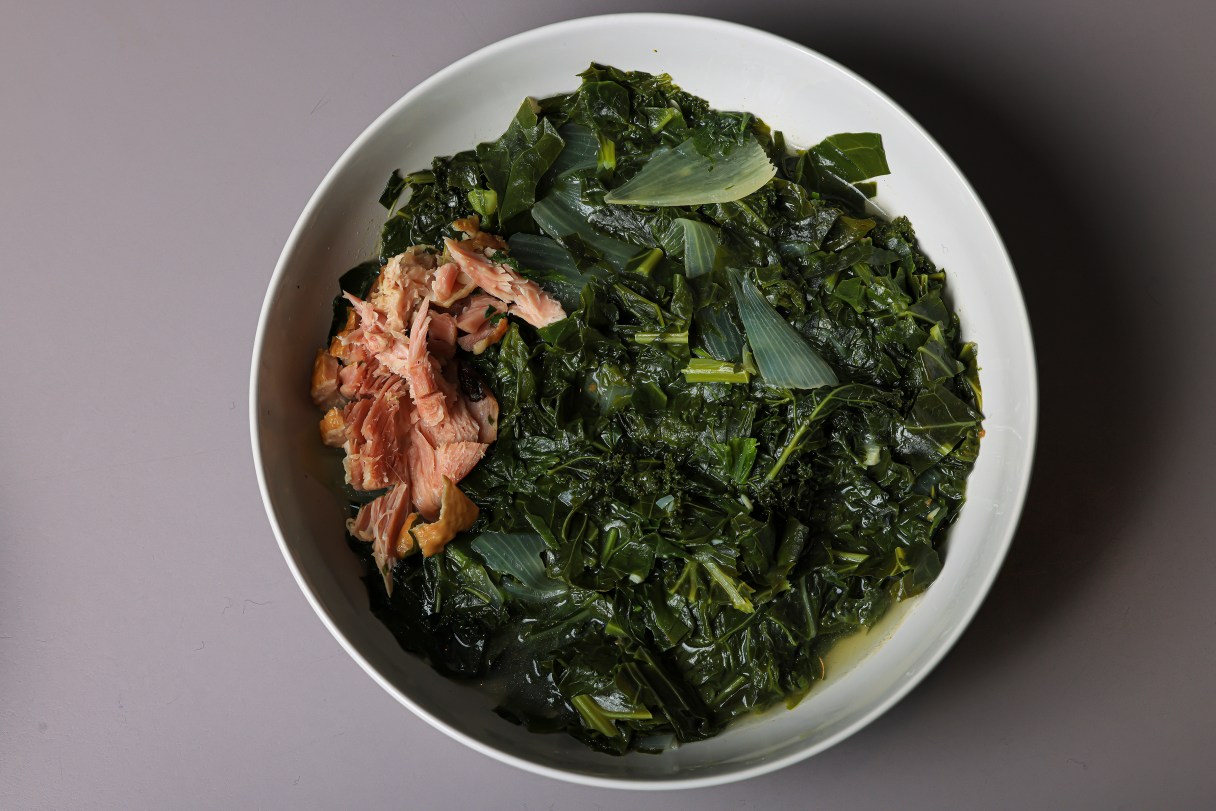
On New Year’s Day, Black American families around the country will sit down to eat a variation on green vegetables and cowpeas, joining in an enduring tradition meant to usher in opportunity in the year ahead.
“I don’t let a New Year’s Day go by without having some form of greens, pork and black-eyed peas,” food historian Jessica Harris said.
The choice of greens, usually cooked with pork for flavor, comes from the perception among Black Americans that folded collard greens look like paper money, said Adrian Miller, an author and food scholar. Eating greens on New Year’s Eve or New Year’s Day is believed to bring about greater financial prosperity. The peas promise good luck, health and abundance.
But although these rituals have become largely associated with the American South, their roots can be traced back to the meeting of West African and European traditions, Miller said. Collard greens, for instance, originated in Northern Europe.
“Collards is a corruption of colewort – colewort is any nonheading cabbage,” said Harris, author of “High on the Hog: A Culinary Journey From Africa to America.” “They became part of the foodways of African Americans. The Africanism is in the cooking of them – not in the green itself. That cooking method of long, low and slow, and with the potlikker being consumed, is a very different thing.”