
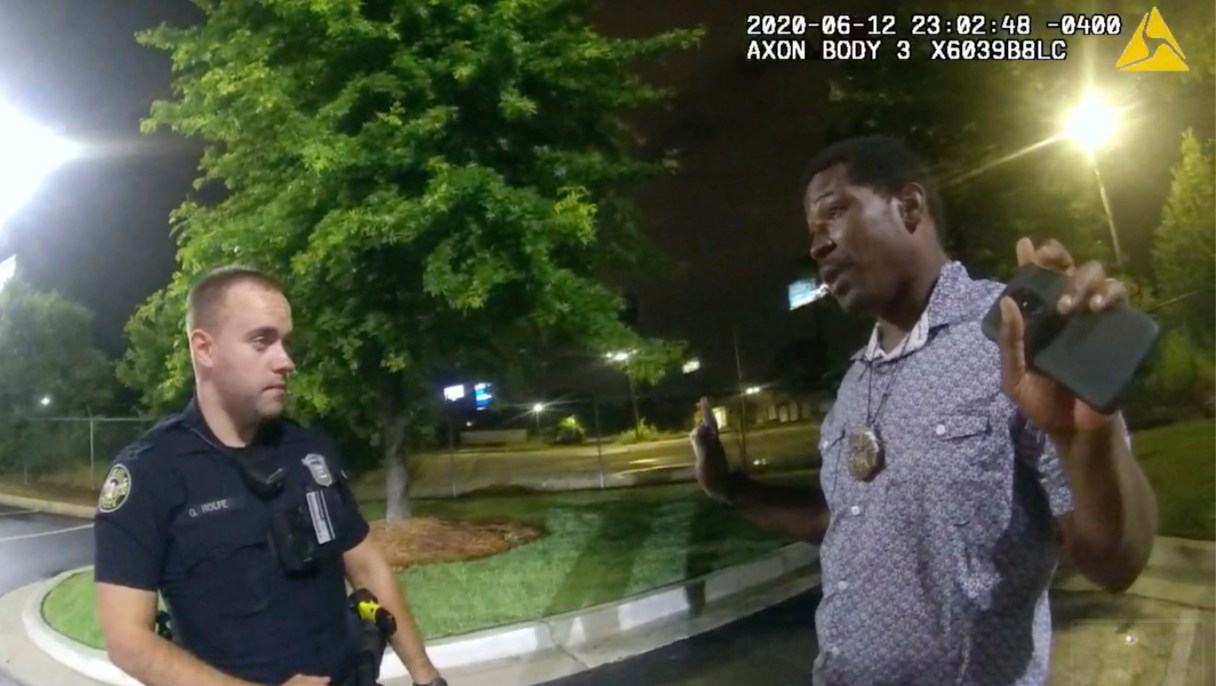
In the fatal shooting of a black man by police in Atlanta last week, officers’ body cameras captured about 40 minutes of footage, but not the critical moments that end with one of them opening fire.
In Oklahoma City, it took police more than a year to release video from the arrest of a man who died in custody. It came out months after the officers involved were cleared of any wrongdoing, and shows them struggling with the man as he says “I can’t breathe.” One officer replies: “I don’t care.”
Nationwide, police departments have rushed to ramp up the use of body cameras, which have been hailed as a potential equalizer that would show the unvarnished truth of an encounter with officers.
But the cases in Georgia and Oklahoma highlight why the technology’s benefit has come into question amid protests sparked by the killing of George Floyd and calls for sweeping changes to American law enforcement. With budget crises looming and cries to “defund the police,” some are asking whether the tens of millions of taxpayer dollars spent to outfit officers with cameras has provided the accountability and transparency expected.
Advocates and officers agree the technology’s broad adoption has been helpful, but its value is dictated by the policies and practices around its use: Cameras improve transparency when departments care about transparency.