
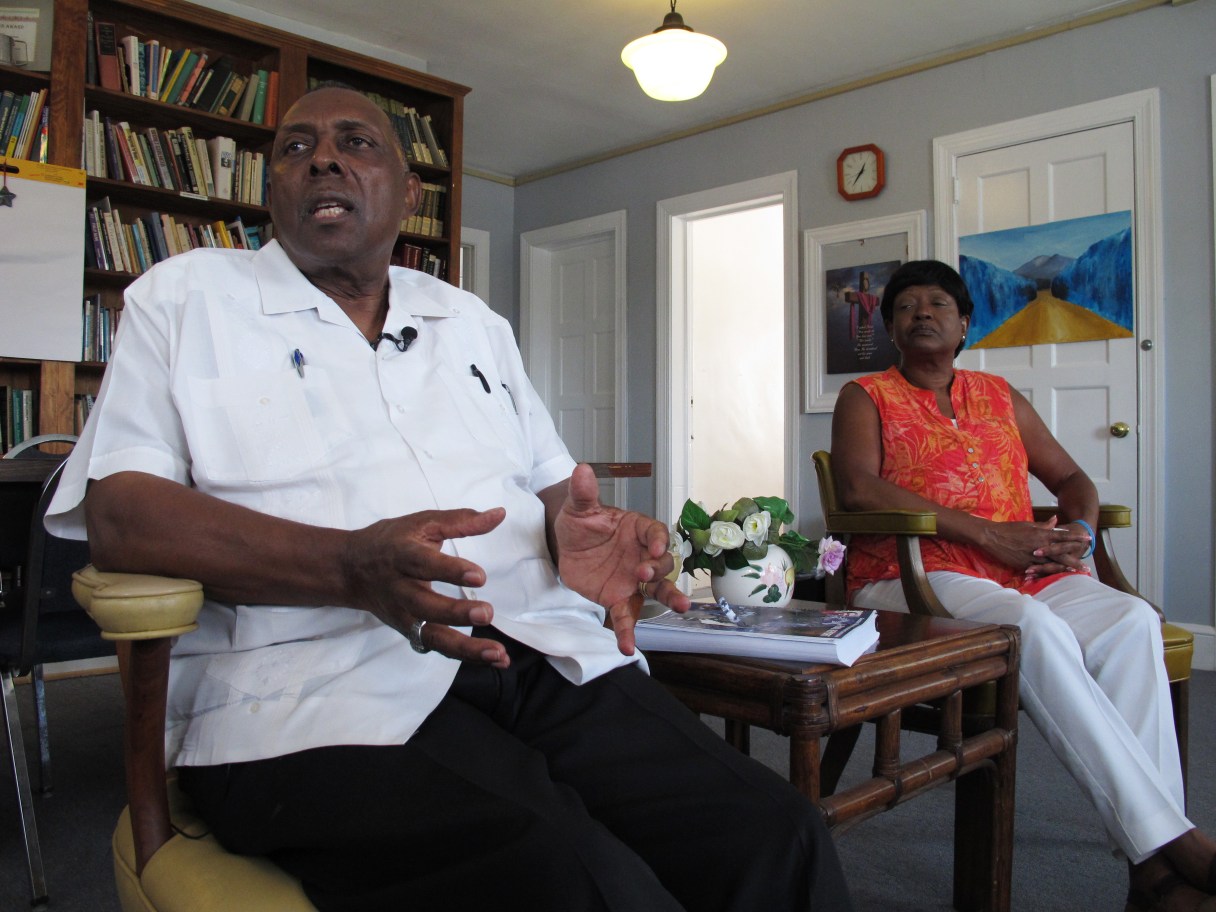
GREENSBORO, N.C. (AP) – The Rev. Nelson Johnson needs no reminders of the massacre of five of his labor-activist friends almost 40 years ago – he still has the faded scar on his left arm, left by a Nazi who stabbed him as white supremacists descended on a march for workers through black neighborhoods in Greensboro.
But the violence surrounding the Aug. 12 march by Ku Klux Klansmen and Nazis in Charlottesville, Virginia, and the death of a young woman hit by a car there, brought the events of Nov. 3, 1979, in sharper focus for him.
“I was horrified,” he said.
Johnson, now 74, was a member of the Workers Viewpoint Organization, which planned a march through a public housing project in Greensboro before a labor conference on Nov. 3, 1979. While the focus was on workers, textile mill wages and brown lung disease, it was also billed as a “Death to the Klan” rally. Both the rally title and the organization’s decision to rename itself the Communist Workers Party were mistakes, Johnson now acknowledges.
Nazis and Ku Klux Klansmen drove into the march and then fired at demonstrators, and a report found that some demonstrators also were armed and fired in response. Five marchers were killed and at least 10 people were wounded, including Johnson. All-white juries at two trials acquitted the Klan and Nazi members, who claimed self-defense. Testimony showed both the police and the then-Bureau of Alcohol, Tobacco and Firearms had been warned by informants about the Klan-Nazi plans.