
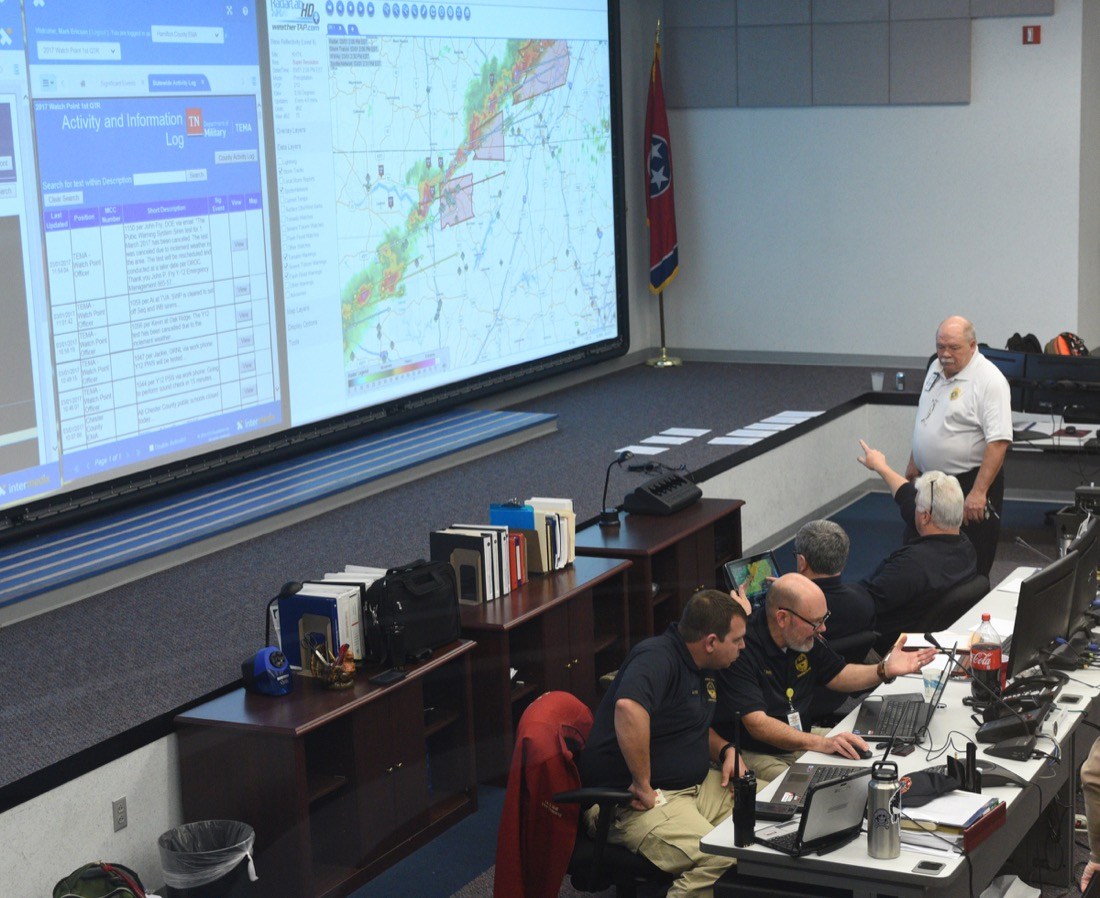
NASHVILLE – Tennessee’s emergency operations chief says his agency is restructuring its support for counties’ planning for natural and man-made disasters in the wake of another state comptroller audit showing some local governments tardy in providing the required updated plans.
But Patrick Sheehan, executive director of the Tennessee Emergency Management Agency, also noted that in a number of instances, smaller, rural counties don’t have adequate financial resources or sometimes don’t see it as a high priority.
“We have local emergency management agencies in this state that are … unfortunately underresourced in some places,” Sheehan told the Legislature’s Government Operations Sunset Joint Subcommittee on Judiciary and Government on Wednesday. “You know, a lot of times one person, in some cases it’s a volunteer who’s designated here.”
The counties’ Basic Emergency Operations Plan is expected to demonstrate their preparations for, during and after a disaster hits with details on who or what government agency, business or nonprofit group will be responsible for each aspect.
Sheehan told lawmakers it’s difficult for local governments at times to see a return on investment when it comes to emergency preparedness. Unfortunately, he said, it becomes “easier to see where there’s a lack of it,” pointing to the aftermaths of hurricanes that slammed Puerto Rico in 2017 and New Orleans in 2005 as prime examples.