

NEW YORK (AP) – The point where childhood ends and adulthood begins isn’t as straightforward as it seems. Add the limelight and things can get complicated for young people who either voluntarily or through circumstances live very public lives.
Those public lives often come with heaping helpings of adult-size sniping. But are children and adolescents who find themselves under global microscopes still entitled to age-appropriate protection from the harshness of public discourse? And, more importantly, can they handle it?
Children and teens, in this era of blurred boundaries, have at their disposal mobile megaphones – for the first time in human history – to reach the entire world. That allows them to be heard, and potentially taken seriously, by hundreds of millions of people, all the way up to heads of state who include the president of the United States.
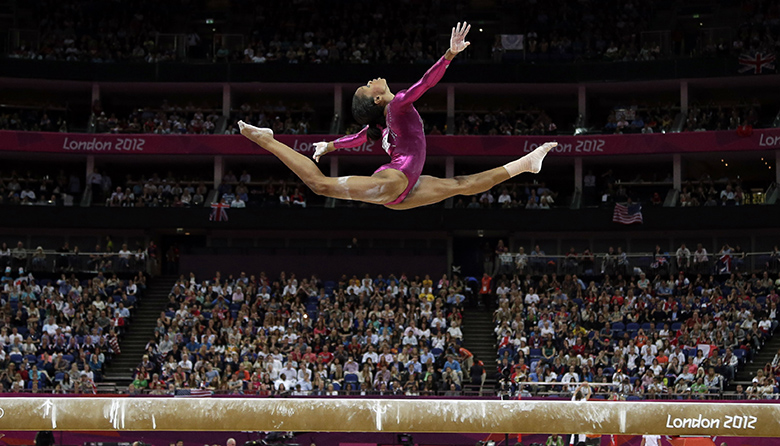 In this Aug. 2, 2012, file photo U.S. gymnast Gabby Douglas performs on the balance beam during the artistic gymnastics women’s individual all-around competition at the 2012 Summer Olympics, in London. Douglas became the first African American woman — and woman of color of any nationality — to win Olympic gold in the individual all-around. The feat was joyous, but some on social media bemoaned that her hair wasn’t perfect. (AP Photo/Gregory Bull, File)
But does it give those who hear them the right to slap back? At what point does the imperative to treat children more gently collide with their decision to enter the marketplace of ideas – and what happens when it does?
In 2012, 16-year-old gymnast Gabby Douglas became the first African American woman – and woman of color of any nationality – to win Olympic gold in the individual all-around. The feat was joyous, but some on social media bemoaned that her hair wasn’t perfect.