
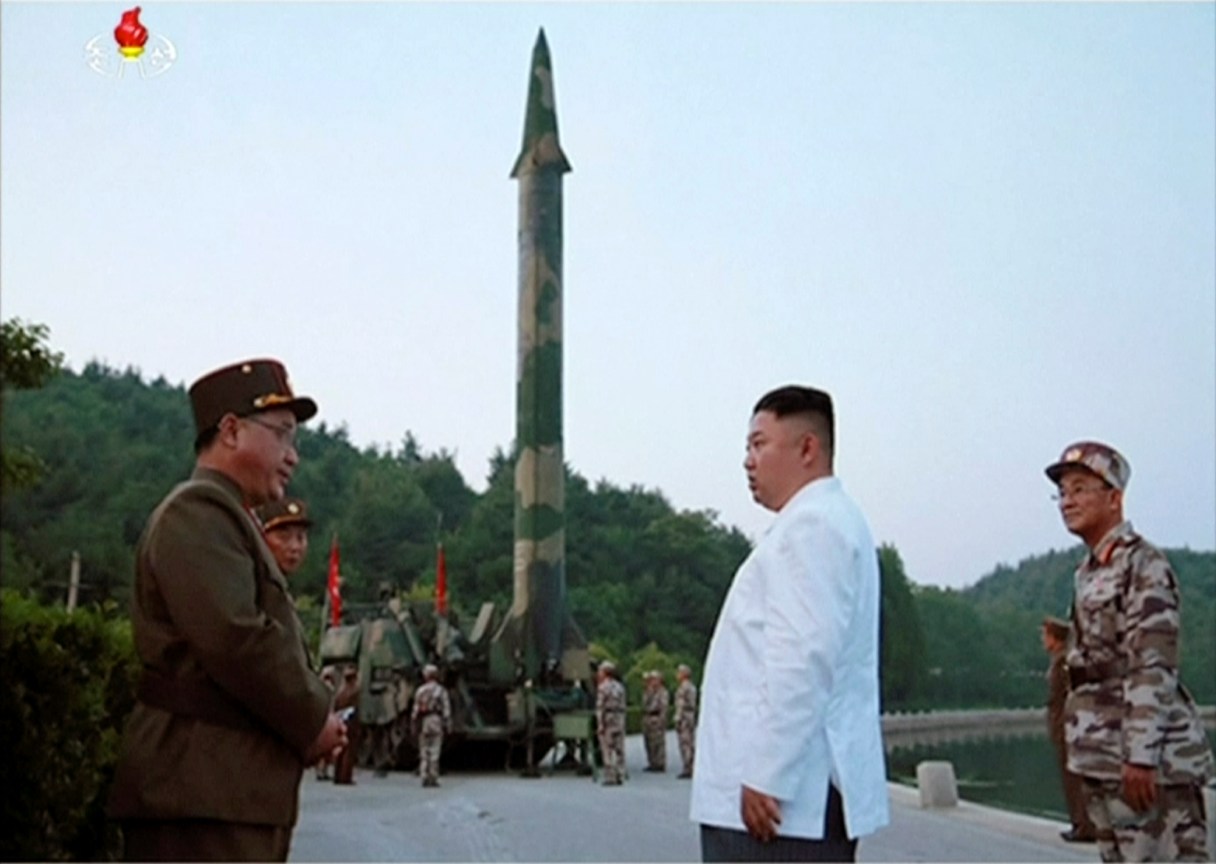
WASHINGTON (AP) – Hit or miss, the Pentagon’s attempt on Tuesday to shoot down a mock warhead over the Pacific Ocean marks an important milestone for an oft-criticized defense program that could be what stands between an incoming North Korean strike and the United States.
Even if successful, the $244 million test will not confirm that the U.S. is capable of defending itself against an intercontinental-range missile fired by North Korea. Pyongyang also is understood to be moving closer to the capability of putting a nuclear warhead on such a missile.
The most recent intercept test, in June 2014, was successful, but the longer track record is spotty. Since the system was declared ready for potential combat use in 2004, only four of nine intercept attempts have been successful.
This is part of a continuous learning curve,” said Navy Capt. Jeff Davis, a Pentagon spokesman.
“We improve and learn from each test, regardless of the outcome. That’s the reason we conduct them,” he said. “We look forward to understanding the results so we can continue to mature the system and stay ahead of the threat.”