
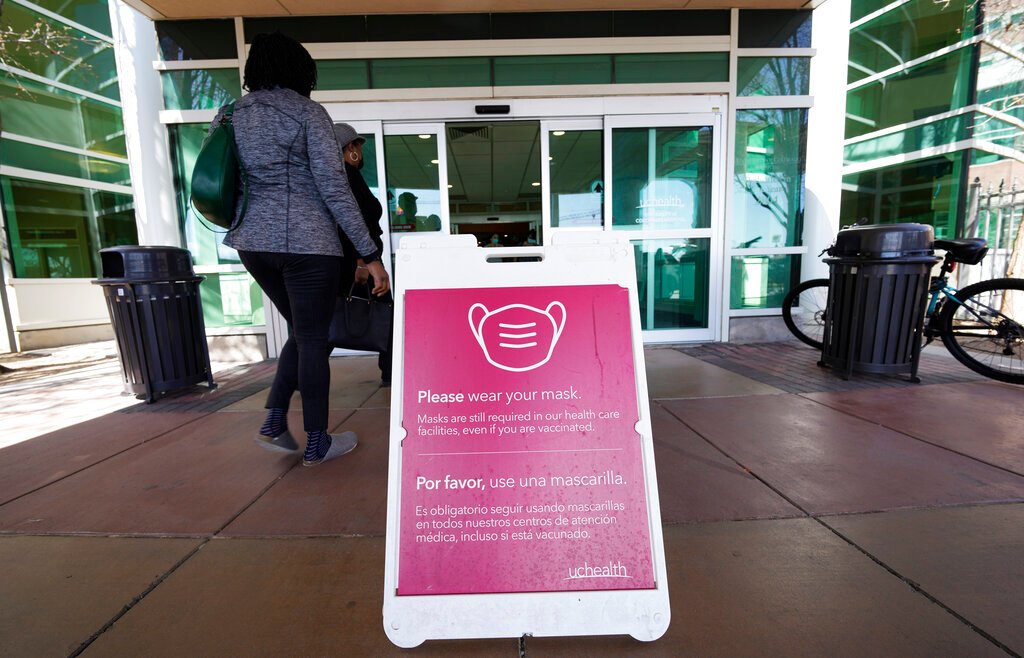
Yet again, the U.S. is trudging into what could be another COVID-19 surge, with cases rising nationally and in most states after a two-month decline.
One big unknown? “We don’t know how high that mountain’s gonna grow,” said Dr. Stuart Campbell Ray, an infectious disease expert at Johns Hopkins University.
No one expects a peak nearly as high as the last one, when the contagious omicron version of the coronavirus ripped through the population.
But experts warn that the coming wave – caused by a mutant called BA.2 that’s thought to be about 30% more contagious – will wash across the nation and push up hospitalizations in a growing number of states in the coming weeks. And the case wave will be bigger than it looks, they say, because reported numbers are vast undercounts as more people test at home without reporting their infections or skip testing altogether.
At the height of the previous omicron surge, reported daily cases reached into the hundreds of thousands. On April 14, the seven-day rolling average for daily new cases rose to 39,521, up from 30,724 two weeks earlier, according to data from Johns Hopkins collected by The Associated Press.