
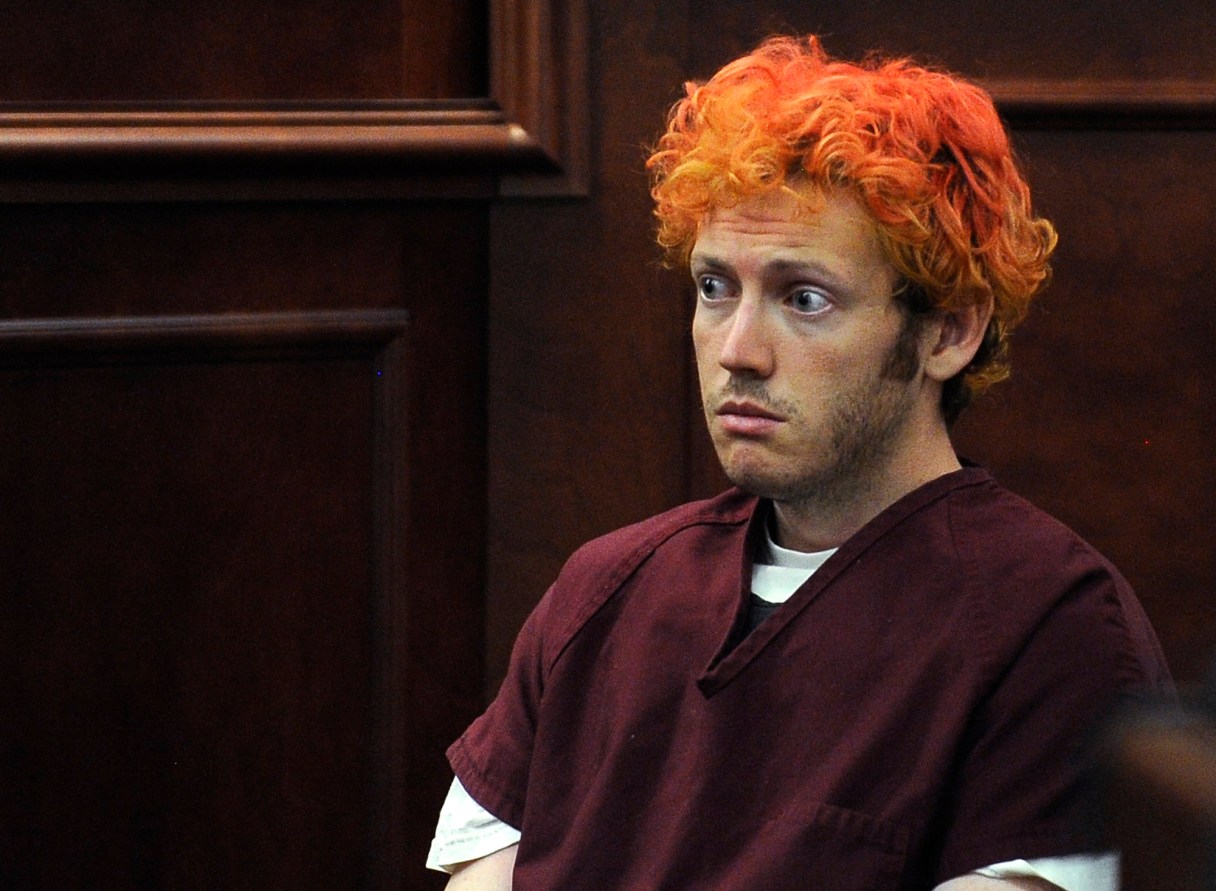
CENTENNIAL, Colo. (AP) – The key to the death penalty trial of a man who methodically shot at moviegoers at a Batman movie premiere will be what was going on inside his mind as he threw smoke canisters and then marched up and down the aisles, firing at anyone who tried to flee.
James Holmes acknowledges killing 12 people and wounding 70 more inside the packed theater, but has pleaded not guilty by reason of insanity. His lawyers will argue that he was too addled by mental illness to tell right from wrong.
And unlike most other states, Colorado puts the burden on prosecutors in insanity cases: They must convince jurors beyond a reasonable doubt that Holmes was sane. It adds another obstacle for a state that has already spent millions to manage an outsized number of victims, hundreds of witnesses and more than 85,000 pages of evidence.
Even so, experts say Holmes faces long odds. Insanity defenses are successful in only 25 percent of felony trials nationally, even less so in homicides.
“Lay people tend to think of people with mental illness as extremely dangerous, and that also influences jurors, especially if someone has killed someone,” said Christopher Slobogin, a professor of law and psychiatry at Vanderbilt Law School. “Usually there’s evidence of intent and planning that seems to be counterintuitive to the lay view of mental illness.”