
Friday, November 13, 2026Nov 13

US launches trial of facial, eye scans on Mexican border

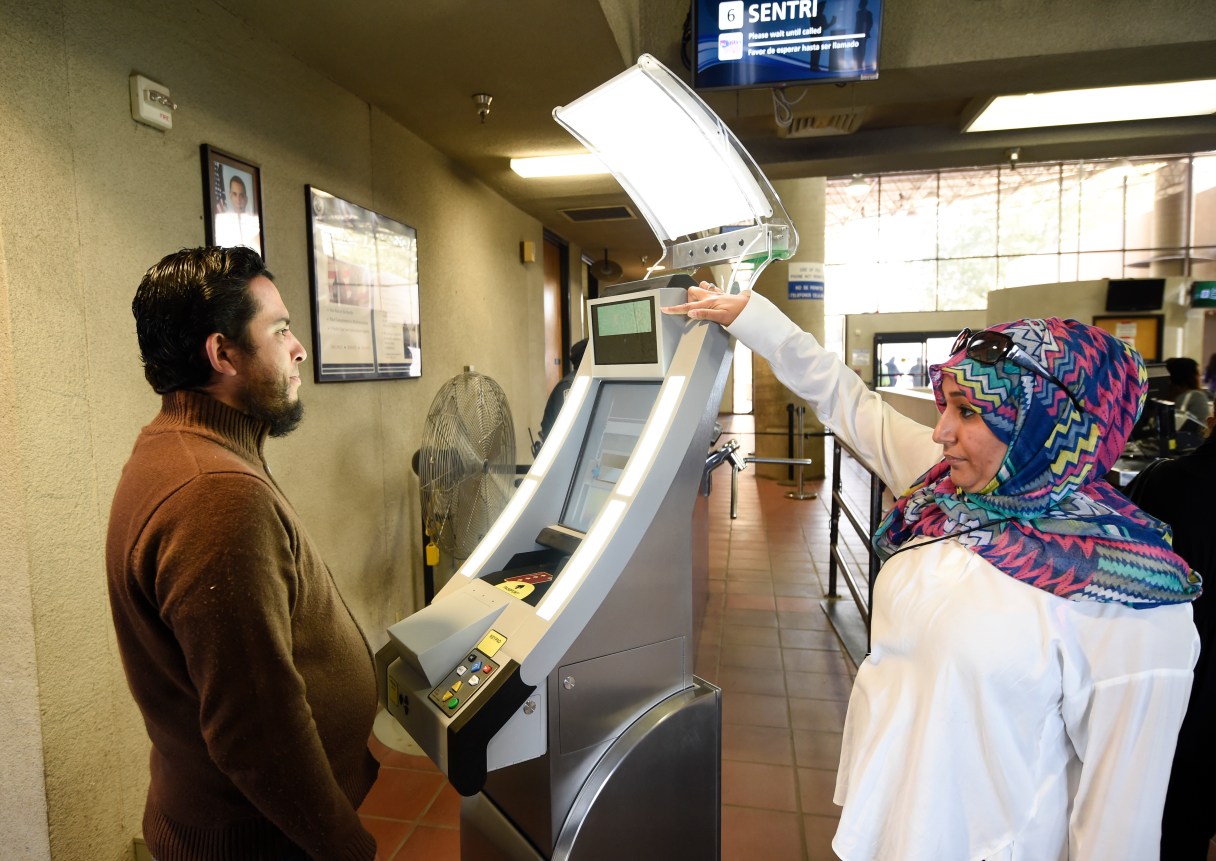
Contractor Sabira Dewji, right, helps a pedestrian crossing from Mexico into the United States at the Otay Mesa Port of Entry have his facial features and eyes scanned at a biometric kiosk Thursday, Dec. 10, 2015, in San Diego.  On Thursday, U.S. Customs and Border Protection began capturing facial and eye scans of foreigners entering the country at San Diego's Otay Mesa port of entry on foot.  (AP Photo/Denis Poroy)
Contractor Sabira Dewji, right, helps a pedestrian crossing from Mexico into the United States at the Otay Mesa Port of Entry have his facial features and eyes scanned at a biometric kiosk Thursday, Dec. 10, 2015, in San Diego. On Thursday, U.S. Customs and Border Protection began capturing facial and eye scans of foreigners entering the country at San Diego's Otay Mesa port of entry on foot. (AP Photo/Denis Poroy) Contractor Sabira Dewji, right, helps a pedestrian crossing from Mexico into the United States at the Otay Mesa Port of Entry have his facial features and eyes scanned at a biometric kiosk Thursday, Dec. 10, 2015, in San Diego. On Thursday, U.S. Customs and Border Protection began capturing facial and eye scans of foreigners entering the country at San Diego's Otay Mesa port of entry on foot. (AP Photo/Denis Poroy)

SAN DIEGO (AP) – The federal government on Thursday began collecting facial and eye scans of foreigners entering the U.S. at a busy border crossing with Mexico, a first step in one of its most ambitious efforts to track people who stay in the country illegally after their visas expire.

Up to half of the people in the U.S. illegally are believed to have overstayed their visas, but the absence of a checkout system has left authorities with no way to identify them.

In a push to change that, Customs and Border Protection began scanning foreigners entering on foot at San Diego’s Otay Mesa port of entry. In February, it will start collecting the same information on foreigners walking into Mexico through the checkpoint.

The trial run, which lasts through June, will help determine if authorities expand screening to foreigners at all land crossings on the 1,954-mile border with Mexico. Authorities will look at the accuracy of the cameras.

Congress has long demanded biometric screening such as fingerprints, facial images or eye scans from people leaving the country, but the task poses enormous financial and logistical challenges, especially at land crossings.