
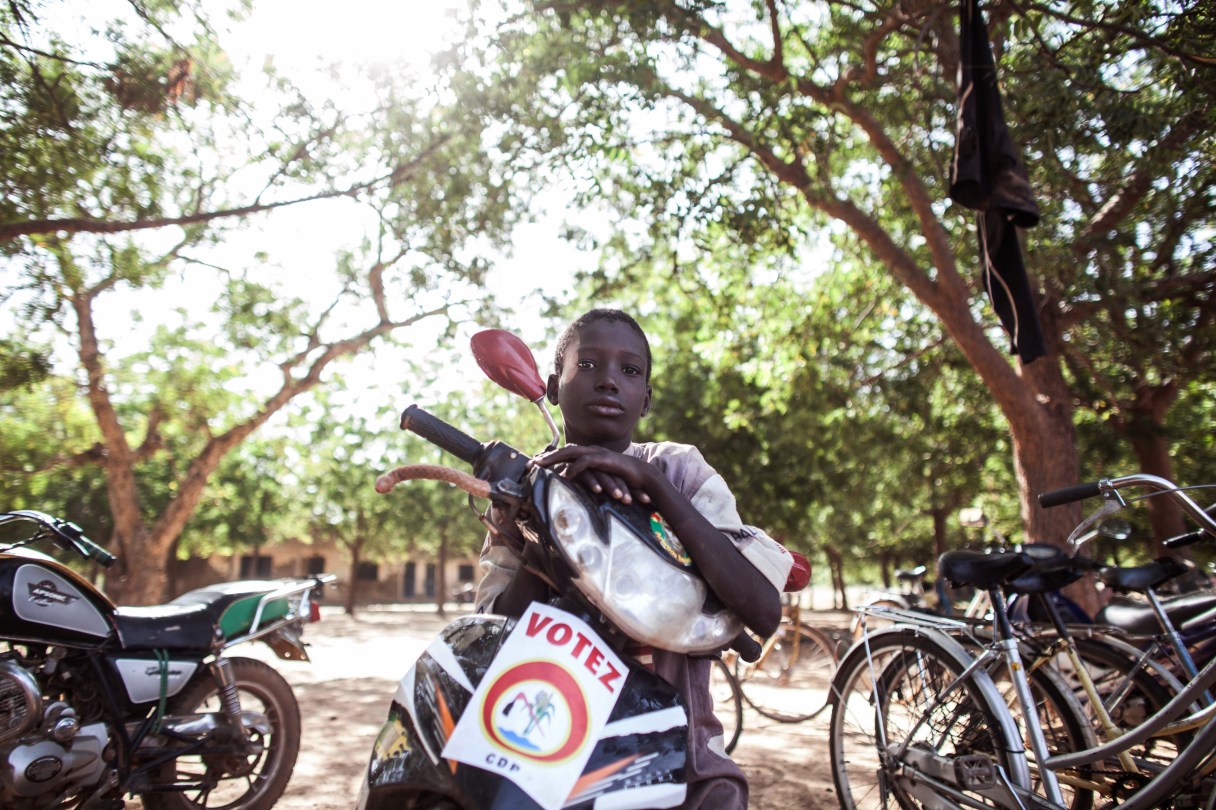
ZINIARE, Burkina Faso (AP) – During his nearly three decades in power, the hometown of Burkina Faso’s ex-president transformed from a dusty village into a fast-growing provincial capital boasting paved roads, a private presidential estate and even a zoo with hippos and giraffes.
Last year, however, longtime strongman Blaise Compaore resigned amid protests that brought hundreds of thousands of Burkinabe into the streets, furious over the president’s attempt to circumvent constitutional term limits and stay in office. The October 2014 uprising ushered in a transition that ends with presidential and legislative elections on Sunday, the most hotly contested in the history of this West African nation.
But as most of the country moves forward without Compaore, residents of Ziniare – where the ex-president’s parents were born and where he invested huge sums of money – are having a harder time letting go. “Physically, he is gone, but we are still proud of him,” said Adama Ouedraogo, who sells kebabs just a few meters from the local headquarters of Compaore’s political party. “He still matters to us.”
Compaore is currently keeping a low-profile in neighboring Ivory Coast, which took him in after he fled last year. In April, Burkina Faso’s transitional government passed a new electoral code barring anyone who supported Compaore’s plans to change the constitution from running, a rule that excluded his party’s candidate.
The changed political landscape has blown open the presidential vote that in past years was dominated by Compaore, who never won with less than 80 percent. His party could still also take many seats in the legislative election but the contest will be much more competitive this time around.