
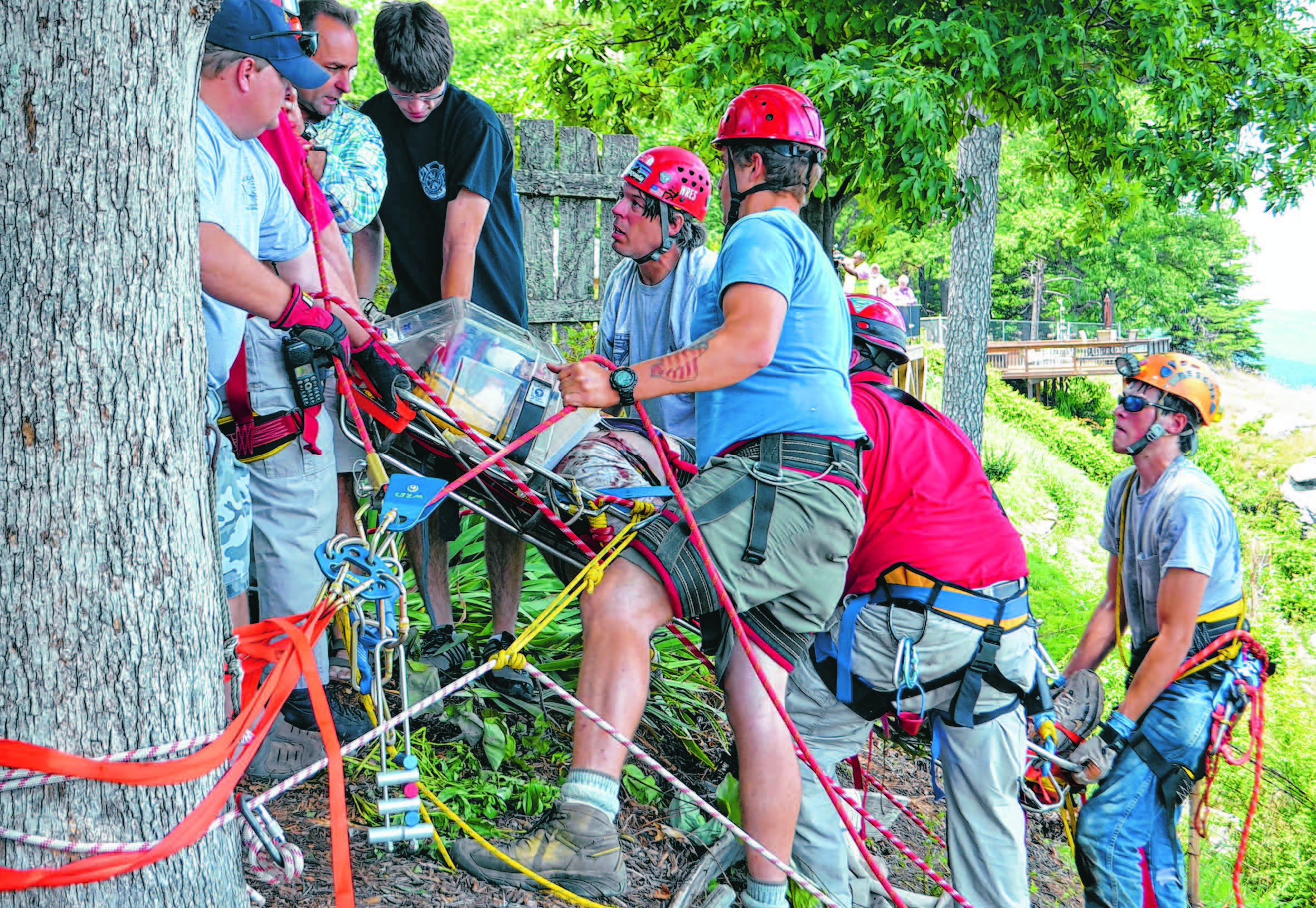
Hundreds of doctors, nurses, first responders and health professionals will attend the Southeastern Wilderness Medicine Conference later this month to take their life-saving skills to the great outdoors.
The intrepid among us seek out the most extreme, exquisite corners of the Earth for recreation, adventure and the colossal task of testing the bounds of Mother Nature. But often, the most magnificent outdoor venues on the planet are far off the beaten path-ever-so-distant from doctors’ offices, hospitals and emergency clinics. In the wilderness, things go wrong sometimes-there are troubles on trails, catastrophes in caverns, wounds on the water, and calamities on cliffs. Sheryl Olson expects the unexpected, and she’s always ready to lend her skillful hands and test her creativity. Take for example, last April in Nepal.
“Our group was on our way down from Everest Base Camp-we had two more days to the bottom,” describes Olson, a wilderness medicine expert and adventure guide with more than 30 years of critical care nursing experience. “A guy came over to me and said he thought he had broken his foot. After examining it, I agreed that his foot was fractured.” The climb down from Everest’s Base Camp is a difficult, often treacherous trek, but Olson, confident in her training and skills, believed she could get the hiker down the world’s highest mountain without calling for emergency medics. “I drew on my knowledge of wilderness medicine-problem solving and dealing with injuries in remote environments,” she says. “I used a Lidocaine patch to decrease the pain locally and the next morning I taped his foot in such a way that he could still wear a shoe and put pressure on his foot. He walked out.”
Olson will join several other wildlife medicine experts-so called, masters of disasters-in Chattanooga later this month to share their stories and expertise at the 9th Southeastern Wilderness Medicine Conference. From managing breaks and dislocations in the backcountry to rescuing the injured in water to surviving wild animal encounters to saving lives in caves, the conference offers close to specialized workshops and superlative lectures geared primarily toward health care professionals who spend time in the outdoors.
“Wilderness medicine is medical care far from definitive care,” says Chris Moore, M.D., founder and program director of the conference. “At its core is a dependence on basic clinical judgment and a unique reliance on improvisation. And that’s what the conference is all about-giving people the tools and knowledge to care for themselves and others out in a wilderness setting when they don’t have access to X-ray machines and other diagnostic and life-saving equipment.”