
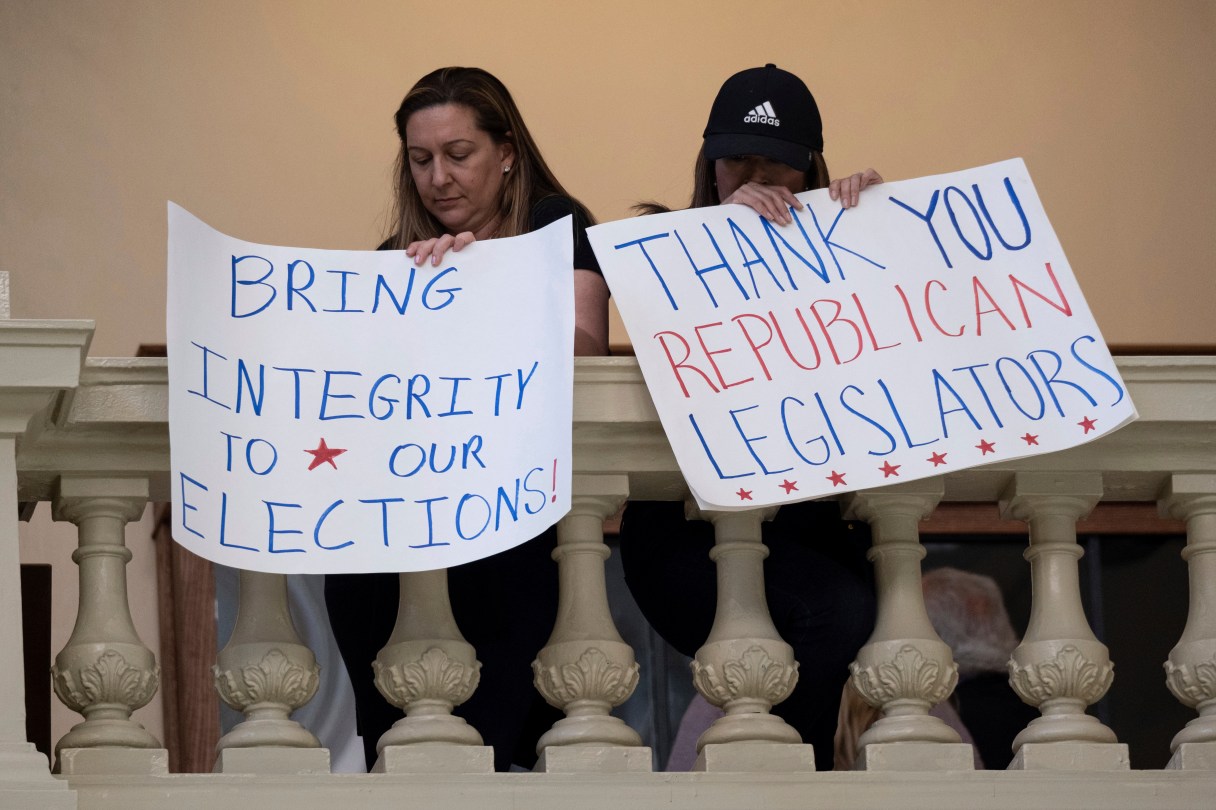
There has been outrage and criticism of the new voting laws in Georgia and of similar efforts in other states. These laws would likely make voting more difficult, including by reducing options for voting and making it harder to use an absentee ballot. My research indicates, however, that such measures may not change election results much, if at all.
Most U.S. voting districts at both the congressional and state legislative levels are safely controlled by one party or the other. Laws that slightly reduce the number of potential voters are unlikely to shift power in Congress and state legislatures significantly.
In addition, my analysis has found that Republican-led partisan gerrymandering efforts actually work against voter suppression measures, by packing Democratic voters into relatively few districts that the party wins easily. That means Democrats have fewer competitive seats to potentially lose, even when some of their supporters are kept from the polls.
Voting laws change
Voting access laws have changed considerably since the end of the Jim Crow era in the mid-20th century. The American public then was far more willing to accept overt voter suppression requirements, like poll taxes and literacy tests, which were widely used in Southern states to keep Blacks from voting.