
Monday, November 16, 2026Nov 16

Rescuers in Lebanon recover more bodies days after blast

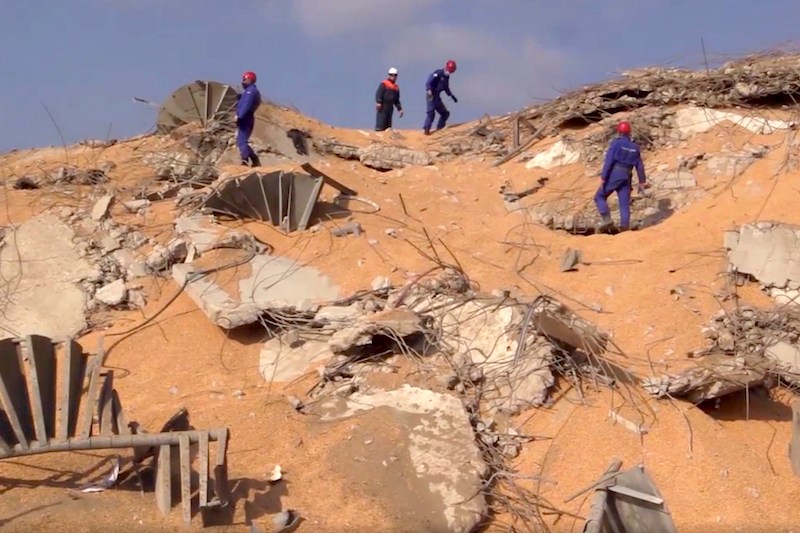
In this photo taken from footage provided by the Russian Emergency Situations Ministry press service, Russian Emergency Situations personnel walk on the site of the explosion in the port of Beirut, Lebanon, on Thursday, Aug. 6, 2020. Russia's emergency officials say the country sent five planeloads of aid to Beirut after an explosion in the Lebanese capital's port killed at least 100 people and injured thousands on Tuesday. Russia's Ministry for Emergency Situations sent rescuers, medical workers, a makeshift hospital and a lab for coronavirus testing to Lebanon. (AP Photo/Ministry of Emergency Situations press service via AP)

BEIRUT (AP) – Rescue teams were still searching the rubble of Beirut’s port for bodies on Friday, nearly three days after a massive explosion sent a wave of destruction through Lebanon’s capital, killing nearly 150 people and wounding thousands.

At least four more bodies have been recovered in the last 24 hours, and authorities say the death toll has risen to 149. The blast shredded a large grain silo, devastated neighborhoods near the port and left several city blocks littered with glass and rubble.

French and Russian rescue teams with dogs were searching the port area on Friday, the day after French President Emmanuel Macron paid a visit to the site, promising aid and vowing to press for reforms by Lebanon’s long-entrenched political leaders.

The blast was apparently caused by the ignition of 2,750 tons of ammonium nitrate, a chemical used for explosives and fertilizer, that had been stored at the port since it was confiscated from an impounded cargo ship in 2013.

The government has launched an investigation as it has come under mounting criticism, with many Lebanese blaming the catastrophe on negligence and corruption.