
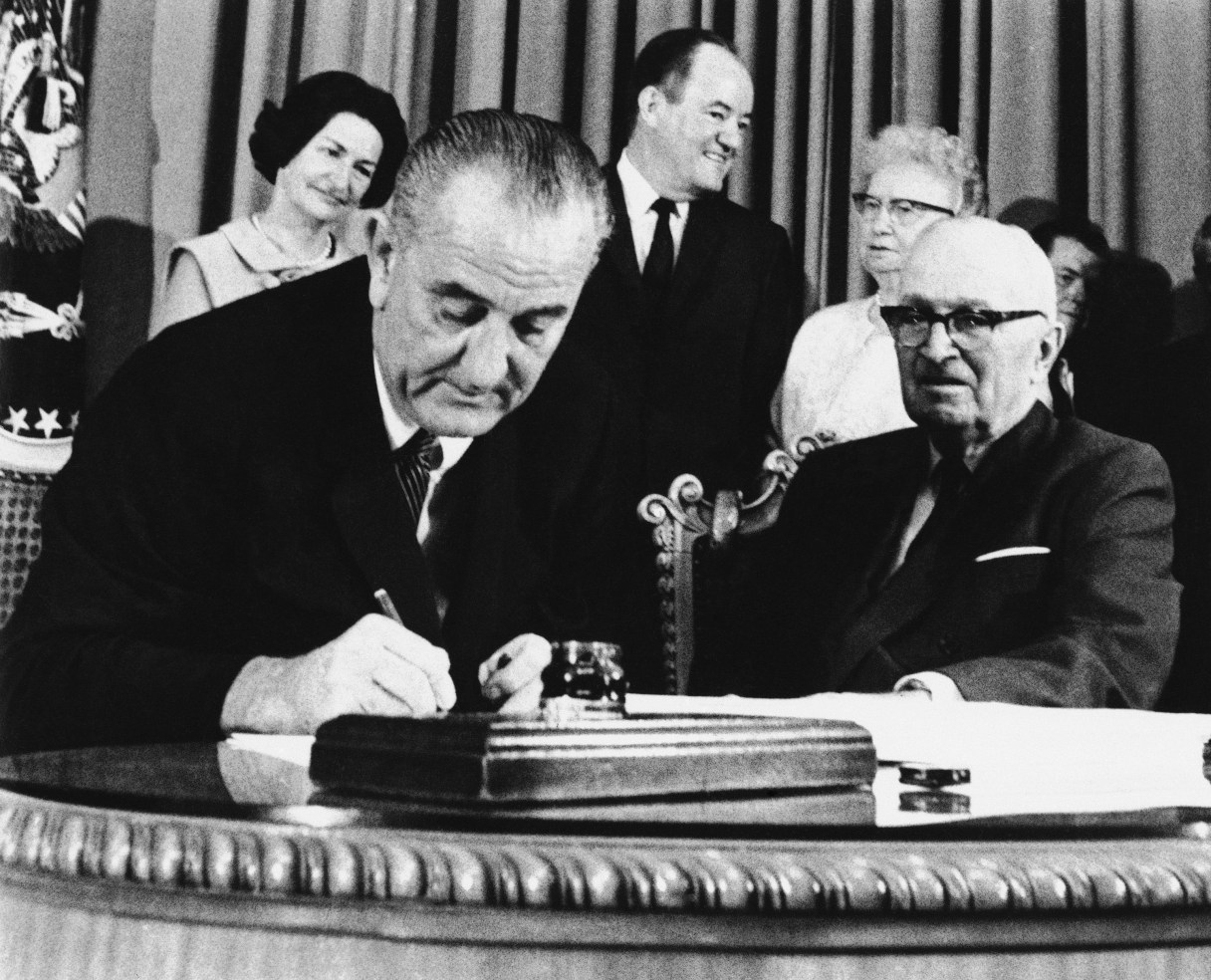
WASHINGTON (AP) – When President Lyndon B. Johnson signed Medicare and Medicaid into law on July 30, 1965, Americans 65 and older were the age group least likely to have health insurance.
“No longer will older Americans be denied the healing miracle of modern medicine,” Johnson said at the signing ceremony. “No longer will illness crush and destroy the savings that they have so carefully put away over a lifetime so that they might enjoy dignity in their later years. No longer will young families see their own incomes, and their own hopes, eaten away simply because they are carrying out their deep moral obligations to their parents, and to their uncles, and their aunts.”
Fifty years later, virtually all seniors have health insurance, a higher coverage rate than younger people. Presidents and lawmakers of both political parties have collaborated to expand Medicare benefits.
Medicaid, the federal-state program for low-income and disabled people, got off to a slower start, but now covers an estimated 69 million people, making it the largest government health program. It pays for nearly half of U.S. births and a little over half of the nation’s nursing home bill.
But the long-range financial outlook for both programs remains cloudy. A mix of tax increases, benefit cuts, and reductions in payments to service providers will be needed sooner or later, experts say. The longer policymakers wait, the more wrenching the changes.