
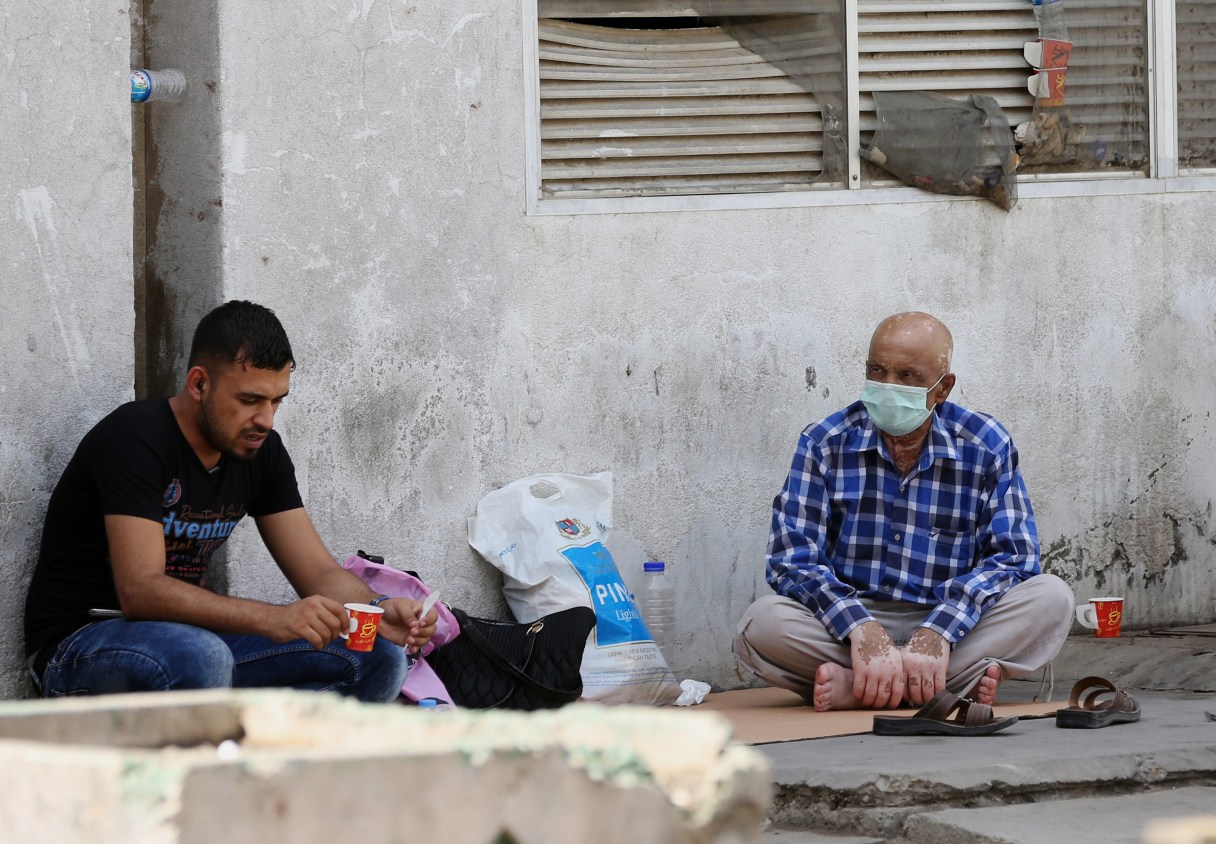
BAGHDAD (AP) – Iraq, which is already facing a prolonged battled against the Islamic State group and mass protests against government corruption and inefficiency, is now struggling with a new challenge: a growing cholera outbreak.
As of Tuesday, at least 54 cases have been confirmed in Baghdad, as well as in the southern provinces of Najaf, Diwaniyah, Babil and Samawah, Health Ministry spokesman Rifaq al-Araji told The Associated Press. At least 20 cholera cases were confirmed in the town of Abu Ghraib alone, which lies on the border between Baghdad province and Anbar province – much of which is under the control of the Islamic State group. Four women were reported to have died in Abu Ghraib, but al-Araji said authorities have not yet confirmed if the deaths were cholera-related.
The cause lies partially with Iraq’s antiquated and badly maintained water and sewage systems, and the outbreak comes at a time when Prime Minister Haider al-Abadi’s government is already struggling with large demonstrations protesting the government’s inability to provide security or basic public services.
In a bid to contain public anger, al-Abadi has ordered emergency measures be taken, particularly in the Abu Ghraib area. These include conducting daily water-quality tests, distributing bottled water to families displaced from their homes due to fighting with IS and setting up additional water purification stations. Iraq’s Education Ministry announced that the opening of primary schools would be delayed to Oct. 18, “to give the Health Ministry the chance to complete precautionary measures in all schools.”
Panicked Iraqis have been rushing to government-run medical centers, since the outbreak was first announced in mid-September, to receive free water purification tablets. In Baghdad’s eastern Sadr City neighborhood, about 50 residents visit the local medical clinic per day to pick up the tablets, the clinic’s director, Dr. Maitham Jamal Abbass, said, adding that his teams have been testing the drinking water and taking stool samples from those exhibiting possible cholera symptoms, such as diarrhea.