
Friday, November 13, 2026Nov 13

Dollars can be a dirty word at banks on US-Mexico border

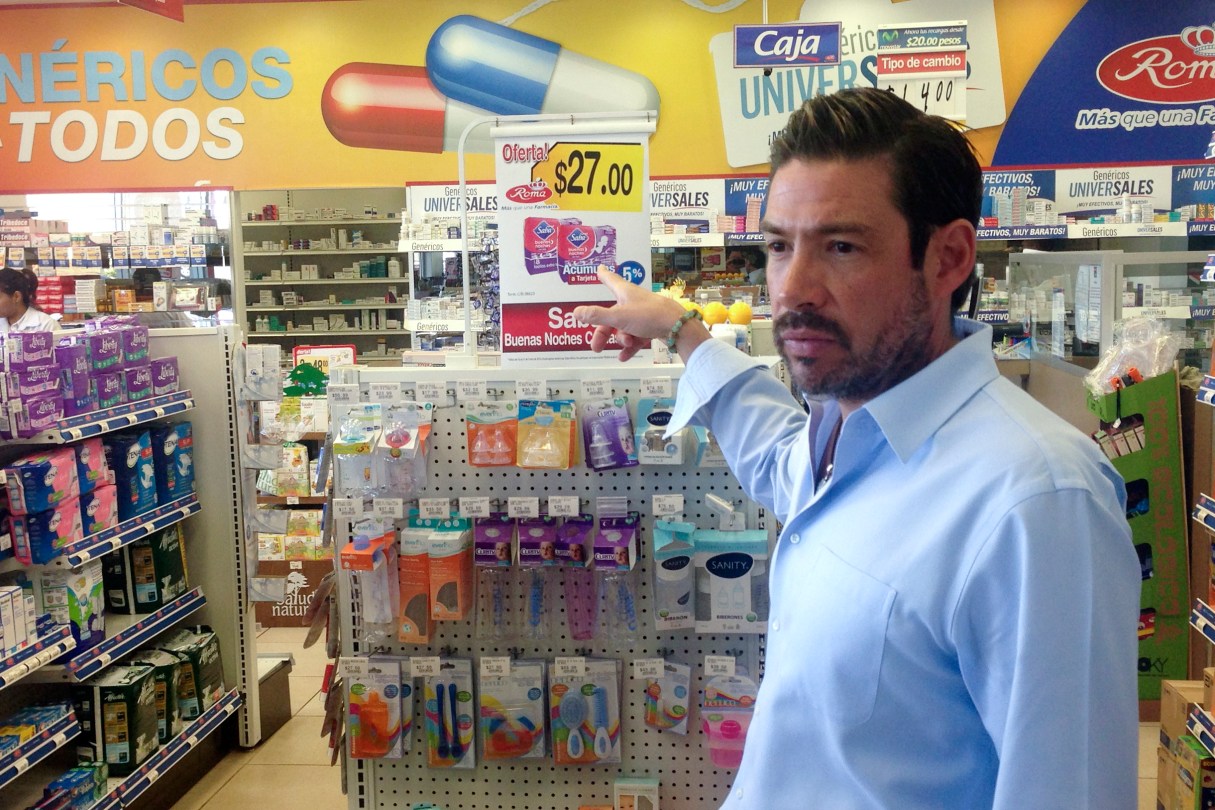
In this Jan. 27, 2015 image, Roberto Castro, chief executive officer of Farmacias Roma, gestures inside one of his locations in Tijuana, Mexico. Castro, who's customers often pay in dollars, faces tough challenges amid a clamor to crack down on money laundering. Many American banks, wary of the potential for massive penalties, have closed Mexican accounts or saddled customers with new restrictions rather than risk the chance. (AP Photo/ Elliot Spagat)
In this Jan. 27, 2015 image, Roberto Castro, chief executive officer of Farmacias Roma, gestures inside one of his locations in Tijuana, Mexico. Castro, who's customers often pay in dollars, faces tough challenges amid a clamor to crack down on money laundering. Many American banks, wary of the potential for massive penalties, have closed Mexican accounts or saddled customers with new restrictions rather than risk the chance. (AP Photo/ Elliot Spagat) In this Jan. 27, 2015 image, Roberto Castro, chief executive officer of Farmacias Roma, gestures inside one of his locations in Tijuana, Mexico. Castro, who's customers often pay in dollars, faces tough challenges amid a clamor to crack down on money laundering. Many American banks, wary of the potential for massive penalties, have closed Mexican accounts or saddled customers with new restrictions rather than risk the chance. (AP Photo/ Elliot Spagat)

SAN DIEGO (AP) – The clamor to crack down on laundering drug money was loud in 2010 when Wachovia National Bank was found to have let $110 million from Mexico be sent through its accounts. It grew two years later when HSBC Holdings PLC agreed to pay $1.9 billion to settle violations that included letting hundreds of millions of dollars from drug cartels flow through one of the world’s largest banks.

Now there is growing sentiment along the U.S.-Mexico border that vigilance has gone overboard and is hurting law-abiding businesses. American banks, wary of the potential for massive penalties, have closed Mexican accounts or saddled customers with new restrictions.

The challenge is particularly acute for Mexican companies whose customers pay dollars. In Mexico, banks refuse to take their greenbacks even after the government lifted 4-year-old caps on cash deposits of the U.S. currency in September.

Roberto Castro, chief executive of one of the largest Mexican pharmacy chains on the U.S. border, compares the approach to chemotherapy.

“You kill the bad cells but you also kill the good cells,” said Castro, whose father founded Farmacias Modernas de Tijuana SA, known as Farmacias Roma, in 1964. “They need to be more targeted in their strategies to combat money laundering.”