

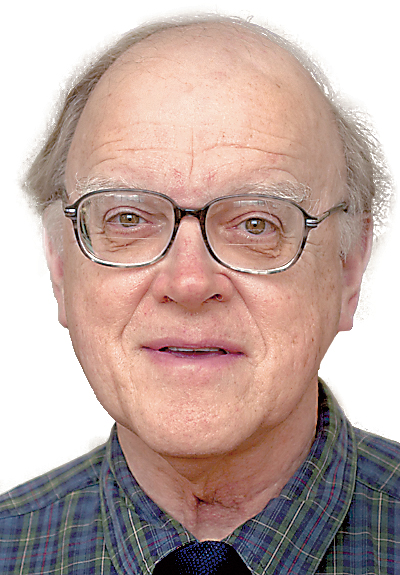
 Dr. Clif Cleaveland
I am a master at procrastination. Rather than sort through materials, I put them aside, usually in a box, deferring their fate to another day. Last week, the moment of truth arrived with a decision to open a cardboard box that had sat in a corner for years.
In a photograph from the early 1920s, my Grandfather Cleaveland sits on the running board of a Model T Ford. A sign on the building in the background reads “W.G. Cleaveland Mules.” Memories returned of his much later descriptions of the annual arrival in LaGrange, Georgia, of a trainload of mules. The animals would be paraded in a large pen at trackside. Area farmers would inspect, test and sometimes purchase an animal to pull plows or wagons loaded with produce. Many of those farms would be lost within a few years with the collapse of cotton prices. Fortunate farmers would find work in towns. The less fortunate depended upon relief from President Roosevelt’s New Deal.
My grandfather drove a Model T until his death in 1949. I rode with him to fish from the banks of the Chattahoochee River on many summer afternoons. In hindsight, I witnessed his slow descent into dementia during his final years.
In a photo from my early childhood, I gaze upward at a tri-engine aircraft parked in a field. Was this the seed for a lifelong fascination with aircraft?
A photograph of my Cub Scout den reminded me of the toll that polio took. Our den chief had a residual limp from the disease. An older sister of another Scout survived a severe attack that impaired her gait. Other affected children were sent to nearby Warm Springs for rehabilitation. Blind to the cause of the disease, public health officials ordered the closing of movie theaters and swimming pools when an outbreak occurred. One doctor in my hometown placed children in a special closet, where they were sprayed with a white powder in hopes of securing their health.
A picture from 1947 documented my arrival with classmates at Jekyll Island, purportedly a weekend retreat for members of Georgia school boy patrols. The retreat was a cover for a religious revival during which the sweating, shouting evangelist taught me a new word: “fornicator.” He addressed our restlessness with the charge: “You boys are nothing but a group of little fornicators!” The word sounded impressive until I tried it out on my parents, who taught me its meaning.
Another photograph from a junior high school art exhibition in Atlanta showed our young female art teacher, whom we considered gorgeous and whom we repeatedly asked when she planned to marry. We even suggested possible candidates for matrimony. I am the only survivor of those photographed.
In that era before most effective therapies, disease figured prominently in our lives. In addition to polio, most children endured measles and mumps. All of us suffered removal of tonsils and adenoids at age 6, a coming-of-age ritual with little justification. Poorer classmates suffered from severe dental caries. The addition in later years of fluoride to drinking water would slowly correct this epidemic.
Until sulfa drugs and penicillin arrived, strep throats could only be treated symptomatically. We did not understand the linkage of these infections to scarlet fever and rheumatic fever.
Bronchitis usually resulted in the application of a smelly, stinging mustard plaster to our chests, a folk remedy with no proven efficacy.
Sudden onset of diabetes in a seventh-grade classmate almost ended her life and generated a fear of that disease in the rest of us.
The mother of a friend died in childbirth. Acute leukemia quickly killed another mother. Slowly, the idea of a medical career formed from the notion of doing something about the physical distress that I saw around me.
Two classmates purportedly killed themselves in later years. Another died while scuba diving.
The only illicit substances for children were tobacco and alcohol.
Photographs, birthday cards, letters and school publications ignited memories and questions of “why?” and “why not me?”
Three hours later, I returned almost every item to the box. Someone else will have to determine the fate of these relics.
Clif Cleaveland, M.D., is a retired internist and former president of the American College of Physicians. Email him at ccleaveland@timesfreepress.com.