
WASHINGTON (AP) – The Obama administration dismissed Moscow’s ban on Western food imports as trivial to the U.S. but warned it would hurt Russia’s own population, drawing a moral contrast in an escalating diplomatic dispute with the former Cold War adversary.
Hours after Russia announced the prohibition in retaliation for U.S. and European sanctions over Ukraine, the White House on Thursday dispatched top administration officials to argue that by banning most food imports, Russia was effectively sanctioning its own people. That makes for “cruel irony” considering that the impact on the American economy will likely be insignificant, said David Cohen, the Treasury under secretary in charge of economic sanctions.
“What the Russians have done here is limit the Russian people’s access to food,” Cohen told reporters. “We don’t do that. Our law doesn’t allow us to do that.”
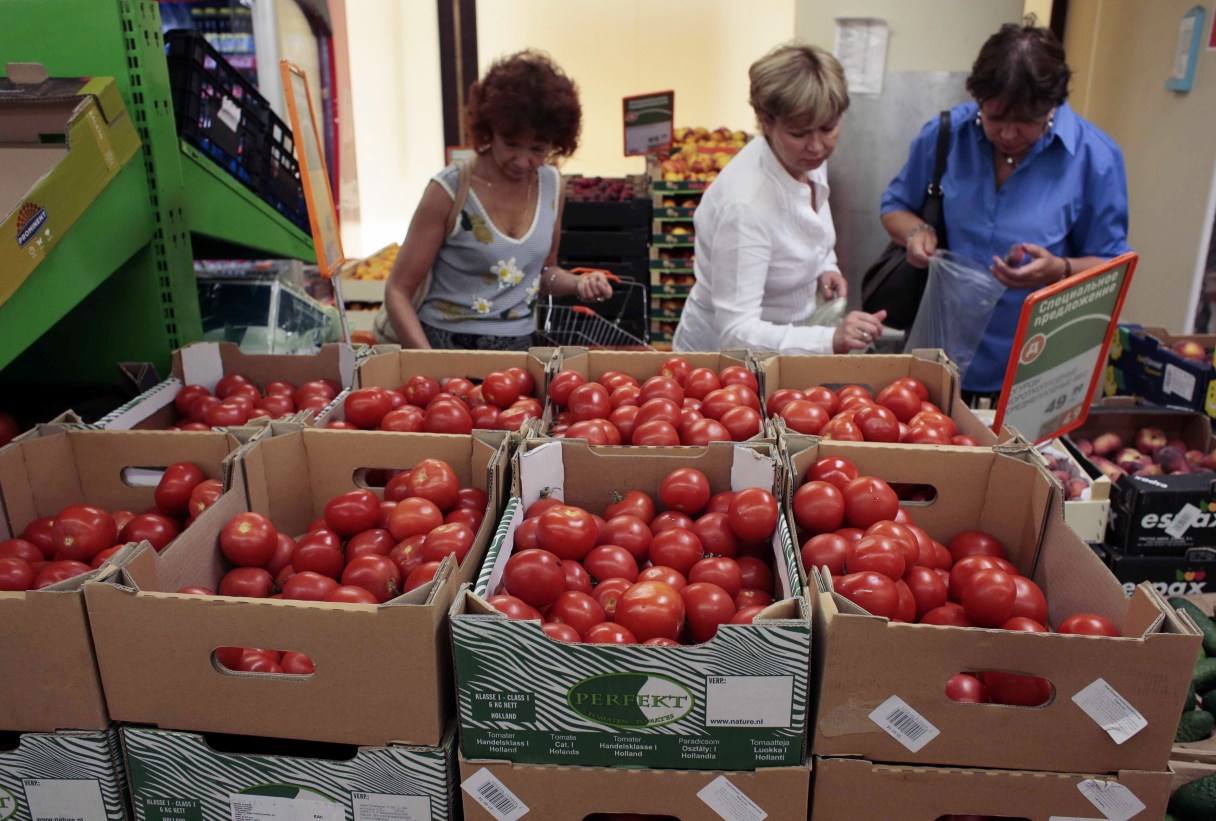
Russia’s yearlong ban, announced Thursday by a somber Prime Minister Dmitry Medvedev, covers meat, fish, fruit, vegetables and milk products from the U.S., the European Union and a handful of other Western nations. The economic sanctions levied by the West are aimed at persuading Russia to stop fueling dissent by separatists in eastern Ukraine.
Jason Furman, the chairman of the White House’s Council of Economic Advisers, shrugged off the import ban’s impact as negligible, in contrast to Western sanctions on Russian individuals, businesses and economic sectors that he said have sent investors fleeing Russia and made a weak Russian economy even weaker. That’s because there’s “a very large asymmetry between the U.S. economy – which is a large, strong, well-diversified economy – and the Russian economy – which is a much smaller, weaker, more poorly diversified economy,” Furman said.