
Monday, November 16, 2026Nov 16

Fears of ‘Wild West’ as COVID-19 blood tests hit the market

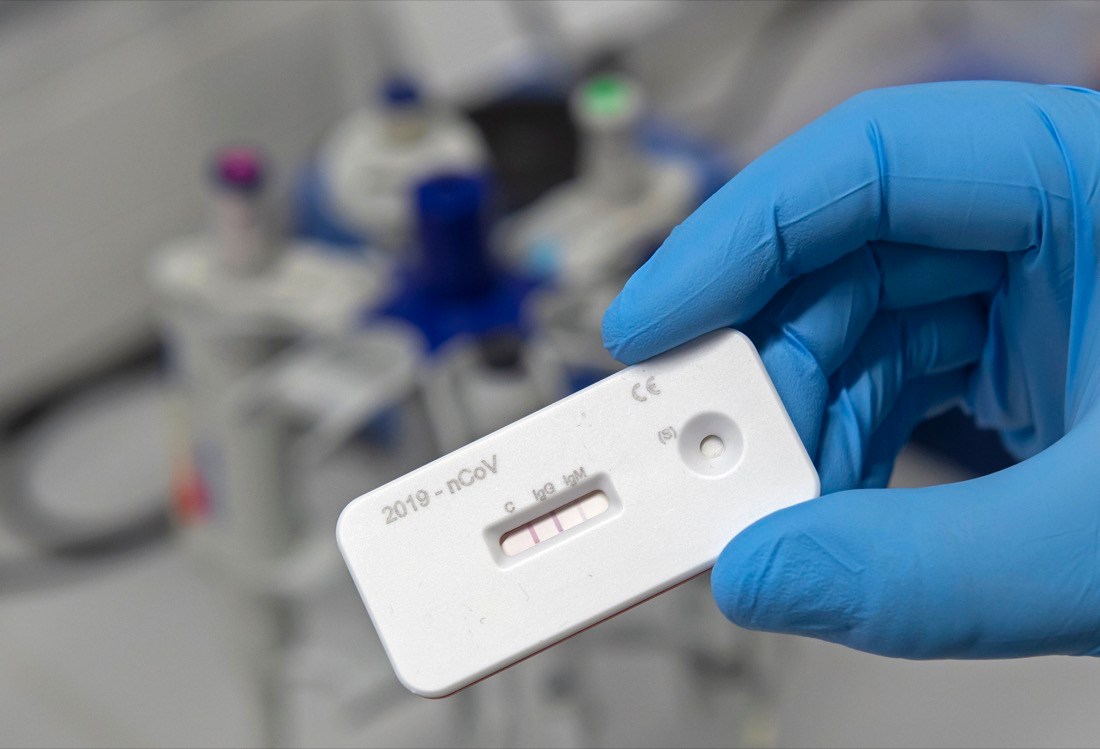
A scientist presents an antibody test for coronavirus in a laboratory of the Leibniz Institute of Photonic Technology (Leibniz IPHT) at the InfectoGnostics research campus in Jena, Germany, Friday, April 3, 2020. An international team of researchers with the participation of the Jena Leibniz Institute of Photonic Technology (Leibniz IPHT) has developed a rapid antibody test for the new coronavirus. By means of a blood sample, the test shows within ten minutes whether a person is acutely infected with the SARS-CoV-2 virus (IgM antibody) or already immune to it (IgG antibody). The strip test is manufactured by the diagnostics company Senova in Weimar and is already on the market. For most people, the new coronavirus causes only mild or moderate symptoms, such as fever and cough. For some, especially older adults and people with existing health problems, it can cause more severe illness, including pneumonia. (AP Photo/Jens Meyer)

WASHINGTON (AP) – Blood tests for the coronavirus could play a key role in deciding whether millions of Americans can safely return to work and school. But public health officials warn that the current “Wild West” of unregulated tests is creating confusion that could ultimately slow the path to recovery.

More than 70 companies have signed up to sell so-called antibody tests in recent weeks, according to U.S. regulators. Governments around the world hope that the rapid tests, which typically use a finger-prick of blood on a test strip, could soon ease public restrictions by identifying people who have previously had the virus and have developed some immunity to it.

But key questions remain: How accurate are the tests, how much protection is needed and how long will that protection last.

The blood tests are different from the nasal swab-based tests currently used to diagnose active COVID-19 infections. Instead, the tests look for blood proteins called antibodies, which the body produces days or weeks after fighting an infection. The same approach is used for HIV, hepatitis, Lyme disease, lupus and many other diseases.

Because of the relative simplicity of the technology, the Food and Drug Administration decided to waive initial review of the tests as part of its emergency response to the coronavirus outbreak.