
Monday, November 16, 2026Nov 16

Bangladesh restricts Rohingya refugees, starts immunization

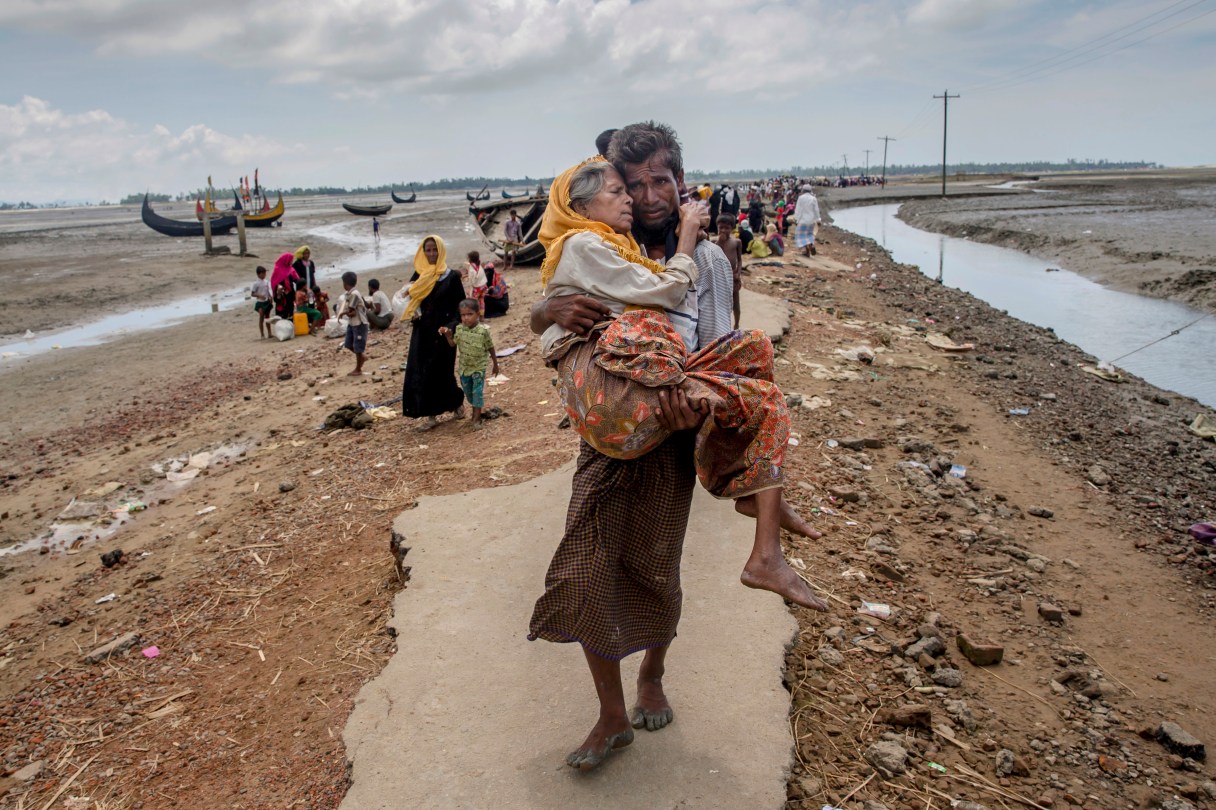
A Rohingya Muslim man Abdul Kareem walks towards a refugee camp carrying his mother Alima Khatoon after crossing over from Myanmar into Bangladesh, at Teknaf, Bangladesh, Saturday, Sept. 16, 2017. United Nations agencies say an estimated 409,000 Rohingya Muslims have fled to Bangladesh since Aug. 25, when deadly attacks by a Rohingya insurgent group on police posts prompted Myanmar's military to launch "clearance operations" in Rakhine state. Those fleeing have described indiscriminate attacks by security forces and Buddhist mobs. (AP Photo/Dar Yasin)

COX’S BAZAR, Bangladesh (AP) – Bangladeshi authorities are trying to restrict the movement of Muslim Rohingya refugees fleeing violence in Myanmar into crowded border camps and have started immunizing tens of thousands of children against diseases.

Bangladesh has been overwhelmed with more than 400,000 Rohingya who fled their homes in the last three weeks amid a crisis the U.N. describes as ethnic cleansing. Prime Minister Sheikh Hasina, wo has lambasted Myanmar for “atrocities,” left Dhaka to address the annual U.N. gathering in New York.

Abdus Salam, a doctor in a state-run hospital in Cox’s Bazar district, says that some 150,000 children will be immunized over seven days for measles, rubella and polio. U.N. says there are some 240,000 children in dire conditions.

Police meanwhile are checking that the refugees don’t spread out to nearby towns.