
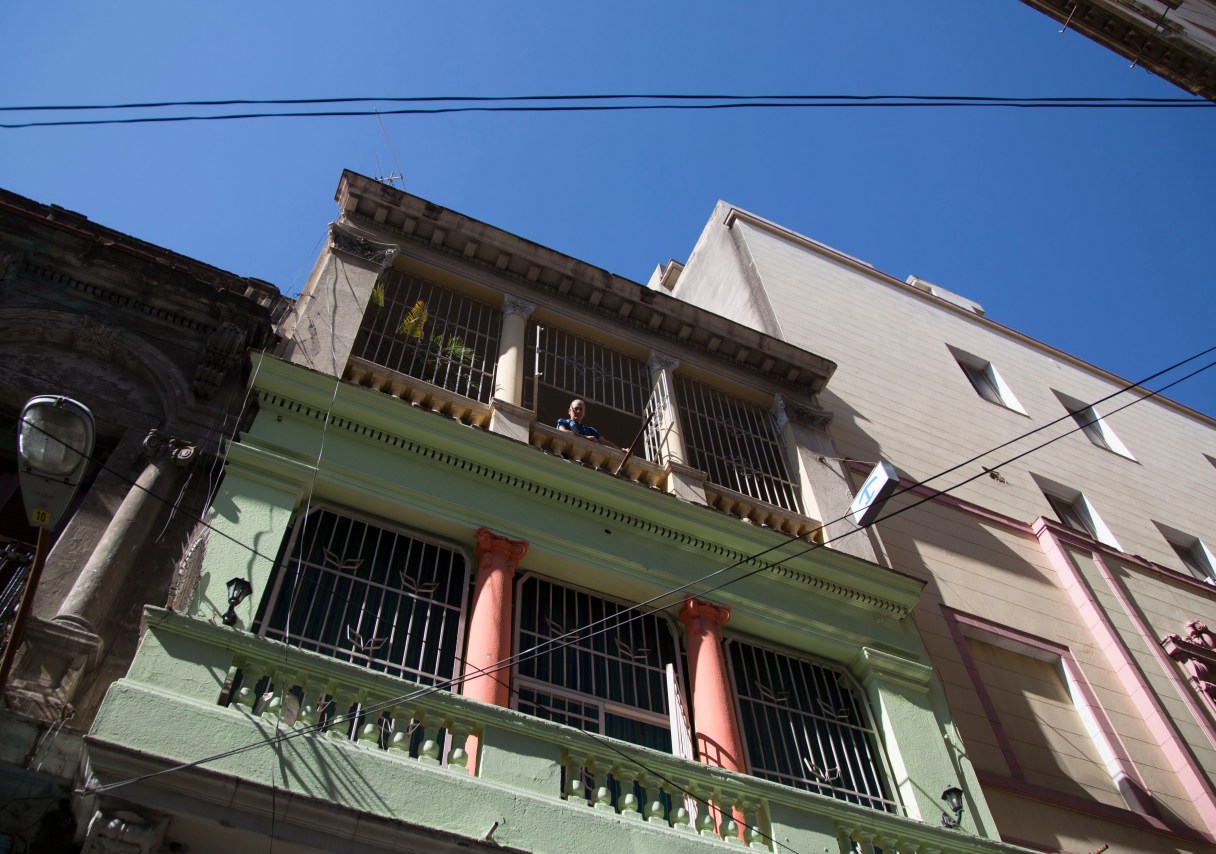
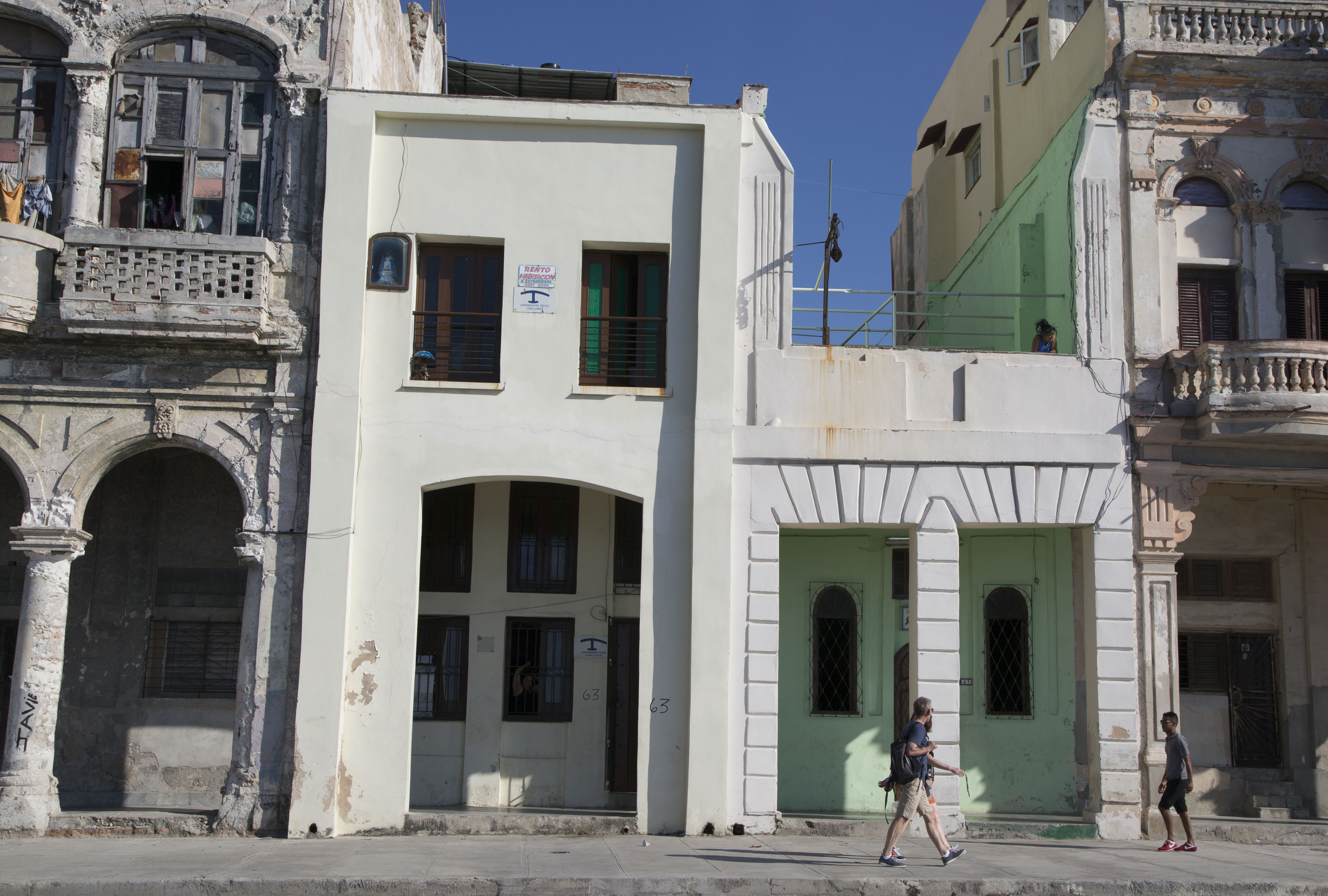
 Tourists walk beside two privately owned houses with rooms for rent in Havana, Cuba, Wednesday, April 1, 2015. The wildly popular online home-sharing service Airbnb will allow American travelers to book lodging in Cuba starting Thursday in the most significant U.S. business expansion on the island since the declaration of detente between the two countries late last year. (AP Photo/Desmond Boylan)
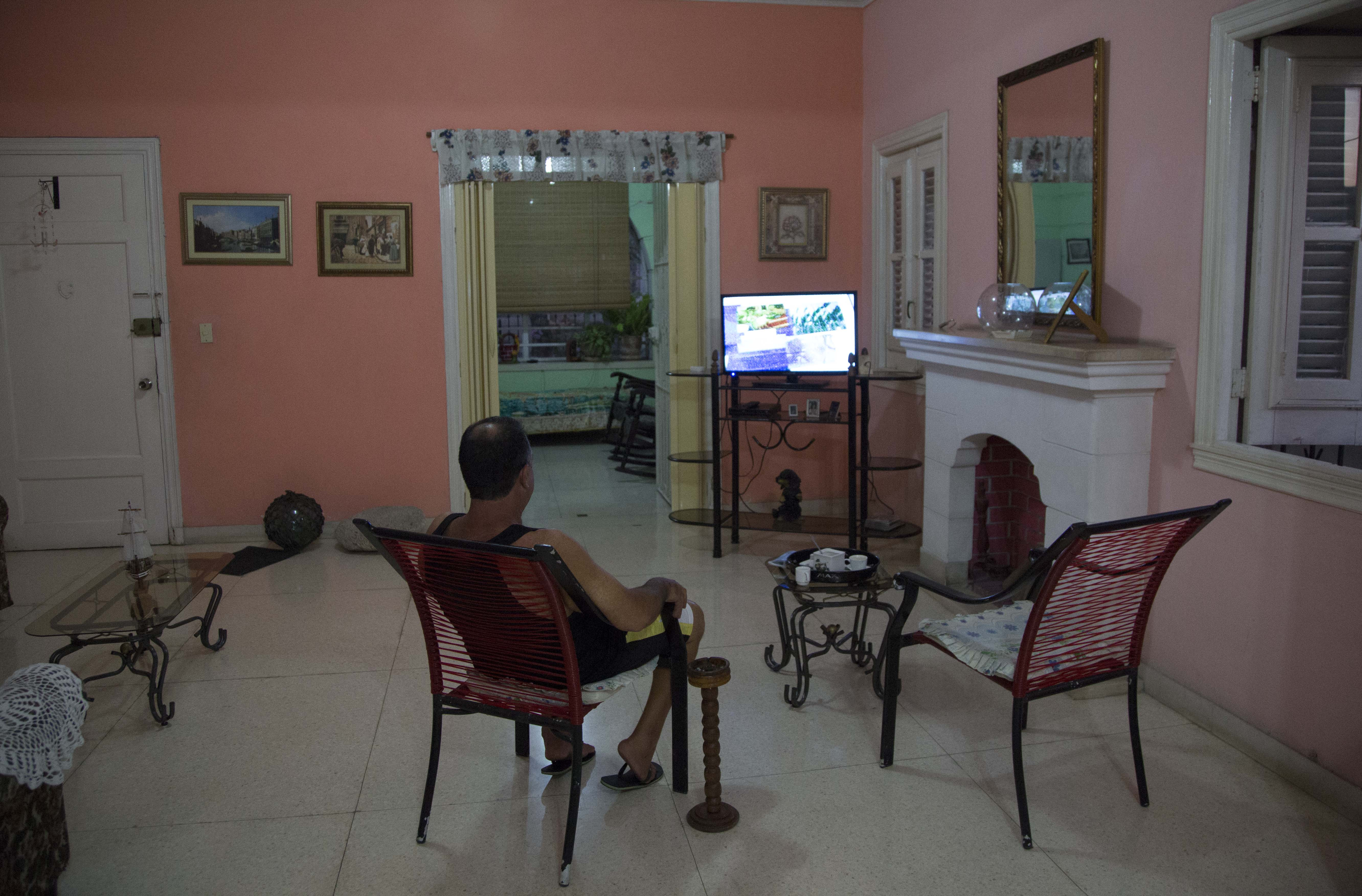 A home owner sits in his living room at his home with rooms for rent in Havana, Cuba, Wednesday, April 1, 2015. The wildly popular online home-sharing service Airbnb will allow American travelers to book lodging in Cuba starting Thursday in the most significant U.S. business expansion on the island since the declaration of detente between the two countries late last year. (AP Photo/Desmond Boylan)
HAVANA (AP) – The popular online home-rental service Airbnb is allowing American travelers to book lodging in Cuba starting Thursday in the most significant U.S. business expansion on the island since the declaration of detente between the two countries late last year.
For a half-century, the U.S. trade embargo has blocked such businesses from entering the Cuban market. In January, however, the Obama administration loosened a series of restrictions on U.S. business in an attempt to encourage the growth of the island’s small private sector.
Airbnb searches for “Cuba” now turn up more than 1,000 properties across the island, with 40 percent in Havana and the rest in tourist destinations such as Cienfuegos a few hours away on the southern coast. The company has been sending teams of representatives to Cuba for three months to sign up home owners, and plans to expand steadily in coming months.
“We believe that Cuba could become one of Airbnb’s biggest markets in Latin America,” said Kay Kuehne, regional director for Airbnb, the website and mobile app that allows users to book rooms in more than 1 million private homes around the world. “We are actually plugging into an existing culture of micro-enterprise in Cuba. The hosts in Cuba have been doing for decades what we just started doing seven years ago.”
One of the most developed and important elements of Cuba’s entrepreneurial sector is a network of thousands of privately owned rooms and houses for tourists. Starting in the post-Soviet economic crisis of the 1990s as homey, bed and breakfast-style alternatives to Cuba’s generally grim state-run hotels, “casas particulares,” or private homes, have expanded into an industry with options ranging from small apartments in central Havana to multi-room beach houses with top-notch food and maid service.