
Thursday, November 12, 2026Nov 12

NATO’s outgoing chief: ‘We cut fat, built muscle”

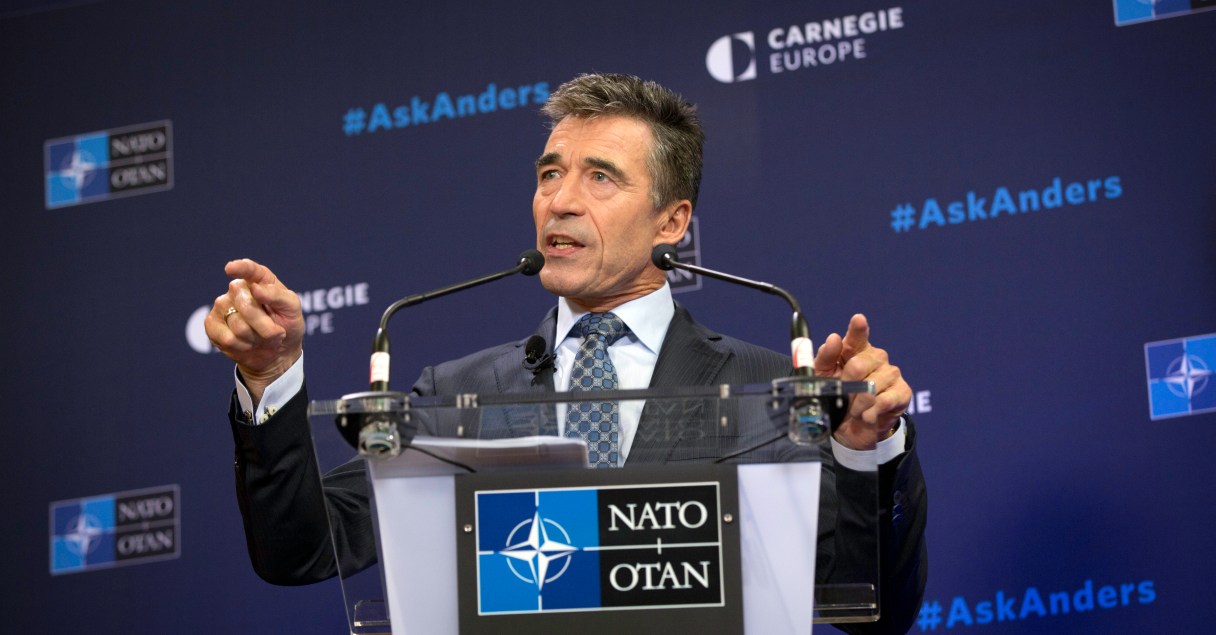
NATO Secretary General Anders Fogh Rasmussen speaks during a Carnegie Europe think tank event at the Bibliotheque Solvay in Brussels on Monday, Sept. 15, 2014. In a farewell speech as NATO's top civilian official, Rasmussen said the alliance finds itself on the front lines of a geopolitical division between "tolerance and fanaticism," and "democracy and totalitarianism." Rasmussen's five-year term as NATO secretary general comes to a close at the end of the month. (AP Photo/Virginia Mayo)
NATO Secretary General Anders Fogh Rasmussen speaks during a Carnegie Europe think tank event at the Bibliotheque Solvay in Brussels on Monday, Sept. 15, 2014. In a farewell speech as NATO's top civilian official, Rasmussen said the alliance finds itself on the front lines of a geopolitical division between "tolerance and fanaticism," and "democracy and totalitarianism." Rasmussen's five-year term as NATO secretary general comes to a close at the end of the month. (AP Photo/Virginia Mayo) NATO Secretary General Anders Fogh Rasmussen speaks during a Carnegie Europe think tank event at the Bibliotheque Solvay in Brussels on Monday, Sept. 15, 2014. In a farewell speech as NATO's top civilian official, Rasmussen said the alliance finds itself on the front lines of a geopolitical division between "tolerance and fanaticism," and "democracy and totalitarianism." Rasmussen's five-year term as NATO secretary general comes to a close at the end of the month. (AP Photo/Virginia Mayo)

BRUSSELS (AP) – When Anders Fogh Rasmussen took over at NATO, the alliance was struggling to contain a growing insurgency in Afghanistan, and some predicted it would soon follow its Cold War foe, the Soviet-led Warsaw Pact, into the dustbin of history.

Five years later, as Rasmussen wraps up his tenure as the 12th secretary general in NATO’s history, the U.S., Canada and their European allies are again squaring off against the Russians, and must confront a more diverse and bewildering array of threats to Western security than ever.

“We should be prepared to address all of them, whether it is a conventional threat against our territory, or what I would call hybrid warfare as we have seen in Ukraine – a sophisticated Russian mix of conventional military operations and information and disinformation campaigns – or terrorism as we see it in Iraq, or cyber-attacks or missile attacks,” Rasmussen told The Associated Press in a farewell interview.

“All this is part of today’s security environment and NATO must stand ready to protect our societies and our populations against all those threats,” said Rasmussen.

The 61-year-old Dane’s last day as the U.S.-led defense alliance’s top civilian official is Sept. 30. In one of his last official acts, he was scheduled to deliver a speech at the U.S. Military Academy at West Point on Tuesday.