
Friday, November 13, 2026Nov 13

Egypt’s woes erode el-Sissi’s image of invincibility

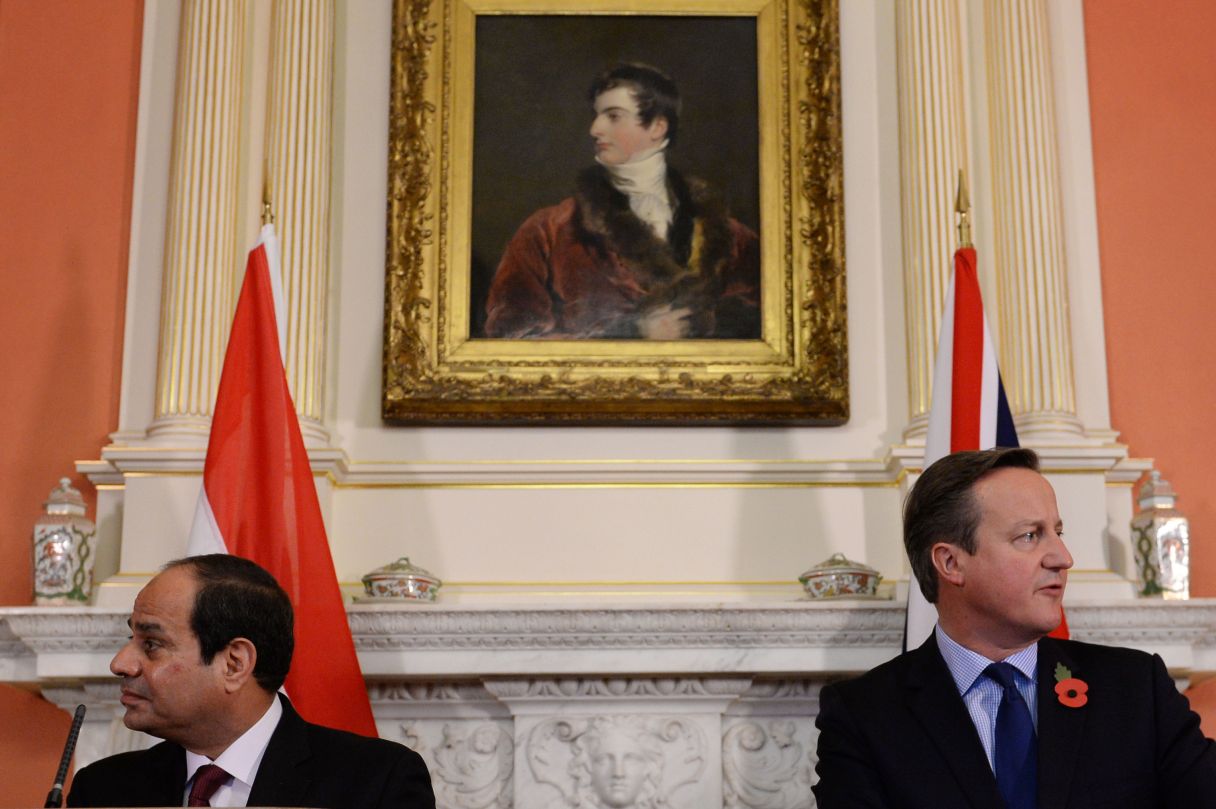
FILE - In this Thursday, Nov. 5, 2015, file photo, Britain's Prime Minister David Cameron, right, holds a news conference with Egyptian President Abdel Fattah el-Sissi, at 10 Downing Street in London, following their meeting. Startling public criticism in Egypt points to how the aura of invincibility that President Abdel-Fattah el-Sissi has long enjoy appears to be eroding. The criticisms spring from multiple fronts _ complaints over neglect by officials, an economy that hasn’t seen dramatic improvement and now worries over tourism following the crash of a Russian jet in Sinai.  (Stefan Rousseau/Pool Photo via AP, File)
FILE - In this Thursday, Nov. 5, 2015, file photo, Britain's Prime Minister David Cameron, right, holds a news conference with Egyptian President Abdel Fattah el-Sissi, at 10 Downing Street in London, following their meeting. Startling public criticism in Egypt points to how the aura of invincibility that President Abdel-Fattah el-Sissi has long enjoy appears to be eroding. The criticisms spring from multiple fronts _ complaints over neglect by officials, an economy that hasn’t seen dramatic improvement and now worries over tourism following the crash of a Russian jet in Sinai. (Stefan Rousseau/Pool Photo via AP, File) FILE - In this Thursday, Nov. 5, 2015, file photo, Britain's Prime Minister David Cameron, right, holds a news conference with Egyptian President Abdel Fattah el-Sissi, at 10 Downing Street in London, following their meeting. Startling public criticism in Egypt points to how the aura of invincibility that President Abdel-Fattah el-Sissi has long enjoy appears to be eroding. The criticisms spring from multiple fronts _ complaints over neglect by officials, an economy that hasn’t seen dramatic improvement and now worries over tourism following the crash of a Russian jet in Sinai. (Stefan Rousseau/Pool Photo via AP, File)

CAIRO (AP) – The criticism was blunt – and startling, since it came from a TV presenter on a state-owned station that, like most other media in Egypt, usually has nothing but praise for Abdel-Fattah el-Sissi, the country’s general-turned-president.

Presenter Azza el-Henawi demanded el-Sissi take action after deaths from floods in areas north of Cairo last month that many blamed on neglect of infrastructure by authorities. She said corruption was being ignored and addressed the president, saying, “As long as no one is held accountable, you will be just talking and making promises and we will get no results … This is why the people are fed up.”

El-Henawy was promptly suspended by the state broadcaster for “unprofessional conduct.”

Her outspoken comments on Nov. 1 pointed to the erosion of the aura of invincibility that el-Sissi has enjoyed. El-Sissi had seemed impervious to criticism ever since he, as military chief, led the 2013 ouster of Egypt’s first freely elected president, the Islamist Mohammed Morsi, after nationwide protests against Morsi and the political domination of the Brotherhood. El-Sissi then stormed into the presidency with a 2014 landslide election victory.

For more than two years, he has been lauded as Egypt’s savior. The media have praised his every move, telling the public that he is putting Egypt on the path of security and economic revival. He’s had virtually no political opposition, since secular political parties have largely joined the cheerleading and a fierce crackdown has crushed the Brotherhood, killing hundreds of his protesting supporters and jailing thousands more. Secular and pro-democracy activists who fueled the 2011 uprising against longtime autocrat Hosni Mubarak were not spared, with dozens jailed, mostly for breaking a law effectively banning street protests.