
Sunday, November 15, 2026Nov 15

Now Roquefort: US eyes tariffs on $2.4B in French imports

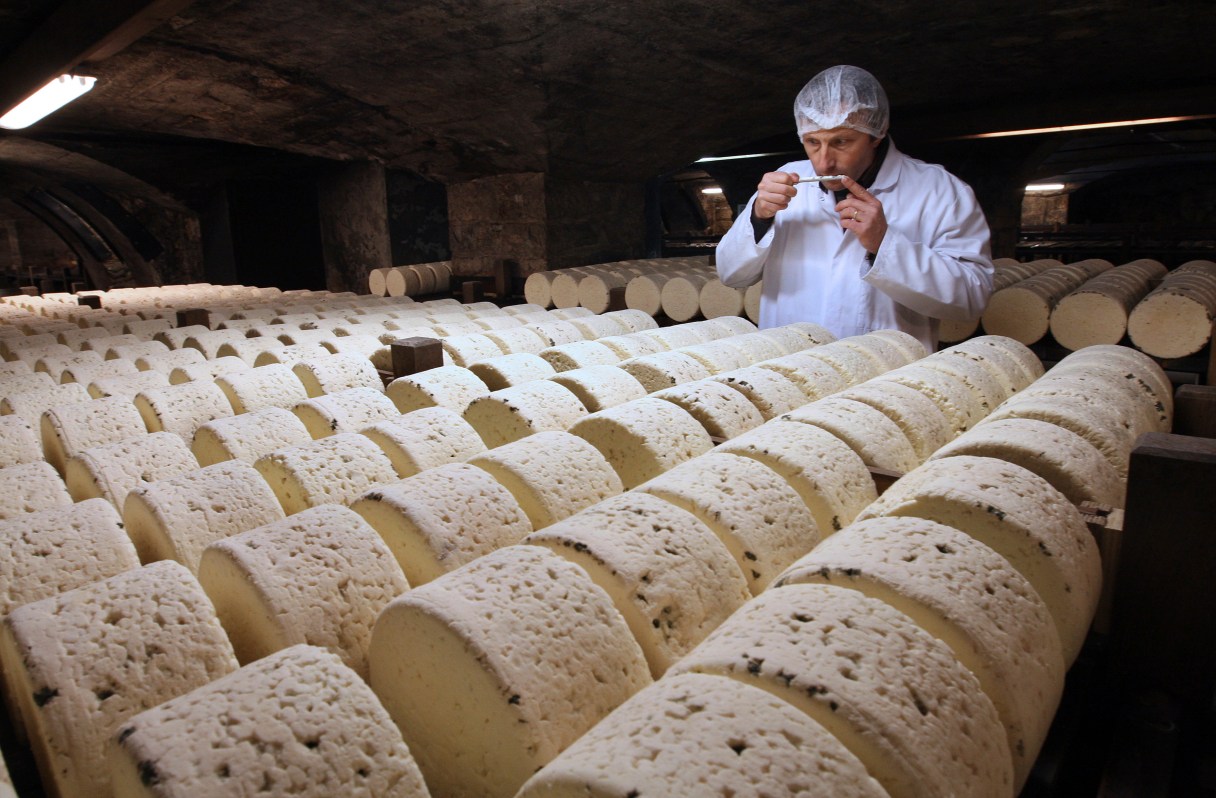
FILE - In this Jan. 21, 2009, file photo, Bernard Roques, a refiner of Societe company, smells a Roquefort cheese as they mature in a cellar in Roquefort, southwestern France. The Trump administration is proposing tariffs on up to $2.4 billion worth of French imports, from Roquefort cheese to handbags, retaliation for France's tax on American tech giants like Google, Amazon and Facebook. The Office of the U.S. Trade Representative says France's new digital services tax discriminates against U.S. companies and says that the tariffs could reach 100%.(AP Photo/Bob Edme, File)

WASHINGTON (AP) – The Trump administration is proposing tariffs on up to $2.4 billion worth of French imports – including Roquefort cheese, handbags, lipstick and sparkling wine – in retaliation for France’s tax on American tech giants like Google, Amazon and Facebook.

The Office of the U.S. Trade Representative charged Monday that France’s new digital services tax discriminates against U.S. companies. The trade office will accept public comments on the tariffs, which could hit 100%, through Jan. 6 and hold a hearing Jan. 7.

The French tax is designed to prevent tech companies from dodging taxes by putting headquarters in low-tax European Union countries. It imposes a 3% annual levy on French revenues of digital companies with yearly global sales worth more than 750 million euros ($830 million) and French revenue exceeding 25 million euros.

The U.S. also criticized the French tax for targeting companies’ revenue, not their profits, and for being retroactive.

The decision to pursue tariffs “sends a clear signal that the United States will take action against digital tax regimes that discriminate or otherwise impose undue burdens on U.S. companies,” U.S. Trade Representative Robert Lighthizer said.