
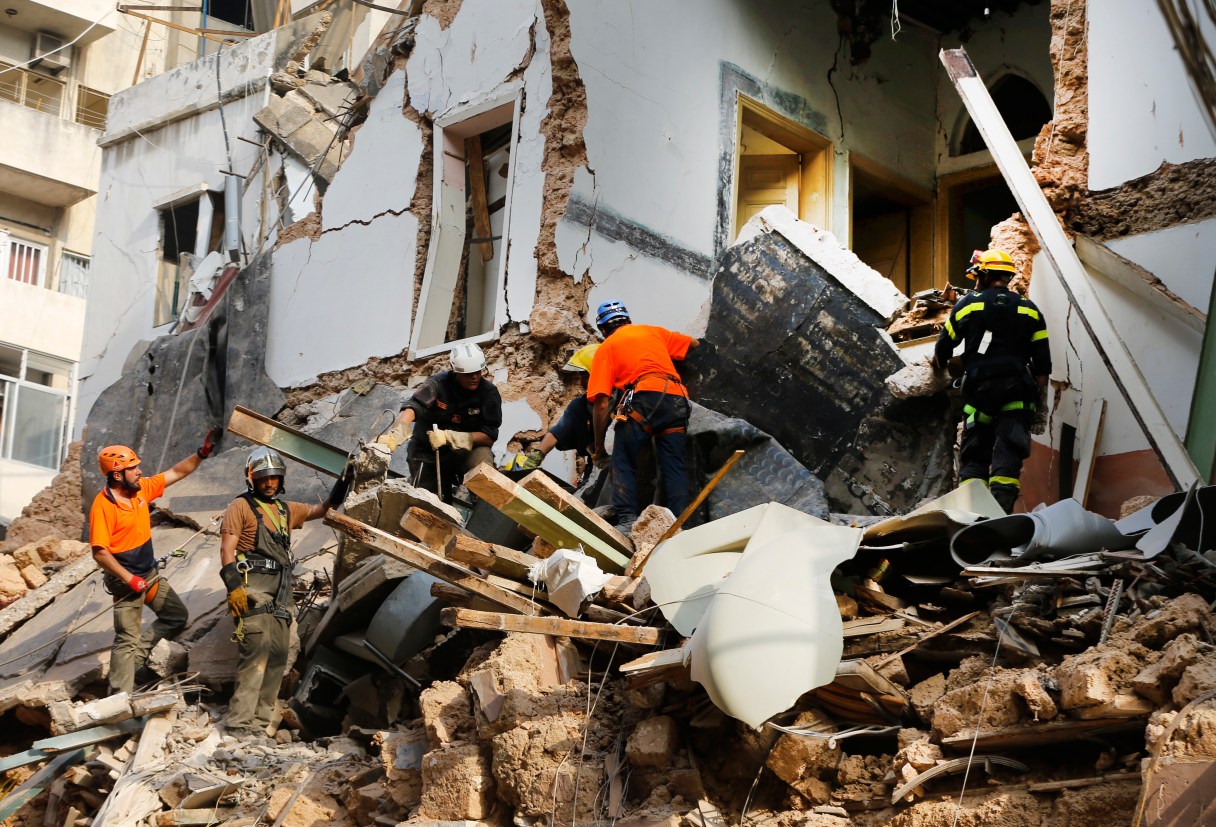
BEIRUT (AP) – A pulsing signal was detected Thursday from under the rubble of a Beirut building that collapsed during the horrific port explosion in the Lebanese capital last month, raising hopes there may be a survivor still buried there.
The effort unfolded after the sniffer dog belonging to the Chilean search and rescue team first detected something as the team was going through Gemmayzeh Street in Beirut and rushed toward the rubble of a building. The street was one of the hardest-hit in the Aug. 4 explosion.
The team then used audio detection equipment for signals or heartbeat, and detected what could be a pulse of 18 to 19 beats per minute. The origin of the pulsing signal was not immediately known but it set off a frantic search and raised new hope.
It is extremely unlikely that any survivors would be found a month after the blast that tore through Beirut in August when nearly 3,000 tons of ammonium nitrate ignited at the port. The explosion killed 191 people and injured 6,000 others and is considered to be one of the biggest non-nuclear explosions ever recorded. Thousands of homes were damaged.
“Ninety-nine percent there isn’t anything, but even if there is less than 1% hope, we should keep on looking,” said Youssef Malah, a civil defense worker. He said his men would continue working throughout the night, adding that the work was extremely sensitive.