
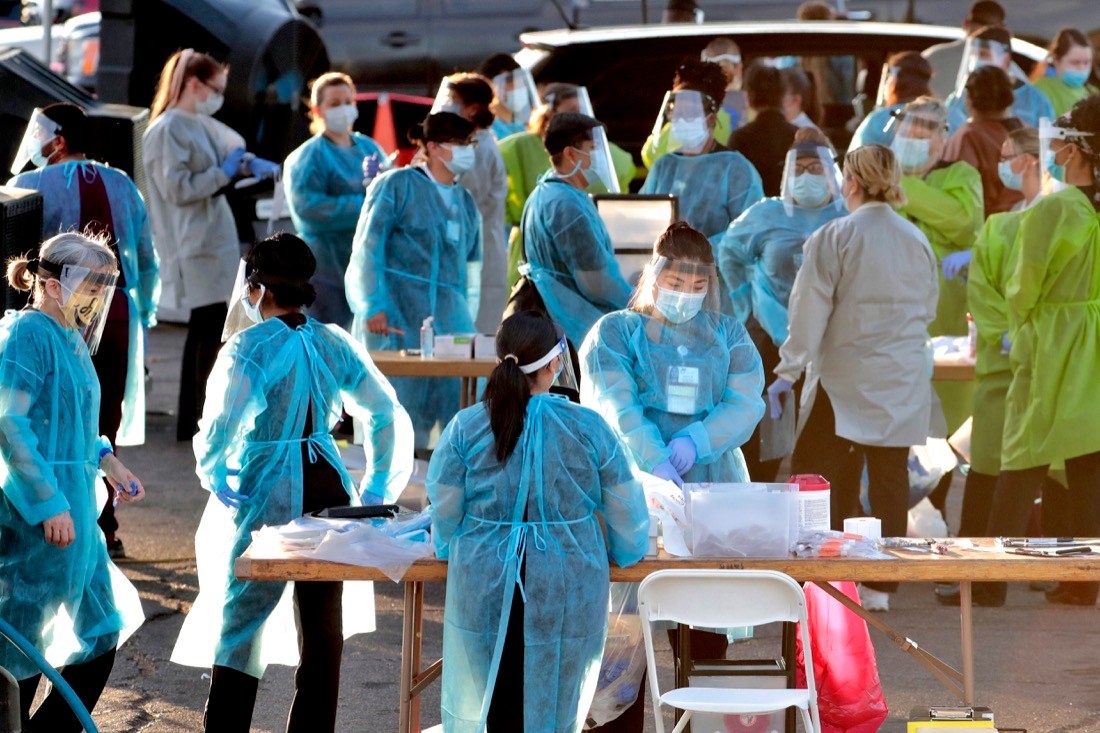
PHOENIX (AP) – A Latino cook whose co-worker got COVID-19 waited in his truck for a free swab at a rare testing event in a low-income neighborhood in Phoenix. A Hispanic tile installer queued up after two weeks of self-isolation while his father battled the coronavirus in intensive care. He didn’t know his dad would die days later.
As the pandemic explodes in diverse states like Arizona and Florida, people in communities of color who have been exposed to the virus are struggling to get tested. While people nationwide complain about appointments being overbooked or waiting hours to be seen, getting a test can be even harder in America’s poorer, Hispanic and Black neighborhoods, far from middle-class areas where most chain pharmacies and urgent care clinics offering tests are found.
“There really isn’t any testing around here,” said Juan Espinosa, who went with his brother Enrique to the recent drive-up testing event in Phoenix’s largely Latino Maryvale neighborhood after a fellow construction worker was suspected of having COVID-19. “We don’t know anywhere else to go.”
Hundreds of people lined up last week for another large-scale testing event in a different low-income area of Phoenix that’s heavily Hispanic and Black.
Arizona – the nation’s leader in new confirmed infections per capita over the past two weeks – and its minority neighborhoods are just starting to feel what New York and other East Coast and Midwestern communities experienced several months ago, said Mahasin Mujahid, associate professor at the University of California, Berkeley’s School of Public Health.