
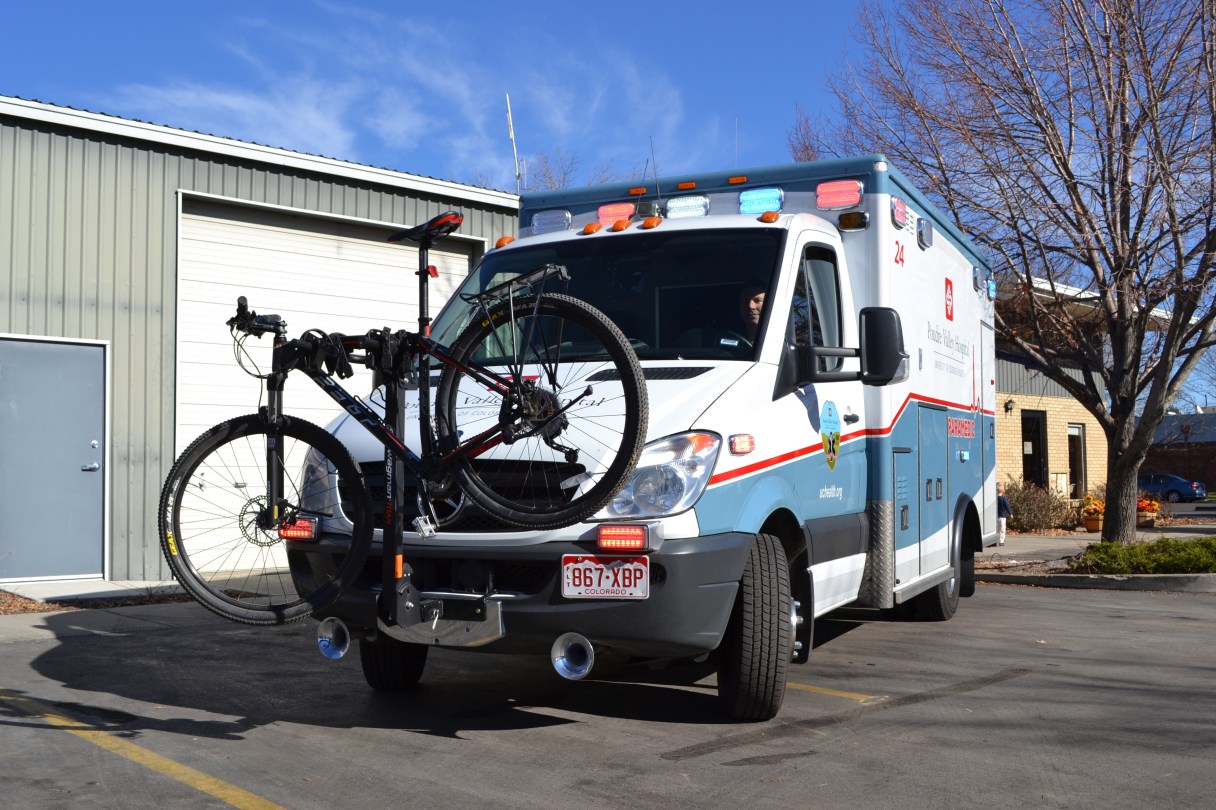
FORT COLLINS, Colo. (AP) – Showing how much one Colorado city loves its bikes, cyclists who go to the hospital by ambulance no longer have to leave their rides behind.
Poudre (POO’-dur) Valley Hospital in Fort Collins, home of Colorado State University, has equipped all 14 of its ambulances with bike racks after encountering increasing numbers of cyclists who had bicycle accidents or medical emergencies while riding.
Some people were reluctant to leave their bikes locked up behind at the scene – whether because they were fancy recreation bikes that cost more than some cars or because they were the patient’s main form of transportation, Steve Main, the hospital’s emergency medical services director, said Friday.
Plus, ambulance workers were spending too much time going back to unlock the bikes once patients could retrieve them.
At the suggestion of bike paramedic Rob Collett, the hospital began adding bike racks to ambulances as they came in for regular maintenance last spring and equipped them all by the end of the year. According to the Coloradoan (http://noconow.co/1yrpUyE ), which first reported the installations, the hospital spent about $5,000 to install the racks, or $356 per ambulance.