
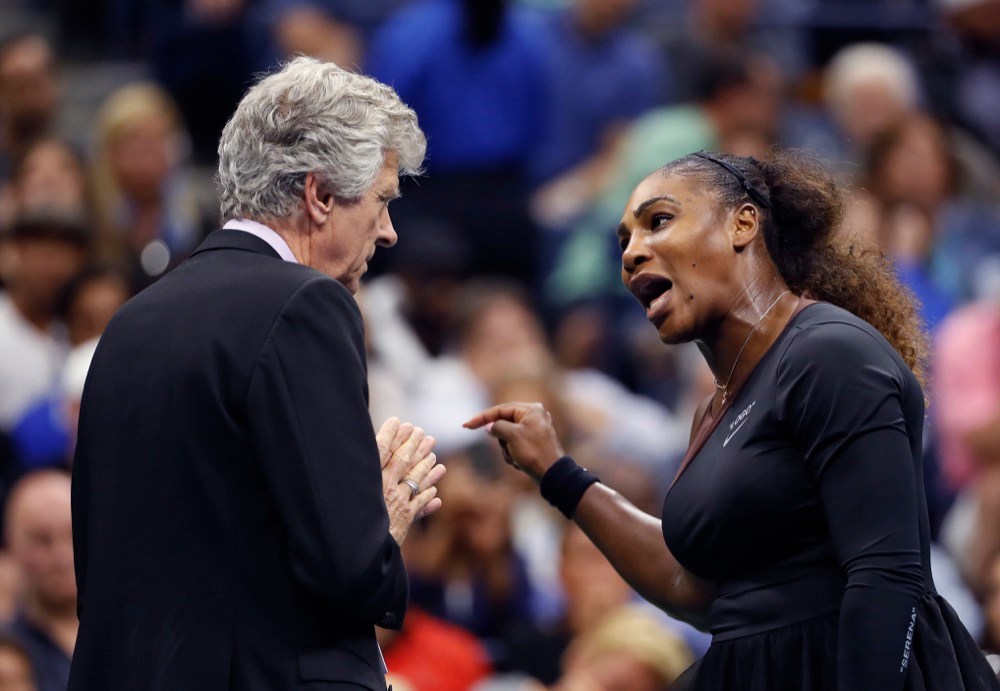
NEW YORK (AP) – When Serena Williams told the umpire at the U.S. Open final that he owed her an apology, that he had stolen something from her, and then she got penalized for her words, Breea Willingham could relate to her frustration and anger.
Willingham isn’t a tennis star, but she is a black woman. She and others like her say Williams’ experience resonates with them because they are often forced to watch their tone and words in the workplace in ways that men and other women are not.
And if they’re not careful, they say, they risk being branded “Angry Black Woman.”
“So much of what she experiences we experience in the workplace, too,” said Willingham, a professor of criminal justice at the State University of New York at Plattsburgh. “As black women … we’re expected to stay in our lane, that lane that has been created for us. Any time we step out of that lane, then we become a problem.”
The stereotype of the “Angry Black Woman” is alive and well, said Felicia Martin, 36, a federal employee who lives in Brooklyn. She recalls once seeing a white female co-worker cursing and throwing things and not facing repercussions, while she’s been told to calm down for expressing her own upset in a normal tone of voice.