
BIRMINGHAM, Ala. — Amelia Boynton Robinson, a civil rights activist who helped lead the 1965 “Bloody Sunday” voting rights march and was the first black woman to run for Congress in Alabama, died early Wednesday at age 104, her son Bruce Boynton said.
Boynton Robinson was among those beaten during the march across the Edmund Pettus Bridge in Selma, Alabama, in March 1965 that became known as “Bloody Sunday.” State troopers teargased and clubbed marchers as they tried crossing the bridge. A newspaper photo featuring an unconscious Boynton Robinson drew wide attention to the movement.
“The truth of it is that was her entire life. That’s what she was completely taken with,” Bruce Boynton said of his mother’s role in shaping the civil rights movement. “She was a loving person, very supportive — but civil rights was her life.”
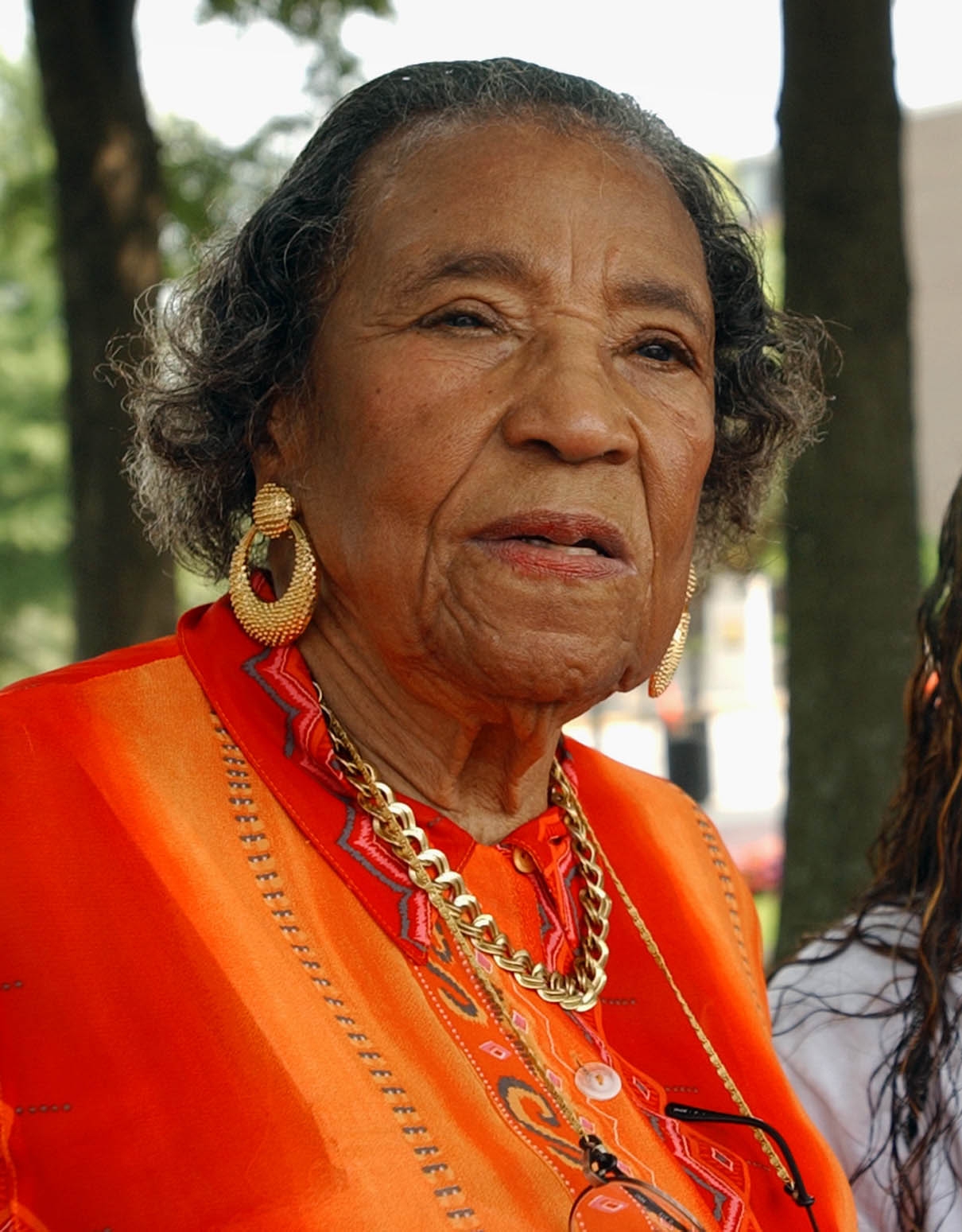 In this Aug. 26, 2003, file photo, Amelia Boynton, Robinson appears at an American Civil Rights Education Services tour at the Martin Luther King, Jr. National Historic Site in Atlanta.
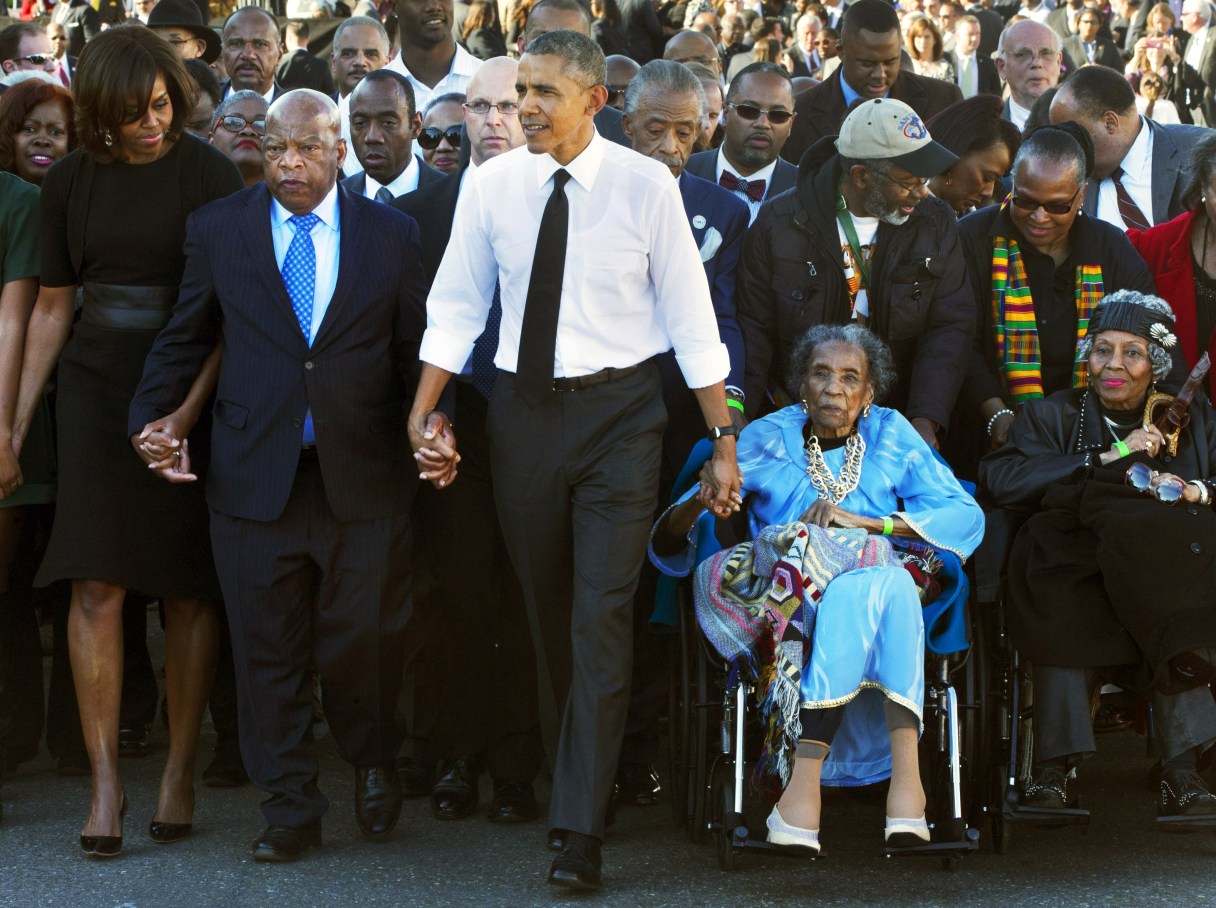
Fifty years after “Bloody Sunday,” Barack Obama, the first black president of the United States, held her hand as she was pushed across the bridge in a wheelchair during a commemoration.
“She was as strong, as hopeful, and as indomitable of spirit — as quintessentially American — as I’m sure she was that day 50 years ago,” Obama said Wednesday in a written statement. “To honor the legacy of an American hero like Amelia Boynton requires only that we follow her example — that all of us fight to protect everyone’s right to vote.”