
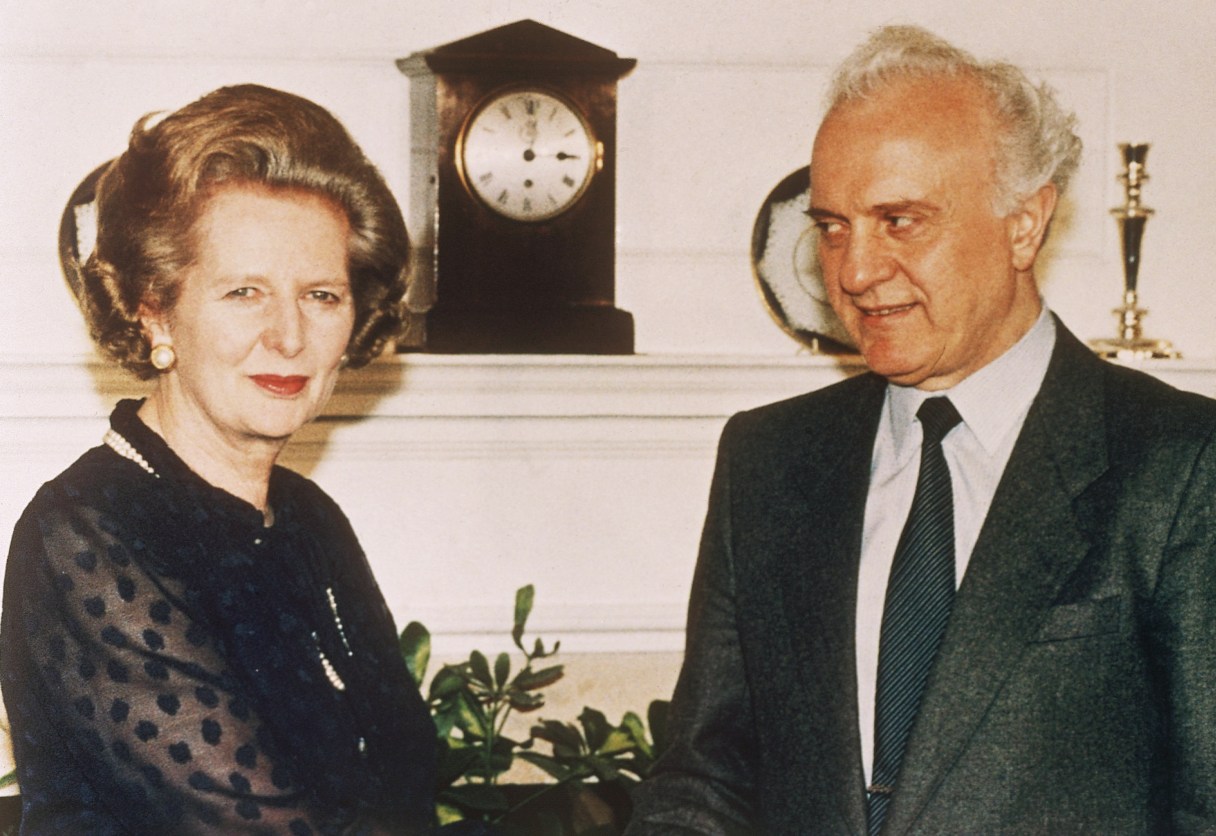
WASHINGTON (AP) – Eduard Shevardnadze was sitting in the front of the small Yak-40 jet that was screaming toward liftoff from Sukhumi. It was 10 p.m. The runway and cabin lights were off. The Georgian leader had spent the day with his troops who were defending the Black Sea city. Abkhazian separatist forces were pouring in rockets.
Shevardnadze, who died Monday at 86, made the dangerous journey to Sukhumi in early March 1993 to take symbolic charge of the Georgian forces. I and my CNN television crew flew with the Georgian leader from the capital, Tbilisi. We spent the day wandering the city, darting into cellar doorways when rocket fire was heard.
At a poorly equipped hospital, Georgian fighters lay bloodied on the floor, and triage doctors darted from one horribly wounded soldier to the next. Shevardnadze visited the clinic, offering comfort to the wounded. He then set off to visit his forces at hilltop positions on the outskirts of Sukhumi.
In the wake of the Soviet Union’s collapse and Georgian independence, separatists in the autonomous regions of Abkhazia and South Ossetia were trying to break free from Georgian control.
Shevardnadze, once the vibrant and new-thinking foreign minister under Soviet leader Mikhail Gorbachev, had returned to his homeland – the former Soviet Republic of Georgia – after Moscow’s sprawling Eurasian empire disintegrated on Christmas night 1991.