
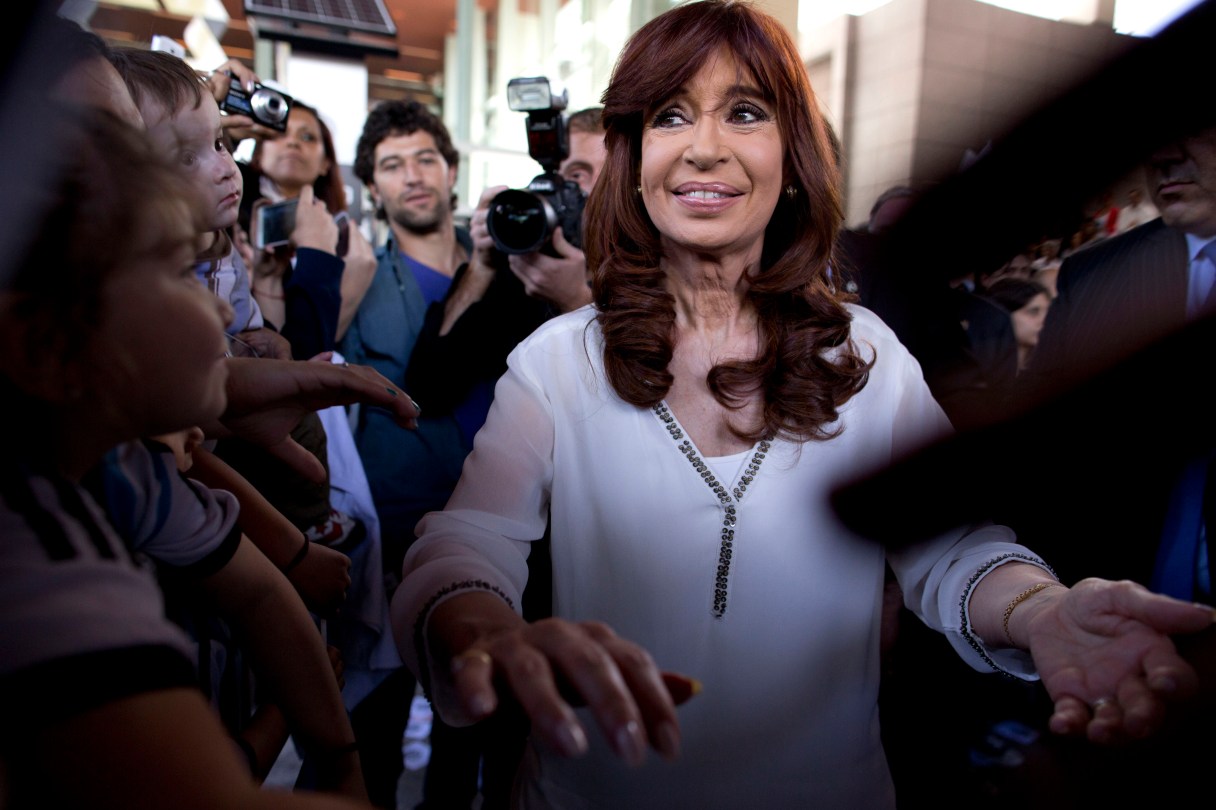
BUENOS AIRES, Argentina (AP) – When Argentines chose a new president in recent elections, many voters seemed more concerned about what would happen with the old one.
Such is the hold of outgoing President Cristina Fernandez on the public imagination in this South American country, where the telegenic, combative and polarizing leader steps down Dec. 10 after dominating the political landscape during eight years in office. Fernandez, who was constitutionally barred from running for a third consecutive term, leaves with high approval ratings despite myriad economic problems and the cloud of several alleged corruptions scandals.
Perhaps most significantly, she’ll be leaving after a major political defeat: Her chosen successor, Daniel Scioli, lost Sunday’s presidential election to Mauricio Macri, who campaigned on free-market ideas as well as promises to roll back many of Fernandez’s left-leaning policies and distance the country from Venezuela.
“It’s unlikely that Fernandez goes quietly into the night,” said Jason Marczak, deputy director of the Atlantic Council’s Adrienne Arsht Latin America Center. “But her concrete plans postelection? Your guess is as good as mine.”
Fernandez, 62, has said little about her future, other than repeatedly promising not to go away. It’s hard to imagine anything less from Argentina’s most important female political figure since Eva Peron, the country’s iconic first lady from the 1940s. Even before assuming the presidency, Fernandez was a central figure as first lady in the administration of her late husband and predecessor, Nestor Kirchner, and as a senator.