
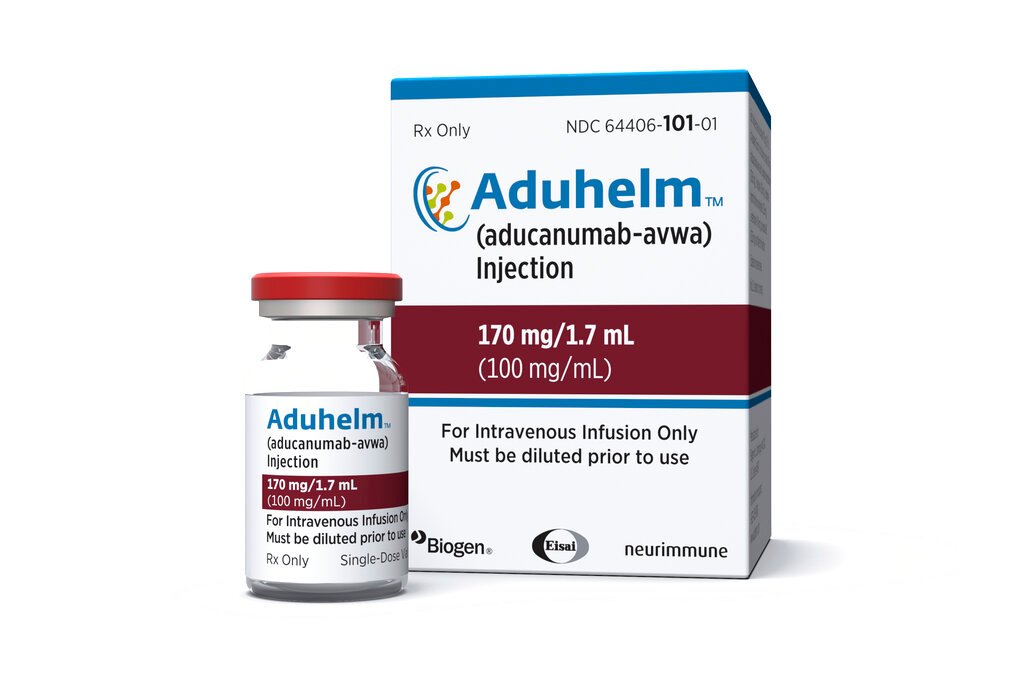
WASHINGTON (AP) – A new $56,000-a-year Alzheimer’s drug would raise Medicare premiums broadly, and some patients who are prescribed the medication could face copayments of about $11,500 annually, according to a research report published Thursday.
The drug, called Aduhelm, was approved by the Food and Drug Administration this week and quickly sparked controversy over its price-tag and questionable benefits. An FDA adviser called the decision “probably the worst drug approval decision in recent U.S. history,” in a letter he submitted when resigning over the decision Thursday.
It’s the first Alzheimer’s medication in nearly 20 years, though it doesn’t cure the life-sapping neurological condition. The FDA determined that its ability to reduce clumps of plaque in the brain is likely to slow dementia. But many experts, including the agency’s own advisers, say that benefit has not been clearly shown.
On Thursday, Dr. Aaron Kesselheim of Harvard University became the third member of an FDA advisory panel that opposed the drug to step down over the decision. Last November the 11-member group voted nearly unanimously against recommending approval for the medication, citing flaws in company studies. The FDA is not required to follow the group’s advice.
In his resignation letter obtained by The Associated Press, Kesselheim said that the FDA’s recent drug approval decisions would undermine public trust, medical innovation “and the affordability of the health care system.” Earlier in the week two expert neurologists also quit the panel.