
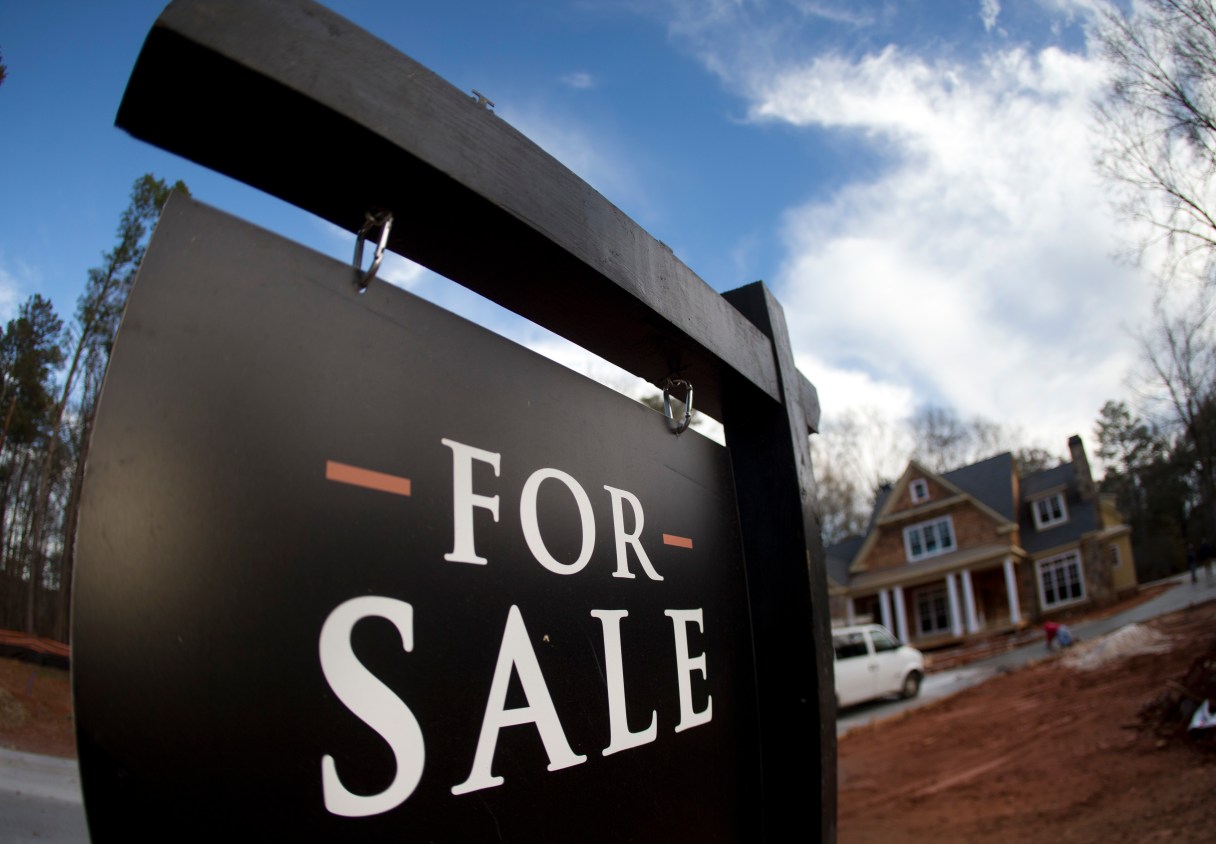
Thirty-year mortgages drop to 3.44 percent
Long-term U.S. mortgage rates edged lower this week. As rates remain at historically low levels, homeowners taking advantage of the chance to refinance their mortgages have pushed up refinancing activity.
Mortgage giant Freddie Mac said Thursday the average for the benchmark 30-year fixed-rate mortgage declined to 3.44 percent from 3.46 percent last week. The average rate is down from 3.90 percent a year ago, and is close to its all-time low of 3.31 percent in November 2012.
The 15-year fixed mortgage rate eased to 2.76 percent from 2.77 percent.
The share of refinancing in overall mortgage activity increased to 64 percent of total applications in the week ended Sept. 2 from 63.5 percent the previous week, the Mortgage Bankers Association reported Wednesday. The British vote in June to leave the European Union roiled financial markets and drove up prices of U.S. Treasury bonds – lowering their yields with long-term mortgage rates following suit. Since then, refinancing’s share of mortgage activity has stayed above 60 percent, Freddie Mac noted.
Jobless claims drop to lowest since July
Fewer Americans applied for unemployment benefits last week, another sign the U.S. job market remains healthy despite a downshift in hiring last month.
The Labor Department said Thursday that the number of applications for jobless aid slid by 4,000 last week to a seasonally adjusted 259,000, lowest since mid-July. Weekly claims have come in below 300,000 for 79 straight weeks, longest streak since 1970. The less volatile four-week average slipped by 1,750 last week to 261,250.
The number of people collecting unemployment checks has fallen more than 5 percent from a year ago to 2.14 million.
Consumer borrowing grows by $17.7 billion
American consumers increased their borrowing in July, though the category that includes credit cards grew at the slowest pace since February.
The Federal Reserve said Thursday that consumer borrowing rose by $17.7 billion in July, up from a $14.5 billion increase in June.
Revolving credit, which covers credit cards, rose by $2.8 billion, down from $9.2 billion in June and least since February’s $2.2 billion. The category that includes auto and student loans increased by $14.9 billion, up sharply from June’s $5.4 billion gain.
Consumer spending accounts for about 70 percent of U.S. economic activity and was one of the few sources of strength in the first quarter, growing at a 4.4 percent annual pace while the overall economy expanded just 1.1 percent.
Consumers have been encouraged by a solid labor market. Employers have added 204,000 jobs a month over the past year -though they added just 151,000 in August – and the unemployment rate is a healthy 4.9 percent.