
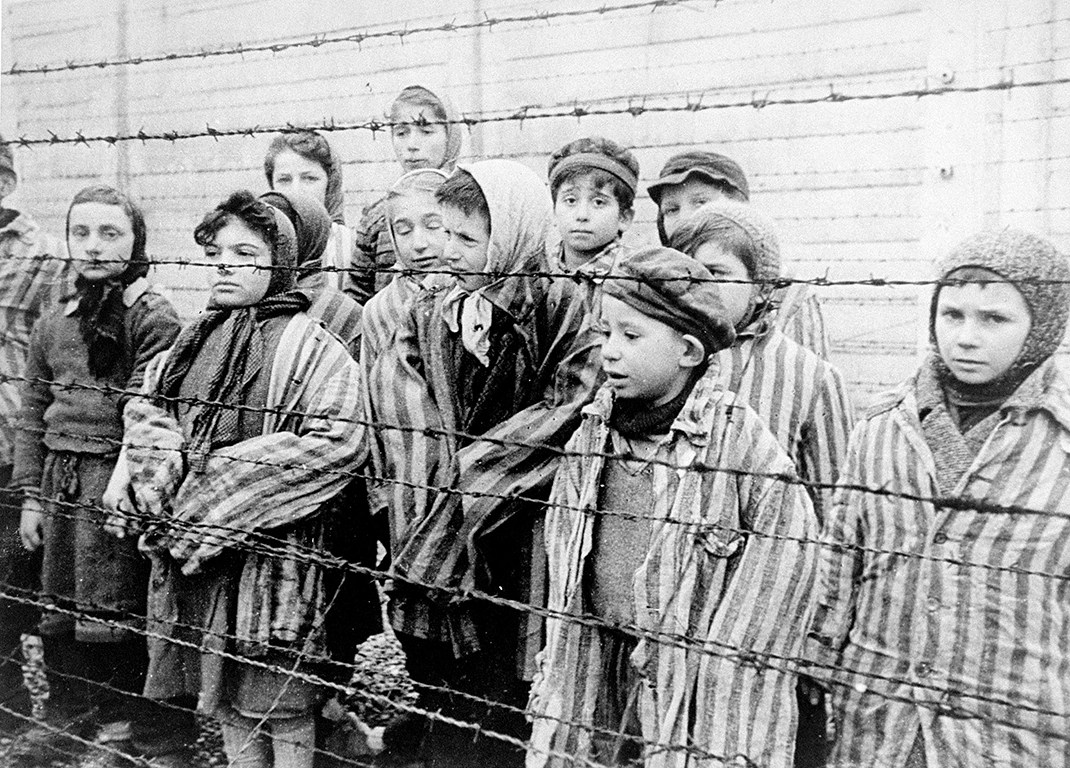
Twenty years ago in the town of Whitwell, Tennessee, a thought-revolution was underway. If the town didn’t know it at the time, it’s because they could not have imagined what one simple question – and, more importantly, what one middle school principal’s brilliant refusal to render a simple answer – would unleash. But the tiny mining town of approximately 2,000 people, 99.9 percent of whom were white Anglo-Saxon Protestant, would soon become the unlikely site of a Holocaust memorial.
The creation of the Children’s Holocaust Memorial at Whitwell Middle School is a moving story of passion, creative vision, faith and teamwork. It has brought hundreds of thousands of tourists to a town that, prior to the museum’s creation, few had heard of. The memorial and its genesis would become the subject of a documentary film, “Paper Clips,” which would be shown around the world. And it would be the impetus for an international service-learning curriculum, “One Clip at a Time,” that would eventually boast 400 educators trained in 29 states plus Canada and Israel.
We at Chatter decided to look back to the inception of the memorial two decades after the fact, and to ask a few of those involved about the impact of the project on them, and on the town of Whitwell.
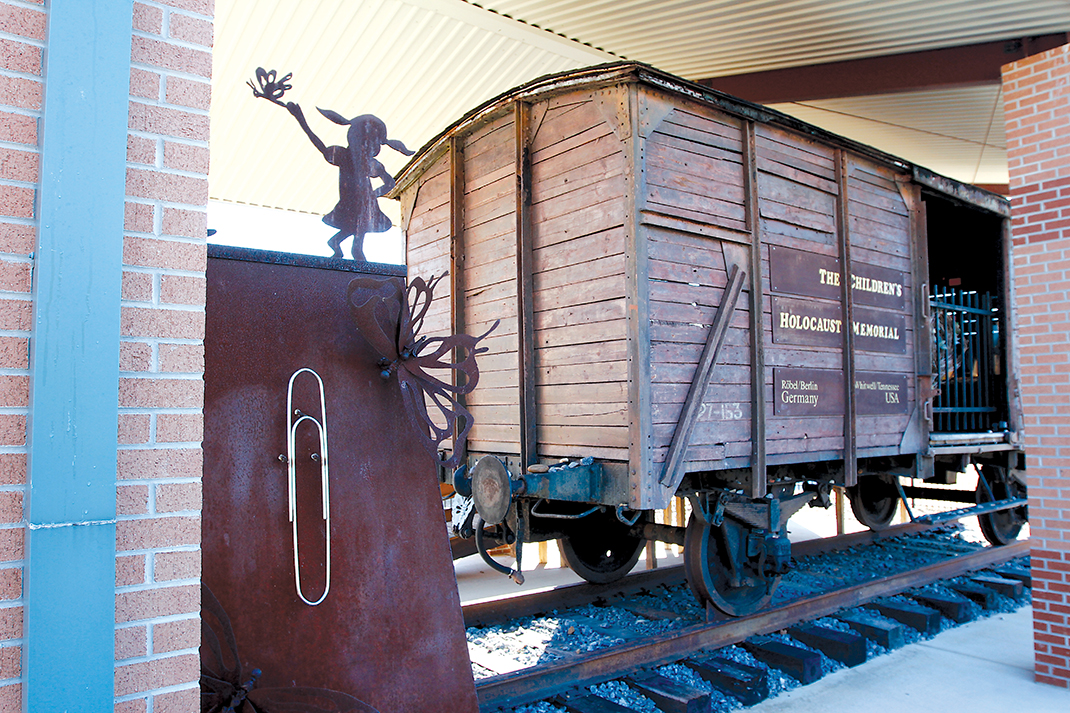 The donated rail car, paid for by donations from German citizens, sits in a courtyard that houses sculptural butterflies and a monument honoring the estimated 1.5 million children lost in the Holocaust.
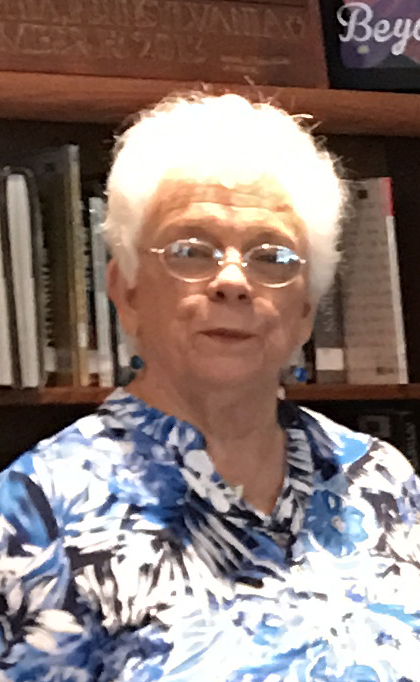 Linda Hooper
“Within the school, there was little tolerance for diversity, and bullying was becoming a problem,” she says. “Kids were, like their parents and their grandparents, choosing the familiarity of the small town of Whitwell over outside education or exploration. And many of the kids who did leave town after high school had difficulty adjusting, and returned.”
So Hooper hatched an idea. She asked associate principal David Smith and language arts teacher Sandra Roberts to start an after-school program. They would look at the Holocaust and at other humanitarian atrocities and genocides worldwide. They would talk about prejudice, hatred, stereotyping, tolerance and diversity at home and abroad; about other cultures and ways of thinking; and about what could be gained, personally and globally, from entertaining a broader, more inclusive worldview. Attendance in the program would be completely voluntary.