
Monday, November 16, 2026Nov 16

CEO of Japan’s Toshiba resigns over doctored books

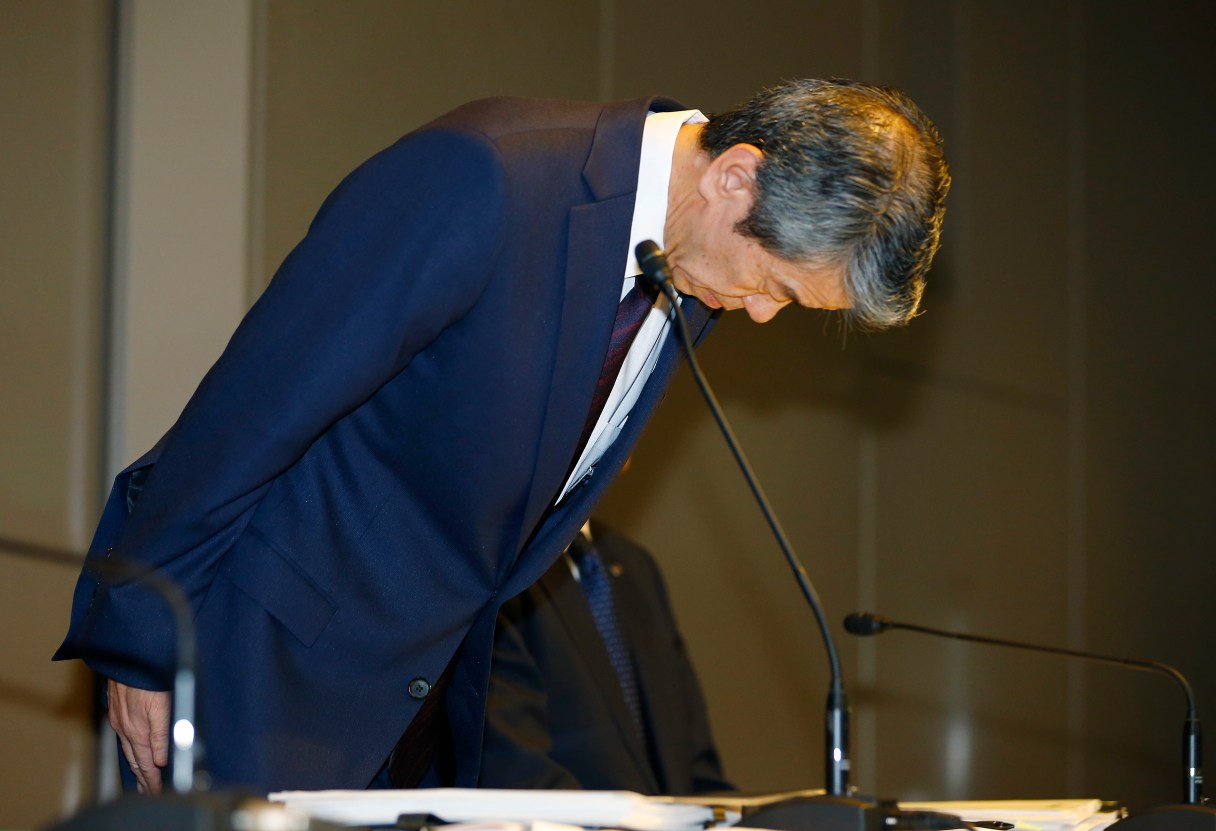
Toshiba Corp. CEO Hisao Tanaka bows during a press conference to announce his resignation at the company's headquarters in Tokyo, Tuesday, July 21, 2015. Tanaka stepped down Tuesday to take responsibility for doctored books that inflated profits at the Japanese technology manufacturer by 151.8 billion yen ($1.2 billion). Toshiba acknowledged a systematic cover-up, which began in 2008, as various parts of its sprawling business including computer chips and personal computers were struggling financially, but top managers set unrealistic earnings targets under the banner of “challenge.” (AP Photo/Shizuo Kambayashi)

TOKYO (AP) – Toshiba’s chief executive resigned Tuesday to take responsibility for doctored books that inflated profits at the Japanese technology manufacturer by 152 billion yen ($1.2 billion) over several years.

Toshiba Corp. acknowledged a systematic cover-up, which began in 2008. Various parts of the Japanese company’s sprawling business including computer chips and personal computers were struggling financially, but top managers set unrealistic earnings targets under the banner of “challenge,” and subordinates faked results.

On top of its struggles in electronics, Tokyo-based Toshiba’s prospects in nuclear power, one of its core businesses, were shaken after the 2011 Fukushima disaster set off public fears about reactor safety, making new nuclear plants unlikely in Japan. All 48 of the nation’s working reactors are now offline.

Bowing deeply before flashing cameras at a news conference, CEO Hisao Tanaka kept his head lowered for nearly half a minute in a gesture meant to convey deep shame and contrition. Tanaka’s predecessors, Norio Sasaki, now a vice chairman, and Atsutoshi Nishida, an adviser, also gave up their posts.

“We have a serious responsibility,” Tanaka told reporters. The company will need to “build a new structure” to reform itself, he said.