
Sunday, November 15, 2026Nov 15

Ice wall at Fukushima plant switched on, but will it work?

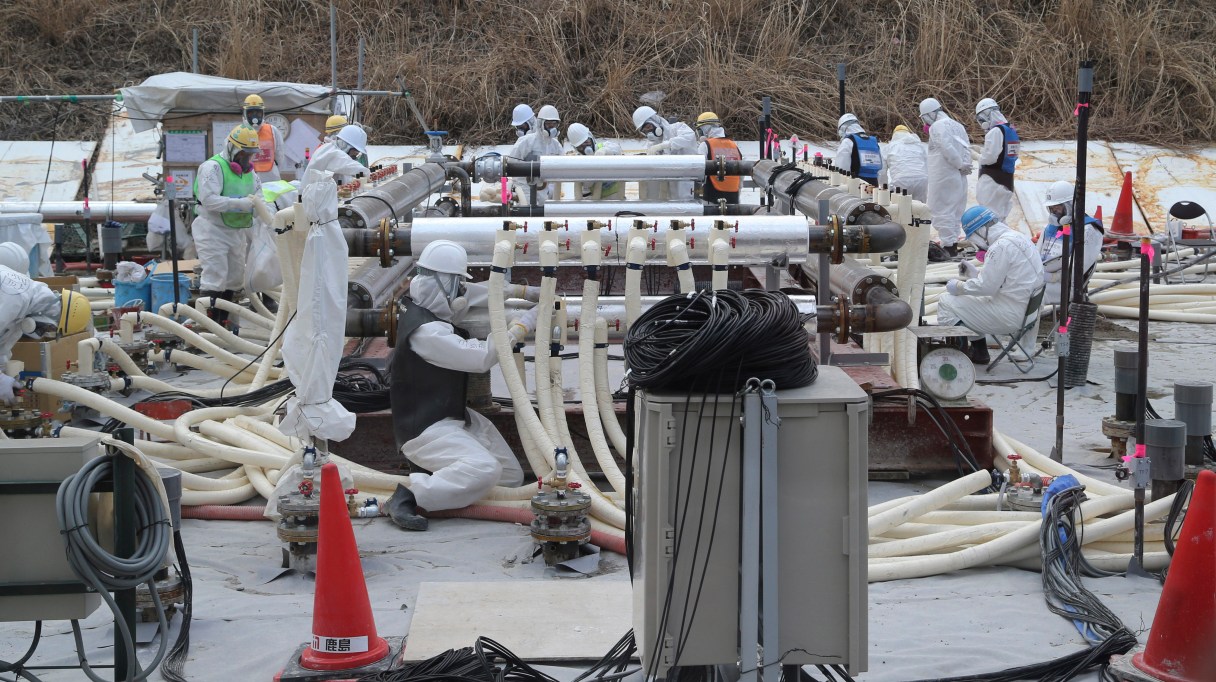
FILE - In this March 10, 2014 file photo, workers wearing protective gears install a trial model of the underground frozen wall at the Fukushima Dai-ichi nuclear power plant in Okuma, Fukushima prefecture, northeastern Japan in their attempt to stop the leakage of radioactive water that has accumulated at the crippled nuclear power plant. Japanese regulators on Wednesday, March 30, 2016, approved the use of a giant refrigeration system to create an unprecedented underground frozen barrier around buildings at the Fukushima nuclear plant in an attempt to contain leaking radioactive water. The plant's operator, Tokyo Electric Power Co., said it plans to turn on the ice wall on Thursday, March 31, starting with the portion near the sea to minimize the risk of contaminated water escaping into the Pacific Ocean. (AP Photo/Koji Sasahara, Pool, File)

TOKYO (AP) – The operator of Japan’s destroyed Fukushima nuclear plant switched on a giant refrigeration system on Thursday to create an unprecedented underground ice wall around its damaged reactors. Radioactive water has been flowing from the reactors, and other methods have failed to fully control it. The decontamination and decommissioning of the plant, damaged by a massive earthquake and tsunami in 2011, hinge of the success of the wall.

Q. WHAT IS AN ICE WALL?

A. Engineers installed 1,550 underground refrigeration pipes designed to create a 1.5-kilometer (0.9-mile) barrier of frozen soil around four damaged reactor buildings and their turbines to control groundwater flowing into the area and prevent radioactive water from seeping out. The pipes are 30 meters (100 feet) deep, the equivalent of a 10-story building. Engineers say coolant in the pipes will freeze the surrounding soil to minus 30 degrees Celsius (minus 22 Fahrenheit), creating the wall over several months.

Q. WHY IS AN ICE WALL NEEDED?

A. The cores of three of the damaged reactors melted during the accident and must be cooled constantly with water to keep them from overheating again. The cooling water becomes radioactive and leaks out through damaged areas into the building basements, where it mixes with groundwater, increasing the volume of contaminated water. Nearly 800,000 tons of radioactive water have been pumped out, treated and stored in 1,000 tanks that now occupy virtually every corner of the Fukushima plant, interfering with its decontamination and decommissioning and adding to the risk of further leaks of water into the nearby ocean.