
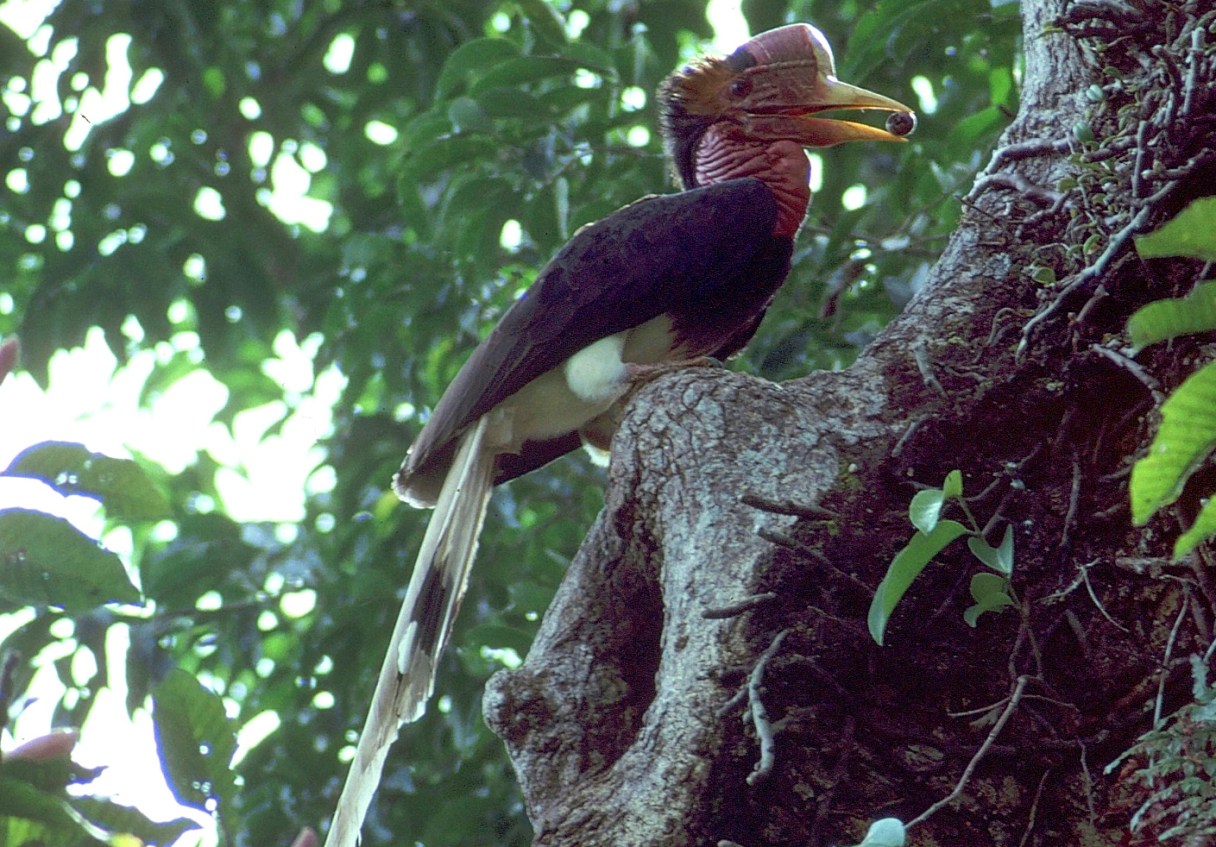
JOHANNESBURG (AP) – Some call it “ivory on wings,” part of the bill of a critically endangered bird in Southeast Asia that is sought by poachers and carved into ornaments for illegal sale to Chinese buyers.
The helmeted hornbill isn’t getting as much attention as the beleaguered African elephant at a global wildlife conference this week in South Africa. But the killing of elephants by the tens of thousands for their tusks is intertwined with a surge in the slaughter of the rare bird whose beak part is a coveted substitute for ivory.
“It’s all part of the rising demand for ivory,” said Richard Thomas, spokesman for TRAFFIC, a conservation group based in Britain.
Poaching of the helmeted hornbill has soared since around 2010, particularly in Indonesia. The timing roughly coincides with an increase in elephant poaching that has caused a sharp drop in elephant populations. Last year, the helmeted hornbill was designated as critically endangered on an international “red list” of threatened species.
Delegates are discussing protections for elephants, helmeted hornbills and other vulnerable wildlife at a meeting in Johannesburg of the Convention on International Trade in Endangered Species of Wild Fauna and Flora, or CITES . The 12-day meeting of the U.N. group, which regulates wildlife trade, ends Oct. 5.