
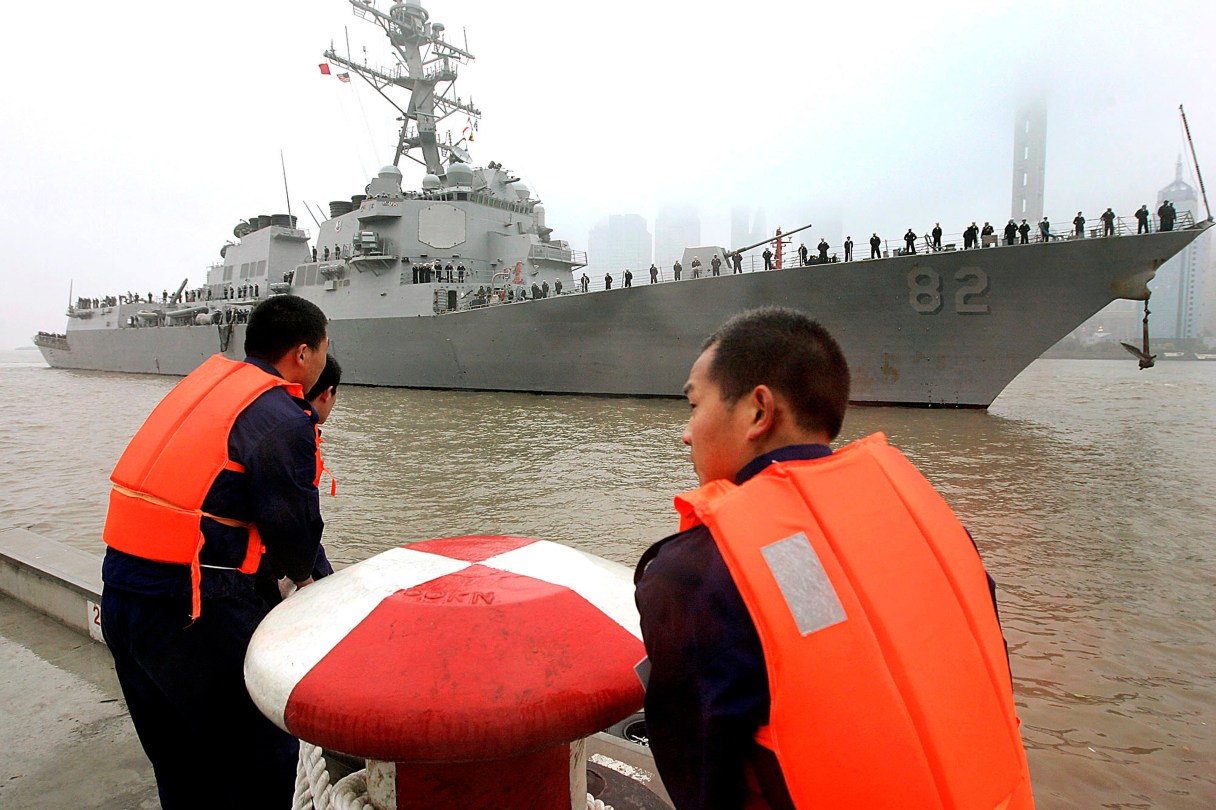
BEIJING (AP) – China summoned the American ambassador to protest the U.S. Navy’s sailing of a warship close to one of China’s artificial islands in the South China Sea, in an act that challenged Chinese sovereignty claims.
China’s Foreign Ministry said on its website Wednesday that Executive Vice Minister Zhang Yesui told Max Baucus that the U.S. had acted in defiance of repeated Chinese objections and had threatened China’s sovereignty and security. While offering no details, Zhang said Tuesday’s “provocative” maneuver also placed personnel and infrastructure on the island in jeopardy.
China was “extremely dissatisfied and a resolutely opposed” the U.S. actions, the ministry said. The U.S. State Department declined to confirm the Tuesday meeting, or comment on any remarks made on the issue.
China says authorities monitored and warned the destroyer USS Lassen as it entered what China claims as a 12-mile (21-kilometer) territorial limit around Subi Reef in the Spratly Islands archipelago, a group of reefs, islets, and atolls where the Philippines has competing claims.
The sail-past fits a U.S. policy of pushing back against China’s growing assertiveness in the South China Sea. U.S. ally the Philippines welcomed the move as a way of helping maintain “a balance of power.”