
Monday, November 16, 2026Nov 16

AP-GfK Poll: Doubts on court’s fairness in health law case

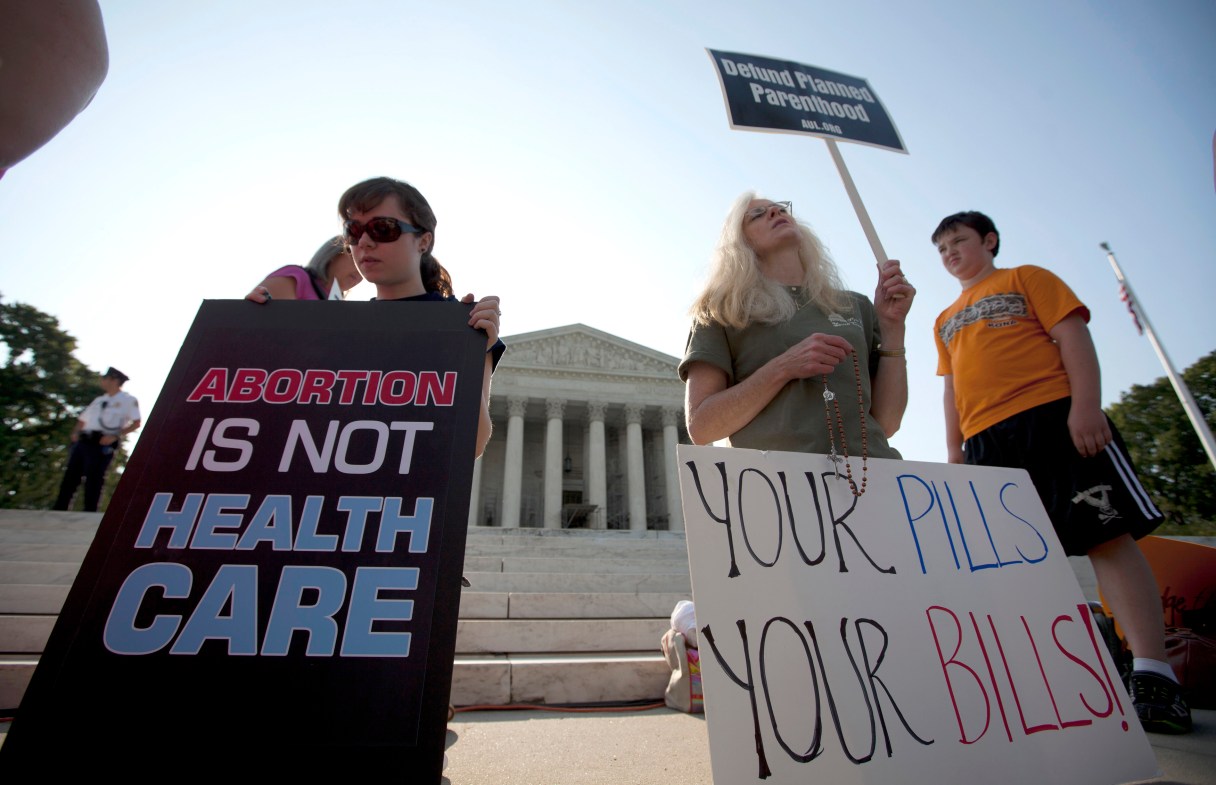
FILE - In this June 28, 2012, file photo, demonstrators pray outside the Supreme Court in Washington before a landmark decision on health care. Many Americans doubt that the Supreme Court can rule fairly in the latest litigation jeopardizing President Barack Obama’s health care law. The Associated Press-GfK poll finds only 1 in 10 are highly confident that the justices will rely on objective interpretations of the law instead of their personal opinions. Nearly half (48 percent) are not confident of the court’s impartiality. (AP Photo/Evan Vucci, File)

WASHINGTON (AP) – Many people in the United States doubt that the Supreme Court can rule fairly in the latest litigation jeopardizing President Barack Obama’s health care law.

The Associated Press-GfK poll finds only 1 person in 10 is highly confident that the justices will rely on objective interpretations of the law rather than their personal opinions. Nearly half, 48 percent, are not confident of the court’s impartiality.

“That lawsuit should have never made it this far,” said Hal Lewis, a retiree from Scranton, Pennsylvania.

“If they rule for the people who are bringing the suit, it could be close to the destruction of Obamacare in this country,” added Lewis, who once edited a local newspaper in his city.

Lewis is one of the relatively few people – 13 percent – who say they are closely following the case, called King v. Burwell.