
Sunday, November 15, 2026Nov 15

In shakeup, most Greek TV stations set to lose licenses

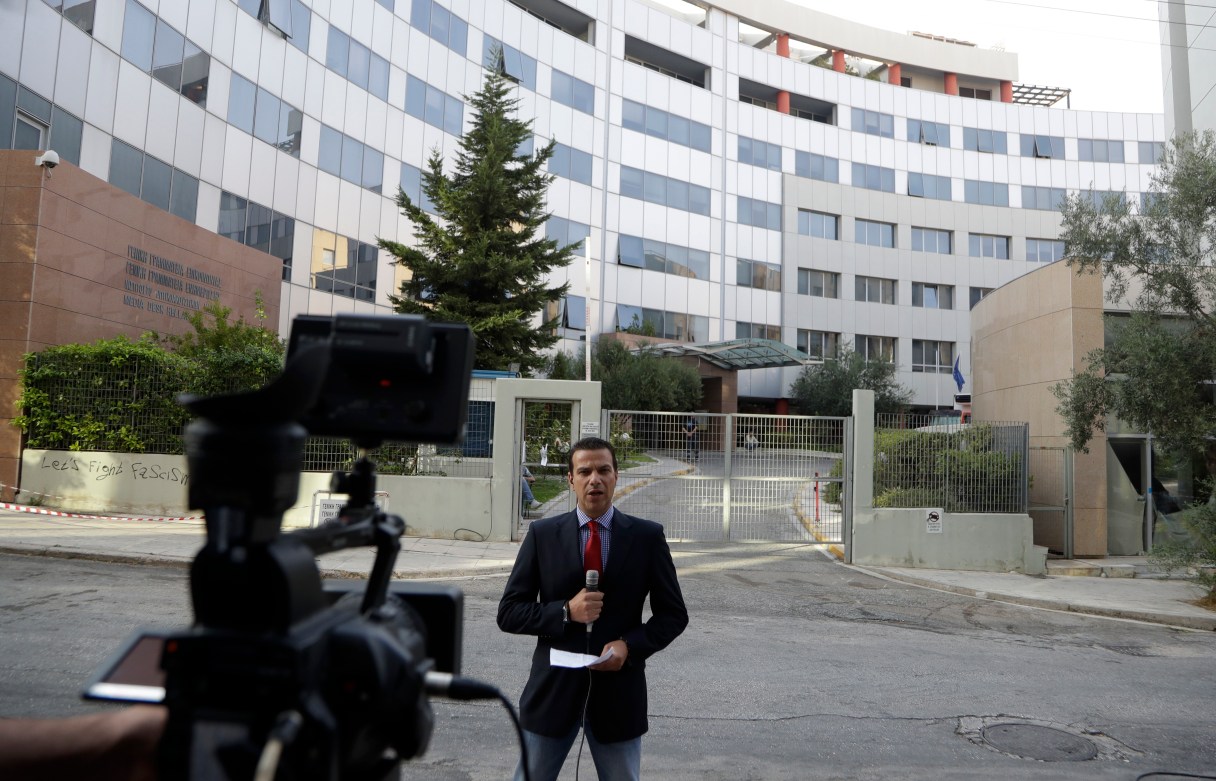
ERT state television reporter Giorgos Sideris speaks on a live broadcast outside the Greek Secretariat General for Media and Communication in Athens on Wednesday, Aug. 31, 2016 where eight bidders are taking part for second day in the process that would see eliminated TV stations close by the end of the year. Greece's left-wing government launched an auction Tuesday for four private national television licenses, reducing the number from seven after a heated public debate on corruption in the financially troubled country. (AP Photo/Thanassis Stavrakis)

ATHENS, Greece (AP) – In a major shakeup for Greek broadcasting, only two of the country’s seven private TV stations have survived a landmark license auction that raised 246 million euros ($275 million) for the cash strapped left-wing government.

The results were announced Friday after TV executives from eight rival candidate companies were kept in isolation at a government building for some 65 hours during the sequential bidding.

Broadcasters Skai and Antenna won two of the four licenses, the others going to two newcomers – including a company linked to Vangelis Marinakis, a prominent ship owner and chairman of Greek soccer champion Olympiakos.

TV stations Star and Alpha were eliminated during the bidding, while three other channels did not enter or were excluded due to financial trouble.

The new licenses will take effect in 90 days, but the government faces multiple legal challenges.