
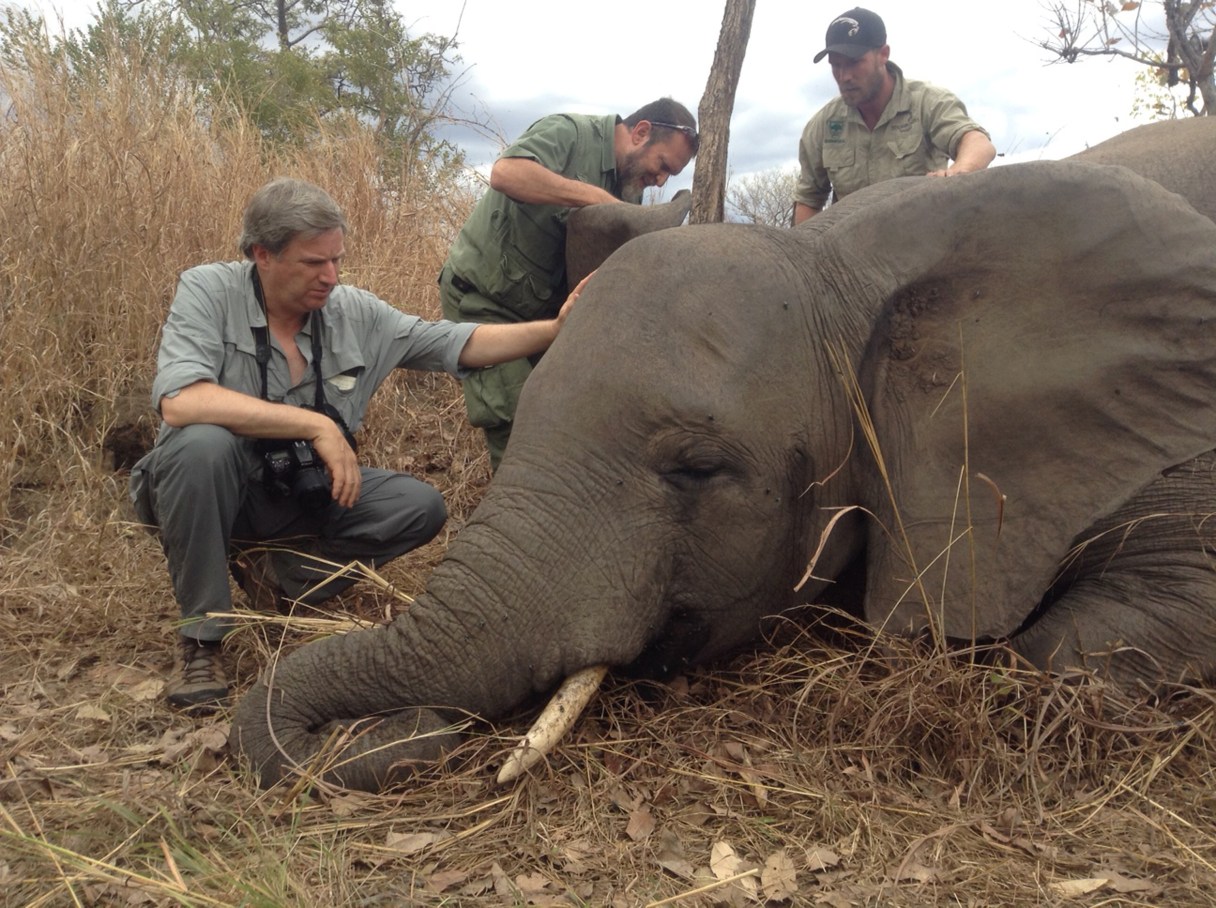
JOHANNESBURG (AP) – The recent arrests of six suspected poachers on a vast wildlife reserve in Mozambique are seen by conservationist as rare good news in a country that long viewed as lacking the will and resources to stem the slaughter of elephants and other species under threat.
The poaching ring had been operating in the Niassa National Reserve, which is twice the size of South Africa’s flagship Kruger National Park, where the rhino population has been hit hard by poachers, many of whom cross over from Mozambique.
The Sept. 7 detentions in the southern African nation followed nearly a year of investigative work, illustrating the challenges of policing rugged areas where armed poachers hike on expeditions that often last two weeks and sometimes kill elephants with single shots targeting vital organs.
Some 200 scouts supported by a spotter plane and intermittent helicopter flights work in Niassa, an area of 42,000 square kilometers (16,200 square miles) that is home to about two-thirds of Mozambique’s elephants. Park managers have ruled out using aerial drones as a form of surveillance, saying the hill-spotted, woodland expanse in northern Mozambique, on the border with Tanzania, is just too big.
Niassa is one of many battlegrounds around Africa where conservationists are struggling to stop poachers, who have annually killed tens of thousands of elephants across the continent in recent years because of a surge in demand for ivory in Asia, primarily China. Authorities in the Mozambican park are planning more law enforcement operations in an attempt to break up the several rings known to operate there.