
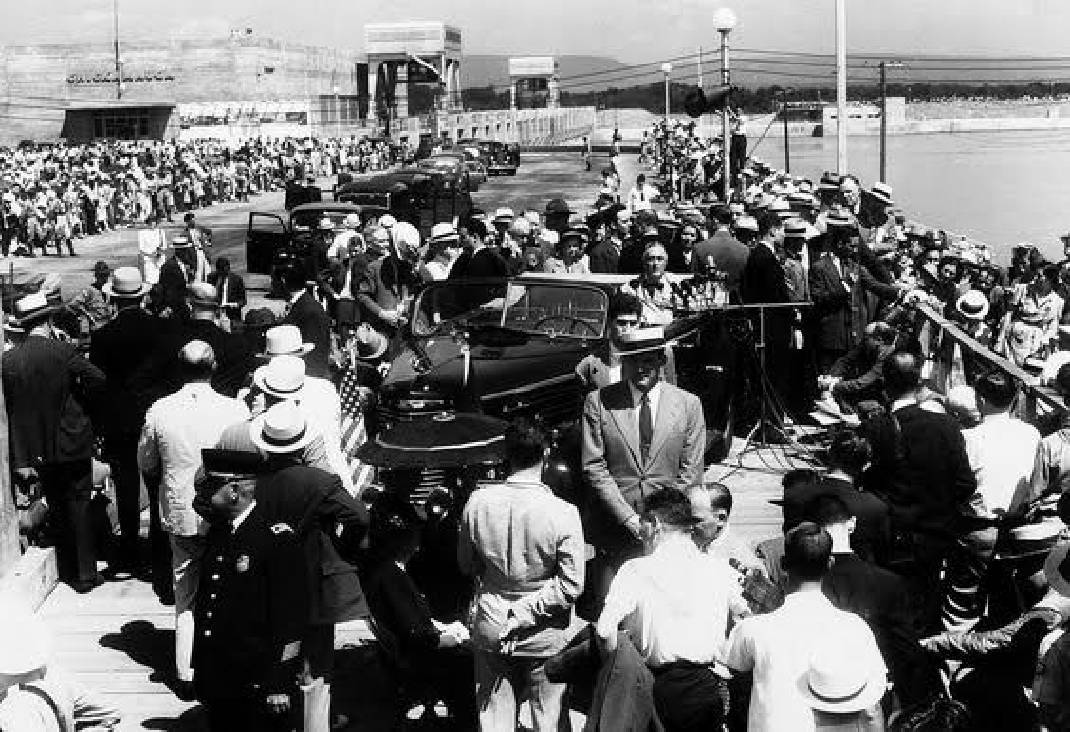
Plans had been finalized and news announcements confirmed that President Franklin D. Roosevelt was coming to Chattanooga to celebrate the completion of the Chickamauga Dam on the Tennessee River. A presidential visit meant an influx of media along with “special friends of the city” and others who would want to catch a glimpse of FDR. The Chattanooga Times announced a Special Celebration Edition would be published which would “serve as another fine example of the services The Times has rendered this community for more than sixty years.”
The Lookout Mountain Hotel readied rooms, ballrooms and patio for the more than 100 out-of-town guests who would attend “the Chickamauga Dam celebration” and planned to stay on the mountain. Third District U. S. Rep. Estes Kefauver remained hopeful that a bill introduced earlier for a special postage stamp issuance honoring the completion of the Chickamauga Dam might be released on the day of the president’s visit.
As the scheduled visit grew closer, the Secret Service became more concerned about the president’s safety. The European war was intensifying quickly. Simultaneously, August 1940 had seen the Italians march into British Somaliland in East Africa, followed by the beginning of air battles and bombings over Britain. By late August, the first German air raids on Central London occurred and, within days, the British RAF responded with air raids on Berlin. On Sept. 13, 1940, the Italian army invaded Egypt and, three days later, the U.S. military conscription bill passed. Governmental leaders on both sides of the conflict speculated about the United States’ future involvement in the war. Security surrounding the president increased in number with the addition of several military-trained marksmen.
The sun shone brightly upon the more than 80,000 attendees who arrived at the Chickamauga Dam to greet the president and hear his address. He arrived a few minutes late as his motorcade slowed, allowing him to wave to the additional 70,000 people who lined the route of the procession. The president, who remained seated in his White House automobile to speak, “mopped perspiration from his brow while he was reading from his prepared text.” But, his delivery never faltered. He knew his address was broadcasting throughout the world via the three major American radio chains.
He praised his “favorite New Deal agency, the Tennessee Valley Authority,” as “one of the great social and economic developments of our time.” Never losing sight of the upcoming election, The Times reported his comment that “there were, of course, those who maintain that the development of this enterprise is not a proper activity of government,” a veiled reference to Wendell Willkie, his presidential opponent. He continued, “As for me, I glory in it as one of the great social and economic achievements of our time.”