
Tuesday, November 3, 2026Nov 3

This story is free to read.

Canada glacier melt rerouted in rare case of ‘river piracy’

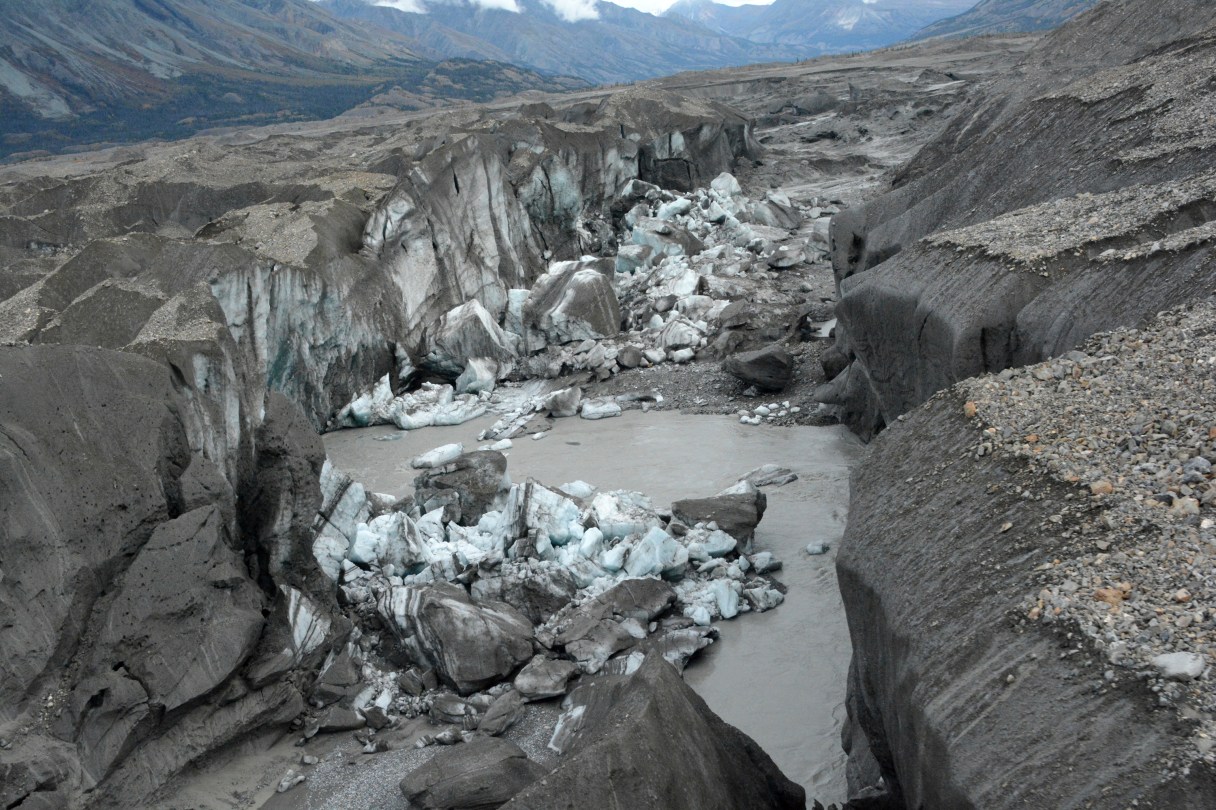
In this photo provided by Jim Best/University of Illinois, taken in 2016, a close-up view of the ice-walled canyon at the terminus of the Kaskawulsh Glacier, with recently collapsed ice blocks. This canyon now carries almost all meltwater from the toe of the glacier down the Kaskawulsh Valley and toward the Gulf of Alaska and the Pacific Ocean instead of the Bering Sea. (Jim Best/University of Illinois via AP)
In this photo provided by Jim Best/University of Illinois, taken in 2016, a close-up view of the ice-walled canyon at the terminus of the Kaskawulsh Glacier, with recently collapsed ice blocks. This canyon now carries almost all meltwater from the toe of the glacier down the Kaskawulsh Valley and toward the Gulf of Alaska and the Pacific Ocean instead of the Bering Sea. (Jim Best/University of Illinois via AP) In this photo provided by Jim Best/University of Illinois, taken in 2016, a close-up view of the ice-walled canyon at the terminus of the Kaskawulsh Glacier, with recently collapsed ice blocks. This canyon now carries almost all meltwater from the toe of the glacier down the Kaskawulsh Valley and toward the Gulf of Alaska and the Pacific Ocean instead of the Bering Sea. (Jim Best/University of Illinois via AP)

WASHINGTON (AP) – Scientists have witnessed the first modern case of what they call “river piracy” and they blame global warming.

Most of the water gushing from a glacier in northwest Canada last year suddenly switched from one river to another.

That changed the Slims River from a deep, raging river to something so shallow that it barely was above a scientist’s high top sneakers at midstream. It also means the water from the glacier ends up in the Pacific Ocean instead of the Arctic’s Bering Sea.

Study chief author Dan Shugar of the University of Washington Tacoma said it seemed to happen in about one day last May. A canyon formed at the end of the glacier, rerouting the water to another river.

The study is published in Monday’s journal Nature Geoscience.