
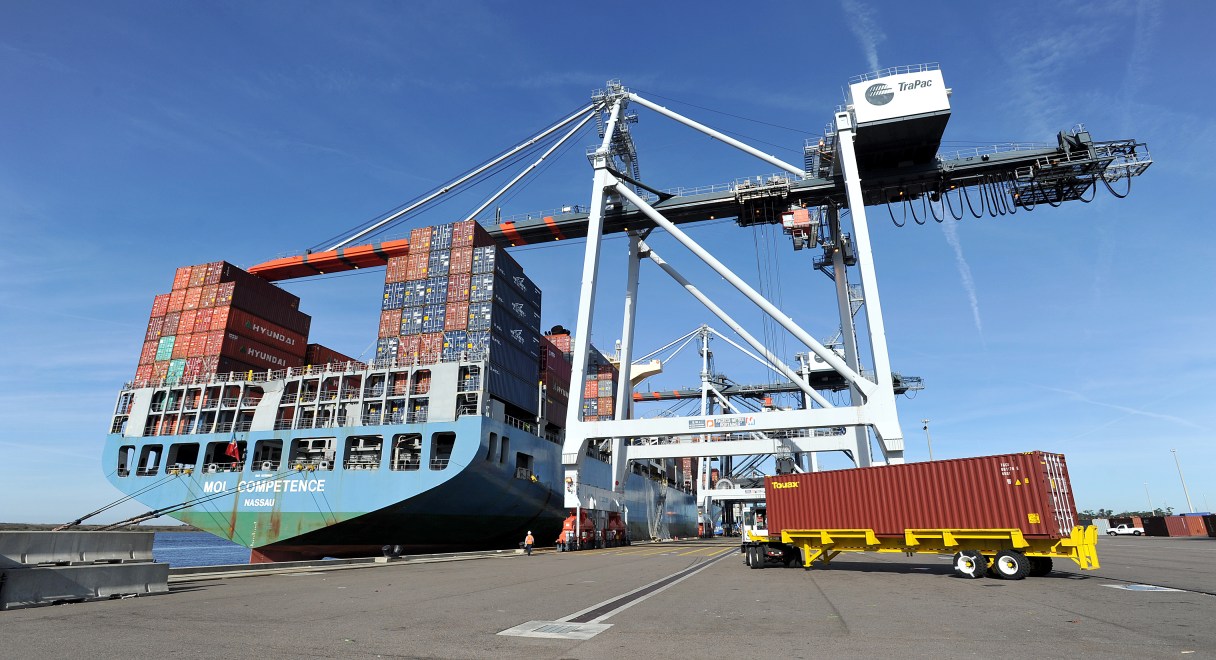
WASHINGTON (AP) – The U.S. trade deficit in December jumped to the highest level in more than two years as American exports fell and imports climbed to a record level.
The deficit jumped 17.1 percent to $46.6 billion in December, the biggest imbalance since November 2012, the Commerce Department reported Thursday. The widening trade gap reflected a drop in exports, which fell 0.8 percent to $194.9 billion. Imports soared 2.2 percent to $241.4 billion.
The deficit for all of 2014 increased to $505 billion, up 6 percent from the 2013 deficit of $476.4 billion. Economists expect the deficit to widen further in 2015 as strong growth in the United States boosts imports, while weak growth overseas and a rising dollar continue to depress exports.
The politically sensitive deficit with China set a record for 2014, rising 23.9 percent to $342.6 billion. The United States deficit with China surpassed the deficit with Japan in 2000 and since then, the trade gap with the world’s No. 2 economy has set a new record nearly every year.
Those deficits are creating pressure on Congress and the Obama administration to take tougher actions against what critics see as China’s unfair trade practices. U.S. manufacturers contend that China is manipulating its currency to keep it artificially low against the dollar as a way to make American products more expensive in China’s market and Chinese products cheaper in the United States.