
Monday, November 16, 2026Nov 16

Rocky first year for the new GED and other equivalency tests

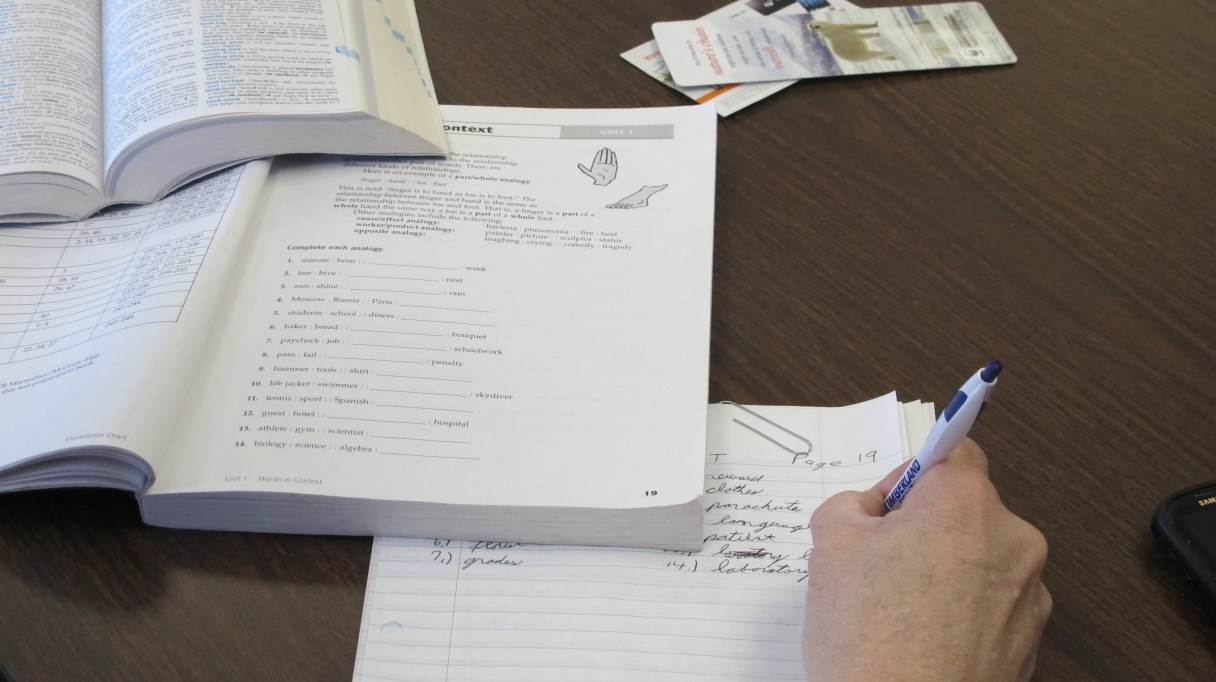
Larry Gorski, 58, of Cheektowaga works to prepare to take the TASC test toward his high school equivalency diploma during an adult education class at the Maryvale Community Education Building in Cheektowaga, N.Y. on March 23, 2015. The GED was overhauled last year to reflect the Common Core standards that have been adopted by most states and emphasize critical thinking. Two new high school equivalency exams that also incorporate some of those standards were also introduced last year.  (AP Photo/Carolyn Thompson)
Larry Gorski, 58, of Cheektowaga works to prepare to take the TASC test toward his high school equivalency diploma during an adult education class at the Maryvale Community Education Building in Cheektowaga, N.Y. on March 23, 2015. The GED was overhauled last year to reflect the Common Core standards that have been adopted by most states and emphasize critical thinking. Two new high school equivalency exams that also incorporate some of those standards were also introduced last year. (AP Photo/Carolyn Thompson)

CHEEKTOWAGA, N.Y. (AP) – The number of people taking high school equivalency exams in the U.S. plummeted – and the percentage who passed fell, too – in the year after a revamped, Common Core-inspired GED was introduced along with two new competing tests.

Test administrators say a rush by people to take the old exam in 2013 before the newer ones were rolled out resulted in fewer test-takers in 2014. And the harder questions on the new exams led to lower scores.

The GED, or General Educational Development test, was overhauled last year to reflect some of the Common Core standards that have been adopted by most states and emphasize critical thinking. In 2014, two new high school equivalency exams that also incorporate some of those standards were introduced by other testing companies.

All three tests require students desiring a diploma to show higher-level skills, such as writing essays using evidence they pull from reading materials they are given. In math, students must interpret data and plot equations to solve problems.

Some of the before-and-after results over the past three years: